
When Dreams Are Not Confined by Borders
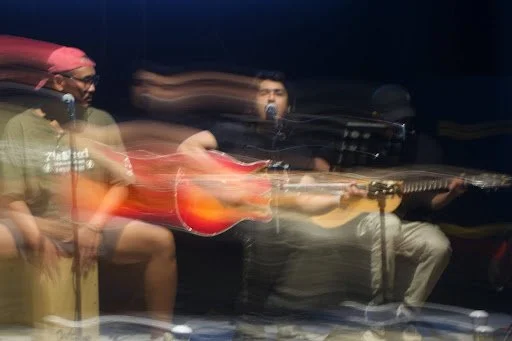
Mey singing at a restaurant in Thailand. Photo by Nathaphob Sungkate
Since the military coup in 2021, Myanmar has moved toward what many describe as a failed state. The country has been engulfed in conflict, with fighting between the Myanmar military, ethnic armed groups, and the People’s Defense Force spreading across much of the country.
The situation worsened in 2024, when the junta introduced mandatory conscription for civilians. The policy targeted men aged 18-35 and women aged 18-27.
This became a turning point: young people began fleeing Myanmar in growing numbers, often with Thailand as their first destination. Over the last two years, I have spoken with many of them. These are their stories.
Old Dreams in a New Land
I met Mey in June 2025. He was living in a small house in the Thai-Myanmar border with his sister and his young child.
Mey was a dentist in Myanmar. He joined the Civil Disobedience Movement (CDM), a nonviolent political movement that began in February 2021. Led initially by medical workers protesting the military coup, the movement called for strikes among civil servants, non-cooperation with the military, and broader economic boycotts.
Mey did not have to join the resistance. He had a stable life and could have continued his work without putting himself at risk of losing everything. But he did.
“If we keep bowing our heads, if no one stands up and resists, our country will never change,” Mey said, noting that the previous generations also experienced the same coup.
After joining CDM, Mey became a target. The military issued a warrant for his arrest. His dental clinic was shut down. He was forced to change his name, move constantly, and sell his belongings piece by piece.
Like others in the resistance, he crossed the border into Thailand through informal routes. He could no longer use official documents without risking arrest. From a young professional with a promising future, he became a refugee. Playing music — an old childhood dream – became his only means to sustain himself.
“Right now, I don’t need anything else,” he said, “I just want to be able to play music.”
Back in Myanmar, he used to earn around 200,000 baht a month as a dentist. Today, he makes about 15,000 baht. During the day, he volunteers at a medical clinic along the border. In the evenings, he plays music at restaurants. Even though it is far from the life he once had, he said that music has become a way of reclaiming a part of himself.
I went with Mey into a rehearsal room and watched as he picked up a guitar, which was among the few possessions he was able to take with him when he fled Myanmar. He told me he had just finished writing a song he called “Luen” — “Missing.” As Mey began to sing, the world seemed to fade away, leaving only him and his music.
The past I long for still lingers in my heart
Everything is temporary, sorrow comes in its time
I miss the days we once shared
In a world where nothing lasts forever
I miss you… I miss you
I look into the distance, smiling softly, remembering
Still lost along the same old path
For a moment… I want to walk through this forest of longing
For a moment… I want to live within it
I’m not sure if Mey is still able to perform these days since Myanmar-run restaurants — one of the few places where migrants can find work — have started facing increasing crackdowns in Thailand, where many forms of small-scale trade are restricted for migrant workers. I can only hope that, somehow, Mey’s days are still guided by music.
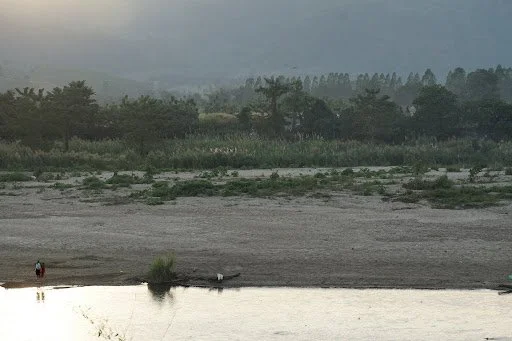
The Moei River forms the border between Thailand and Myanmar in Tak Province. Photo by Nathaphob Sungkate
From Teacher to Journalist
I first met Tet (not his real name) during the Thai-Myanmar Media Fellowship in 2023-2024. Tet and I were on the same team that worked on an investigative report about the birth registration of migrant workers’ children in Thailand. Our report uncovered corruption and barriers that prevented many children of migrants from accessing their most basic rights.
I later learned that Tet used to be a teacher in Myanmar.
On the day of the coup, he was among some 70 people in his town who joined the Civil Disobedience Movement. He resigned from his job as an act of peaceful resistance. Soon after, the Myanmar military issued a warrant for his arrest.
He went into hiding, moving from place to place. He first traveled to Yangon, then north into Karen State, before eventually crossing into Thailand through Chiang Mai.
A friend introduced him to a media outlet there.
Without a passport, Tet had to rely on temporary documents and register as a migrant worker. His only way to remain in Thailand was to have himself listed as a construction worker on his identification card, even though this meant losing access to social security and basic healthcare rights.
Tet once told me that teaching was a job he loved. It did not pay much, but it gave him a sense of purpose.
“Tiring, but fulfilling,” he said.
That sense of fulfillment dissipated after the 2021 coup. He saw protesters — many of them young people — shot and killed in the streets. Yet state media continued to report that the country was peaceful.
“It was like North Korea,” he said. “The junta forced the remaining media outlets to cover up everything. Journalists who refused to be swayed by pressure from the military had to flee their homes and workplaces.
“If they didn’t report what the military wanted, they would be arrested,” Tet said.
That reality pushed Tet to become a journalist himself, reporting on Myanmar from across the border.
Thailand has become a last refuge for many Myanmar journalists who continue to cover the situation back home. But working from here comes with constant challenges.
First, Myanmar journalists are not officially allowed to work in Thailand. Many operate without formal permits, working in the shadows.
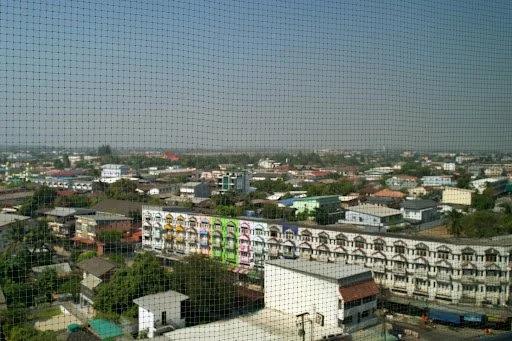
Mae Sot, Tak Province in Thailand, is a border town with a high concentration of Myanmar citizens. Photo by Nathaphob Sungkate
Second, they report from outside the country, making access to sources difficult, and getting information back to local communities even harder, especially with Myanmar’s military restricting the flow of information tightly.
And then there is the matter of their health. Access to healthcare for Myanmar nationals in Thailand is limited and uncertain.
“I can’t afford to let anything happen to my health,” Tet said. “If something does happen, I don’t even know where I would go.”
Many refugees from Myanmar also carry the quiet burden of mental health issues.
Most of them left aging parents behind. Many of them gave up their middle-class lives in Myanmar only to become undocumented or low-wage workers in Thailand. Without legal recognition, they have no other recourse but to take on jobs far below their qualifications. They live with the constant fear of exploitation, including by authorities.
Like many others, Tet lives with accumulated stress.
Tet said all he could do is to remind his parents to stay healthy because he cannot go back to Myanmar if anything happens to them.
“If I go back to Myanmar, I will be imprisoned,” he said. “But the loneliness here affects me.”
Once, I asked Tet what brings him happiness these days.
His response: Waking up in the morning, having a cup of coffee, and spending the rest of the day doing work that he still believes in.
“I don’t have big dreams,” Tet said. “Just being able to live happily with the people I love — that’s enough.”
Simple Dreams
I have been reporting on Myanmar refugees in Thailand for the past three years. What keeps me going is the hope I see — and the strength I draw — every time I speak with them.
Being a refugee is not something to romanticize. There is nothing easy or beautiful about it. And yet, those who choose to keep going continue to live with hope – hope to be treated as equal human beings,
to be respected, and to be given a chance to work, to live, and to access the most basic rights that others take for granted.
And perhaps most important of all, the hope to be together with their families again.
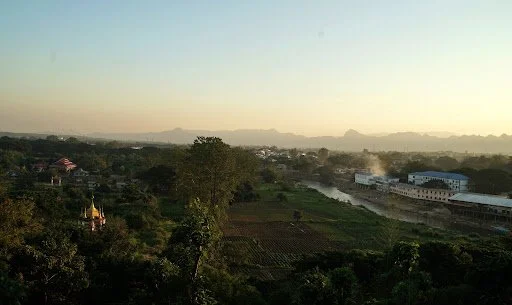
Thailand to the left of the river and Myanmar to the right. Photo by Nathaphob Sungkate
*The opinions of contributing writers are their own and do not necessarily represent the views of We Are One Humanity. Submissions offering differing or alternative views are welcome


Listening to many roots in a restless, unfinished democracy