
Americans Respond to the Attack on Iran
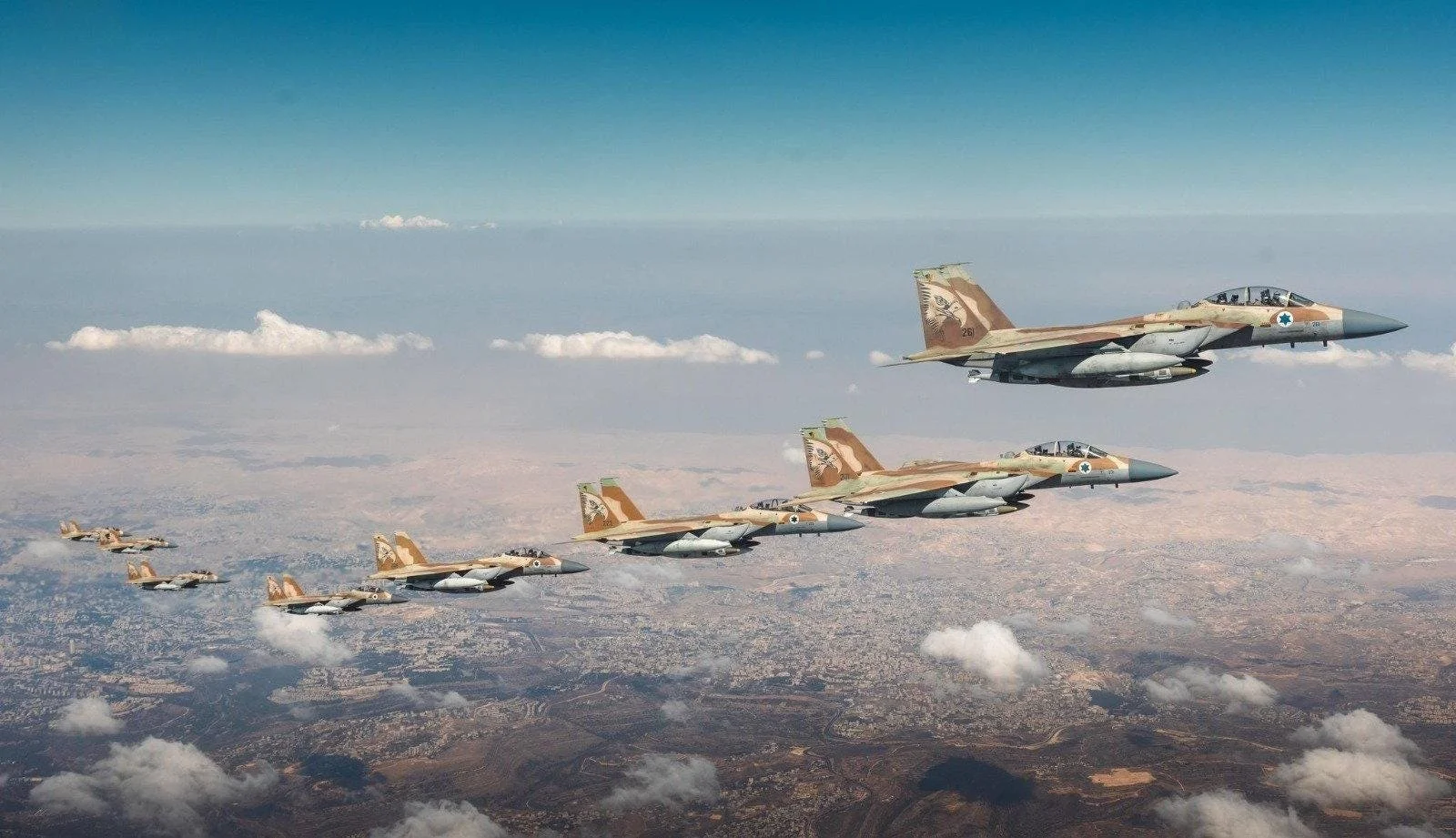
Israeli Air Force fighter jets on their way to attack Iran, June 2025 (IDF Spokesperson's Unit /
No turn of history occurs for only one reason. A convergence of influences made President Trump decide to join with Israel to launch an attack on Iran.
There are reasons, there are rationales, there are calculations, there are ramifications. And there is the gut. Pundits have addressed all these threads in the past days and will continue to do so. So many considerations are in the mix that the Israel-US assault on Iran will keep the talking heads busy for weeks, years, nay decades to come.
But it is hard not to conclude that the cause of this war funnels down to the gut instinct of Donald Trump.
In the first forty-eight hours after the attack, a Reuters-Ipsos poll found that only 27 percent of Americans approved of it.
Why did they disapprove? After all, most of us felt some euphoria when the news of Khamenei’s death was announced. And we have considerable sympathy for Iranians and Iranians living abroad like Azadeh Moaveni who eloquently describe the shadow this oppressive ruler cast over their lives.
Like Trump, the American people respond with their gut, and Americans are fundamentally not interested in getting mired in an overseas war. They have had too much of that since 2002 in Afghanistan and Iraq. They know too much about the costs and the ways foreign war can enmesh Americans in a relentless grind that is hard to abandon.
When Trump campaigned in 2016 he asserted that “regime change” was “a proven, absolute failure.” Eight years later, in his 2024 campaign he repeatedly reiterated his policy of “no new wars.” The details of these remarks might not be remembered by all, but his repeated, near comical, expression of hope to win the Nobel Peace Prize during the course of last year are hard to forget. He has created a Board of Peace, for heaven’s sake, whose task is to make Gaza into something new. Trump has tried to present himself as a peaceable leader. That idea was always disingenuous, but if it persisted before February 28, it is now in tatters.
Americans can see that their president and his team don’t know what the goal or rationale of this war is. Spokespeople for MAGA vacillate in explaining it. One day the goal is to strike down the Iranian nuclear facilities, even though Trump asserted as recently as February 24, in his State of the Union Address, that Iran’s nuclear facilities were crippled last July. On another day the aim is to bring down the Iranian government – regime change – leaving space for Iranians to rise up and create a new political reality. On March 2, Secretary of State Marco Rubio said the Israelis were going to attack anyway and since the US was likely to be a target of Iranian retaliation, it needed to be part of the offensive from the start. On March 3, Rubio dialed back on the matter of Israel’s influence, saying Iran’s buildup of ballistic missiles and drones led the US to decide to strike before Iran used those weapons on America.
Critics of the decision to attack Iran know from past experience that regime change doesn’t happen as the result of an air war. Regime change requires boots on the ground, a move the US would surely not wish to make. They therefore do not see regime change as a practical possibility even if it is desirable. They also look at the legal aspects. International law does not sanction “preventive” war – preemption, yes, prevention, no. Since the US’s national security was not directly threatened, attacking Iran does not meet the requirement of a preemptive war. Domestic law calls for congressional approval for going to war. The intricacies of the War Powers Resolution of 1973, which hardly wins prizes for clarity, are therefore under the spotlight. Those who strive to maintain a moral core in foreign policy decisions say that no matter how despicable a leader is, assassination or targeted attack like the one that killed Khamenei is unacceptable: it is the kind of action that comes back to bite the aggressor.
Supporters of the attack might say, as Trump’s former National Security Advisor John Bolton did on the PBS Newshour on March 3, it was about time someone did this. The Iranian regime has been destabilizing the middle east region for decades and should have been taken out a long time ago. And, said Bolton, arguments about the absence of an endgame plan are unrealistic – no action of this kind can have certainty about the endgame. Bolton’s support for this move of Trump is particularly interesting because of the acerbic relationship between Trump and Bolton. Trump fired Bolton in 2019; Bolton’s White House memoir, The Room Where it Happened, was critical of Trump; and Trump has taken retribution on Bolton by indicting him for unlawful retaining of documents.
The above small sampling of the national debate distracts from the underlying and determining truth that Donald Trump wanted this war.
A series of psychological factors collaborated to lead him to it. First, Netanyahu has been eager for this war for some time, and the symbiosis between Netanyahu and Trump guaranteed it would happen. The two men share a realpolitik mindset and an awareness that they face indictment once they leave office. Both men are shameless about adopting a military option if it can distract from their own domestic weaknesses. As far as Netanyahu is concerned, even if he has strong support within his own party, his support in Israel is not strong. The mood in Israel is “sullen” and Netanyahu faces elections this spring at a moment when his coalition is weak.
Trump, likewise, is feeling more insecure at home. Pushback in Minnesota against the crude tactics of ICE caused some in Trump’s inner circle to question his deportation methods. He had been imagining that if the situation seemed to demand it, he could move towards use of the military to impose domestic order, but Minnesota slowed this plan. The midterm elections are looming, and midterms are never a good moment for the incumbent party. Consumer prices refuse to drop. And the Epstein files just never go away.
In spite of having had to back down over Greenland, Trump’s forays into the international arena in recent months have given him some taste of the joy of wielding military power. In Venezuela, a dramatic action apparently succeeded at low cost. He hopes that Iran will play out similarly.
How will the Iran project affect American politics going forward? If it proves to be a rapid success, it might still serve to unite Trump’s base behind him. Offsetting this is the likelihood that service personnel will be called upon in greater numbers than they have already to keep this action going. It is unlikely the US will be able to pull out any time soon. This will not help Donald Trump’s popularity.
Might Trump use the fact that the US is on a war footing to place limits on election regulations in fall 2026? This possibility has been raised and is not out of the question.
On the other hand, attacking Iran seems to play into the hands of Trump’s critics – and Democrats are pouncing to cry Shame! to a Trump administration that takes its country into war on such flimsy pretexts. The big question in this regard is whether Democrats can capitalize on this moment, to find a uniting stance.
A more serious question is whether this new demarche will help to desensitize the American population with regard to their president’s willingness to use force? Will they become more used to the fact that he looks for no guard rails and takes upon himself the use of this delicate instrument in unnecessary ways? Will they become used to the idea that in order to secure the future for our own group, we cannot be kind, or even fair, to everyone?
A comforting thought for those who believe that Donald Trump’s presidency is bent on undermining the American project of government of the people, by the people and for the people, is that the attack on Iran is an act of hubris. And all leaders who operate in the thrall of hubris end up misjudging: it is only a matter of time before disaster arrives. Comments Ross Douthat of the New York Times “This is the pattern of many historical conquerors: The long run of success yields the inevitable hubris, and the grand career ends with a grand debacle and would-be successors reaching for the knife.”



Facing history's darkest truths can liberate individuals and nations