
Bamboo School: Never a Burden
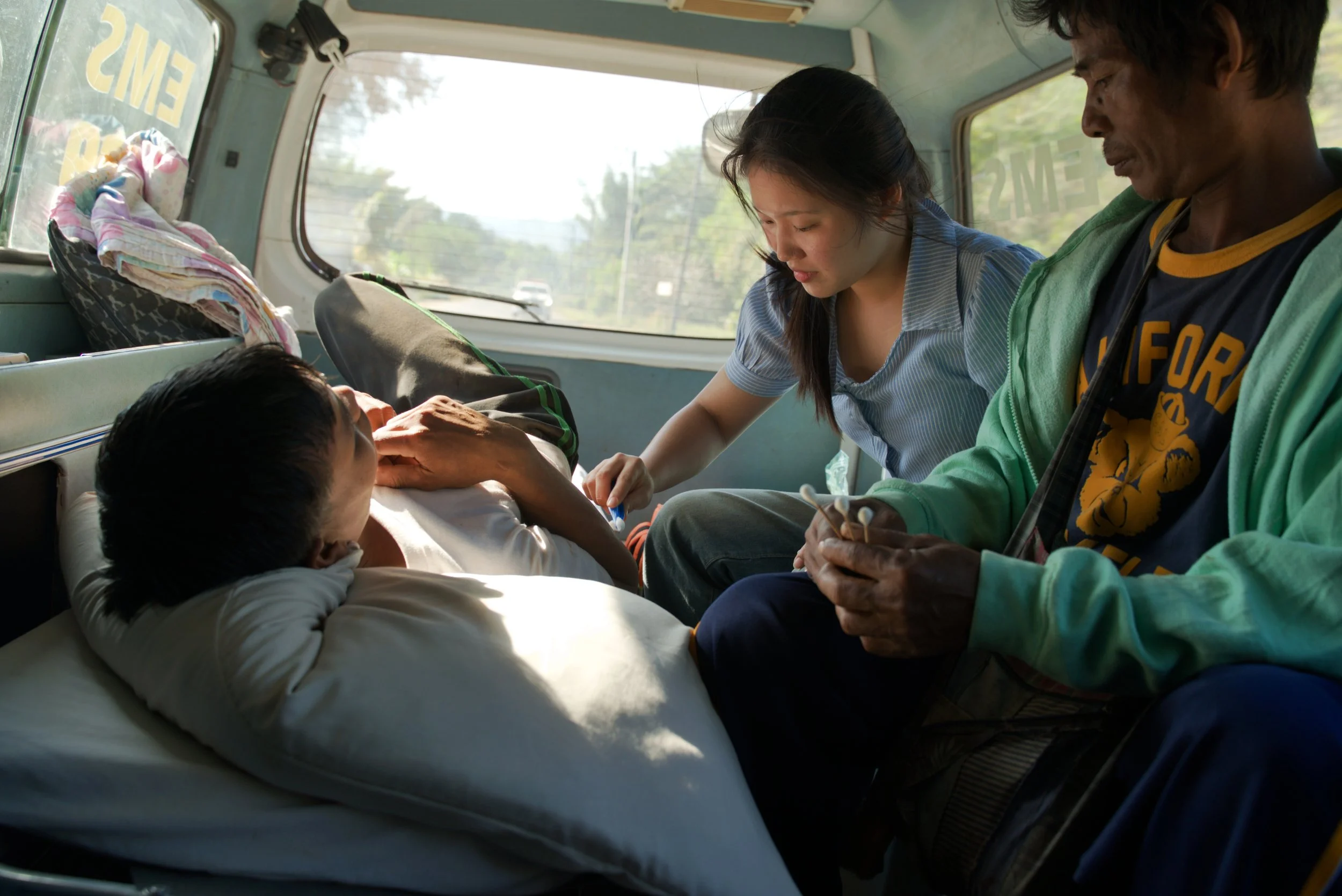
Students at Bamboo School responding to emergency calls in their community on the Thailand-Myanmar border (Photo: Nathaphob Sungkate)
The Bamboo School sits quietly in a rural community in Kanchanaburi province, Thailand, less than 20 kilometers from the Myanmar border. On a Saturday morning, as I joined the students for worship, I learned firsthand that the school's impact reaches far beyond its modest grounds.
The phone rang and Zak, a 21-year-old who lives at Bamboo School, answered. The call came from a local health station. There had been a motorcycle accident. The injured person needed to be rushed to the district hospital.
Zak moved without hesitation. He grabbed the keys and started the emergency vehicle. Fonkaew, another resident at the Bamboo School,quickly prepared first-aid supplies and cleared space in the back seat. Within minutes, they were on their way.
Mocheree Pornjiranon, the nurse who called them, had once been a child at Bamboo School. She later completed her nursing degree and returned to serve the community.
For these three, the process was not unusual. Accidents happen almost daily in this remote subdistrict, where comprehensive public health services remain limited. Older students at Bamboo School are trained to provide basic emergency care and to transport patients to the town hospital.
They were trained by Catherine Ruth Riley Bryan, a New Zealander who founded the school 25 years ago.
Catherine told me how it began. At the time, she was teaching English in Chiang Mai, in the Northern part of Thailand. One summer, a student said she wanted to return home to the Bong Ti subdistrict to visit her family. Catherine and several students traveled with her.
“When I arrived,” Catherine said, “there was no electricity, no running water, no paved roads. And there was no school for the children.”
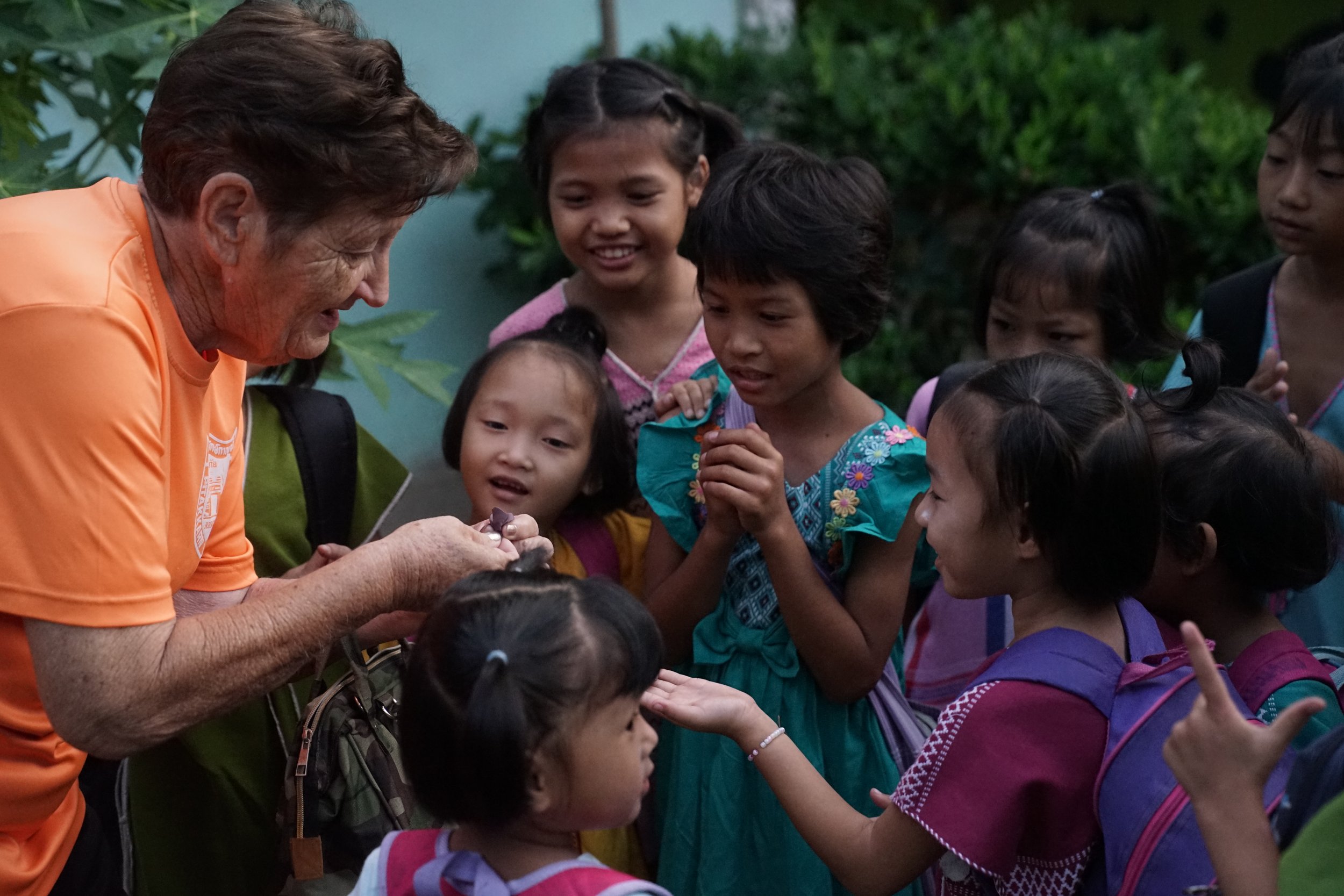
Catherine with students from Bamboo School
From that visit, Bamboo School was born. Over the past 25 years, it has become both a school and a home for more than 900 children from Thailand and Myanmar. Many former students now hold stable jobs serving their community, including registered nurses, teachers, barbers, and doctors.
Many of them were once displaced children or children without access to education. When given an opportunity, they proved that they were never a burden. Today, they contribute to society through their work and service.
“I wanted to become a nurse since I’ve been at Bamboo School.”
Mali told me this with a quiet smile. Today, she is a senior nurse at a district hospital. In the evenings, she also runs a small clinic providing basic medical care to people in the community.
Mali lived at Bamboo School for two years before finishing high school. It was Catherine who found a sponsor so she could complete her Bachelor of Nursing degree.
“Without Bamboo School, many children would never have had the chance to continue to higher education.”
Mali said with pride that she is the first professional nurse from her subdistrict. She explained that Bamboo School has supported the local community in many ways — especially in public health and education.
In the end, Mali reminded me of something important: children who migrate, like many at Bamboo School, can grow up to become skilled and capable members of Thai society. Given the opportunity, they return to serve their own communities — not as a burden, but as part of the future.
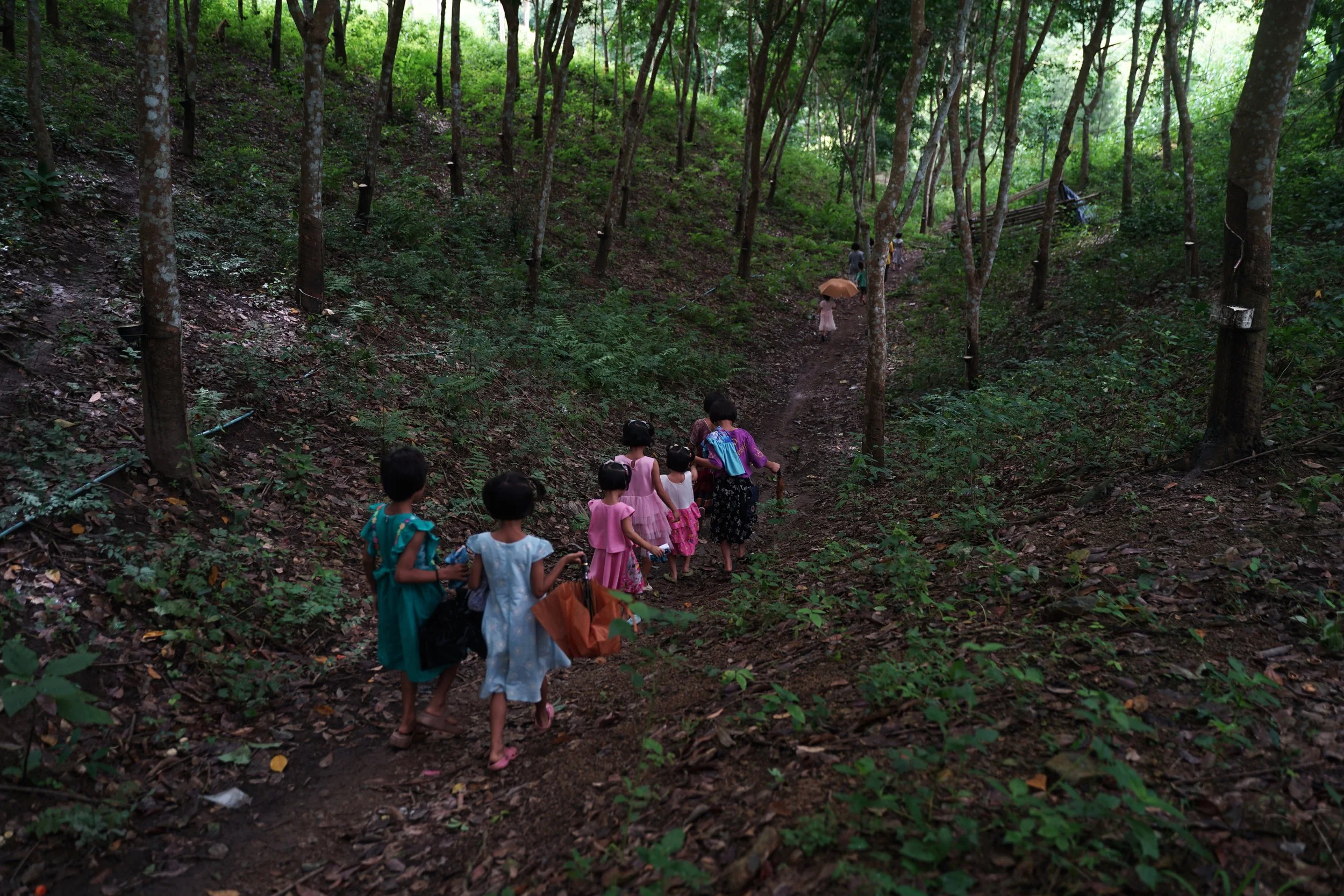
Students of Bamboo School
A World that Needs Population Replacement
Professor Emeritus Aphichat Chamratrithirong from the Institute for Population and Social Research at Mahidol University once presented research projecting that, by the end of the 21st century, Thailand’s population could fall to 32 million, down from 69 million today.
This raises the question of “population replacement.” Policies that encourage Thai families to have more children may take decades to show results. Some scholars, therefore, propose managed migration as part of the solution.
Thailand is not alone. Birth rates are declining in countries such as Japan, South Korea, and the United States. Globally, the total fertility rate has fallen sharply. Between 1950 and 1955, the world’s average fertility rate was 4.86 children per woman. Today, it stands at around 2.35.
Yet migration remains politically sensitive.
“When we talk about the importing population, people often see them as foreigners. There is resistance to granting nationality. We still lack awareness about population decline,” Professor Aphichat told me.
Like many countries, Thailand faces a shrinking workforce. At the same time, it remains caught in fear of migrants. Many worry that migrants will take their jobs, even though migrant workers largely fill positions that Thai workers choose not to do.
I have interviewed business owners across several industries. Many told me their operations now depend on migrant labor. A growing number of Thai workers have moved into informal work — becoming delivery riders, online sellers, or seeking jobs abroad. Higher-skilled work also attracts many. As a result, low-skilled jobs are often left unfilled.
Migrant workers, most of them from Myanmar, now sustain large parts of Thailand’s grassroots economy, despite ongoing hostility from some who believe they are taking resources away from Thai citizens.
“If migrant workers disappeared one day, the Thai economy would stall in the short term. Many businesses would not survive because they could not find Thai workers,” said Associate Professor Kiriya Kulkolkarn from the Faculty of Economics at Thammasat University.
She has studied migrant labor for more than 20 years. In our conversation last year, she explained that destination countries often gain fiscal benefits. In Thailand’s case, government revenue collected from migrant workers — such as value-added tax and permit fees — exceeds the public spending allocated to them.
Fear of migrants, she argued, can be managed. What matters is transparent policy design and systems that recognize migrants’ potential contributions in exchange for legal residence.
For me, the image of refugees as thin, hopeless figures waiting passively for charity is outdated. It is a portrayal once used by some foundations to evoke sympathy and donations. We need to move beyond that narrative.
Migrants are not different from me. They want education. They want stable jobs. They want to save money, build secure lives, and pursue their dreams without being a burden to anyone. We are the same in almost every way. The only difference is that their homes are not safe and do not offer the same opportunities.
I still believe there is enough space in this world for us to share our lives and dreams without hating one another simply because of our nationalities.
The first time I visited Bamboo School was in 2018. I returned again in 2024 to report on its progress, and I continue to visit whenever I can. Most recently, I spent time there during the New Year holiday. One afternoon, after running around the field until we were exhausted, we lay on the grass looking up at the sky. Apple, a small girl of seven or eight, pointed upward. “God is in the sky,” she said. “God takes care of people and deals with those who do bad things. In Myanmar, I used to go to school, but no one came… The police would come in — bang, bang, bang.” Her voice softened. “It made me scared.”
*The opinions of contributing writers are their own and do not necessarily represent the views of We Are One Humanity. Submissions offering differing or alternative views are welcome


Listening to many roots in a restless, unfinished democracy