
The Bullies Around and Within Us
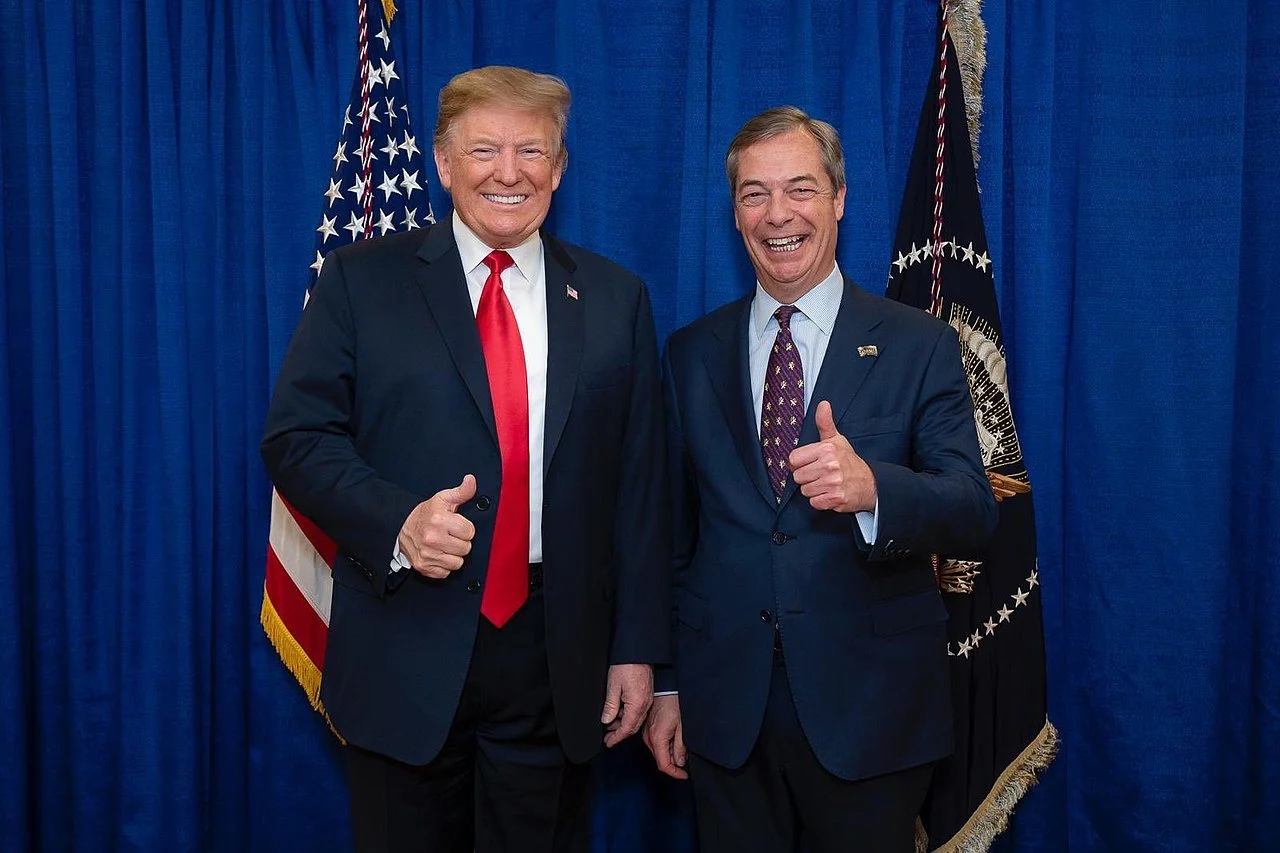
Nigel Farage with Donald Trump in 2019 (Wikimedia Commons)
Stifling fear and people looking sideways and watching their steps. Smiles of people craving protection and favours.
I love the opposite, the atmosphere where everyone feels free to share their convictions and ideas. Where no one is placed on a pedestal.
I remember the bullies in the schoolyard. I also remember coming face-to-face with the bully within myself. I was around eleven years old, playing with some friends and classmates. I got into a quarrel and a physical fight with one of them. This boy was a little different from the others. He was very pale, his skin revealed serious eczema, and he was often ill. I got the upper hand in the fight and suddenly felt excited and pleased about the power I had to inflict pain. Then, in a flash, I noticed the despair and anger in his eyes. He felt humiliated. Shame flooded my heart. “What was I doing?” I loosened my grip, and the fight ended. I had gotten a glimpse of the cruel bully within myself.
It was a turning point. We became good friends, and I wanted to protect him. I can remember my fury when seeing bullies harassing their victims at school or elsewhere. I couldn’t bear it. Sometimes I tried to intervene.
Many are bullied because of their appearance, their race or religion, nationality or social status. The traumas of being harassed haunt them for years. Some get help, and the scars are healed. For others, the healing never comes. Sometimes their hurt and anger take them on a course of bullying others. However, there are stories of hope, many of them to be found on the internet, about the courage of friends who intervene, and bullies recognizing the pain caused and trying to make amends. In one case, a classmate stood up to the bully on behalf of the victim. It broke the spell. The bully changed her ways. Two men met several years after the actual bullying took place. They came face-to-face by chance in the hardware store owned by the victim. Both had their children with them. The bully was very warm upon greeting his old schoolmate, telling the children that they were good, old friends. The victim felt offended by this and whispered angrily to his former tormentor how awful the bullying had been. He told him to leave the store. In the evening, there was a knock on his door. It was the bully. He came with a bottle of wine, told him how guilty he felt and how sorry he was for the hurt he had caused. His wife had helped him change his attitude.
Bullies Throughout Democracy
Often, it is not only about individuals, but whole communities or nations being victims of continuous bullying and oppression. Indigenous communities standing in the way of European expansion were crushed and sometimes fell into deep collective depressions. The histories of both Jews and Palestinians are glaring examples of humiliation and how slow the international community is to react.
However, something else is on my mind. What do we do in democracies when bullies climb the ladder to become leaders? Why are they not stopped before they get into positions of power in business, politics and all kinds of organizations, even becoming Prime Ministers and Presidents?
This question came to mind when, at the end of last year, I read in The Guardian the painful accounts of teenagers being bullied and humiliated at their school in London many years ago. The victims wanted to forget and move on, but once the bully appeared on the public scene and was constantly in the media, the hurts and wounds were opened again. The victims came forward to tell their stories. Nigel Farage, the present leader of the Reform Party in UK, was the bully. Reminded and accused of his past misdeeds, he has done his best to play them down. That is no surprise. Bullies and oppressors often have weak memories about what they inflicted on others. They claim not to remember or that they did not intend to hurt anyone. What they do in the privacy of their consciences may be different and possibly closer to the truth. The victims, on the other hand, often have vivid memories of horrible incidents and of being repeatedly humiliated.
So, why do we let bullies get away with their trampling on the dignity of others, allowing them to move on? One answer is fairly obvious. It is highly uncomfortable to confront bullies. The risks are high. It might mean losing our job, being beaten up or expelled from a circle of friends. Or much worse. Our lives get threatened, and also the lives of family members. The better option seems to be to avoid the bullies, get out of their way and hope that we don’t meet them again. Unfortunately, others do, and others suffer.
Another option is to join the club of admirers and obedient bootlickers. It provides something we human beings crave. Safety. A sense of belonging. As long as we toe the line and pay attention to the rules the bully lays down, we benefit from the power the bully has. But of course, our freedom and integrity are lost.
When I watched one particular bully climb the ladder, elbowing his way towards ever greater power, I kept saying to myself, ‘This is beyond belief! Now, surely someone must want to take action to stop him.’ However, after some resistance and protests, those in disagreement seemed to become quiet or disappear from public view.
Fear of Others
When the destructive consequences of the actions of bullies become evident, many regret their cowardice. Along the roads of bullies’ ascent, lie the wrecked moral compasses of those who moved aside to let them through to the corridors of power. Tears are shed in hindsight.
Can we reconquer lost territory?
I was privileged to grow up in an environment where we were encouraged to think independently and analyse, share our opinions and stand up for our convictions, and to respect what others believed. I enjoyed lively and fruitful discussions about important issues in life and society and do so till this day. Everyone is respected and everyone has a say. Democracy depends on such a culture. My generation in Norway and countless people around the world have benefitted from such an environment. However, we have to strengthen it to withstand present and future threats.
Looking back, I really regret the times I did not voice my disagreement or what I thought would be a better solution. Why didn’t I? Sadly, the answer is fear of what others might think. Sometimes I thought others knew better, and maybe they did. But everyone’s input is valuable to help find the best way forward. That belief is fundamental for a thriving democracy.
Fear of others. Think about it. That is the fertile soil for bullies to thrive. Fear weakens our immunity and defence against their manipulation. It spreads conformism. Look at what the others say and do, and don’t step too far out of line.
Cultures and mindsets of honesty, courage, love and respect for everyone. Compassion for those who suffer. That is what we need to develop, coupled with a fearlessness to confront the bullies. To train our hearts and minds to make space for true freedom. In schools, sports clubs, community centres and neighbourhoods, churches, mosques and other houses of worship. Of course, there are restraints on freedom: No humiliation and attacks on others because of their culture, nationality, race or religion. We are all different. That is the beauty of the mosaic of our humanity.
And let us take heart: The culture of true freedom is alive in so many places around the world. Honesty and courage show up in boardrooms, community meetings, political parties, environmental groups and on the streets. Whistleblowers tell the truth where bosses try to close the lids.
And some tragically die for the cause, bearing witness to how hard it can be to stand up to bullying and oppression. As I was writing these words, a friend sent me the song ‘The streets of Minneapolis’ by Bruce Springsteen.
*The opinions of contributing writers are their own and do not necessarily represent the views of We Are One Humanity. Submissions offering differing or alternative views are welcome
More stories from We Are One Humanity
Facing history's darkest truths can liberate individuals and nations