
"The Pitt" and the Real Heroes Behind the Scrubs
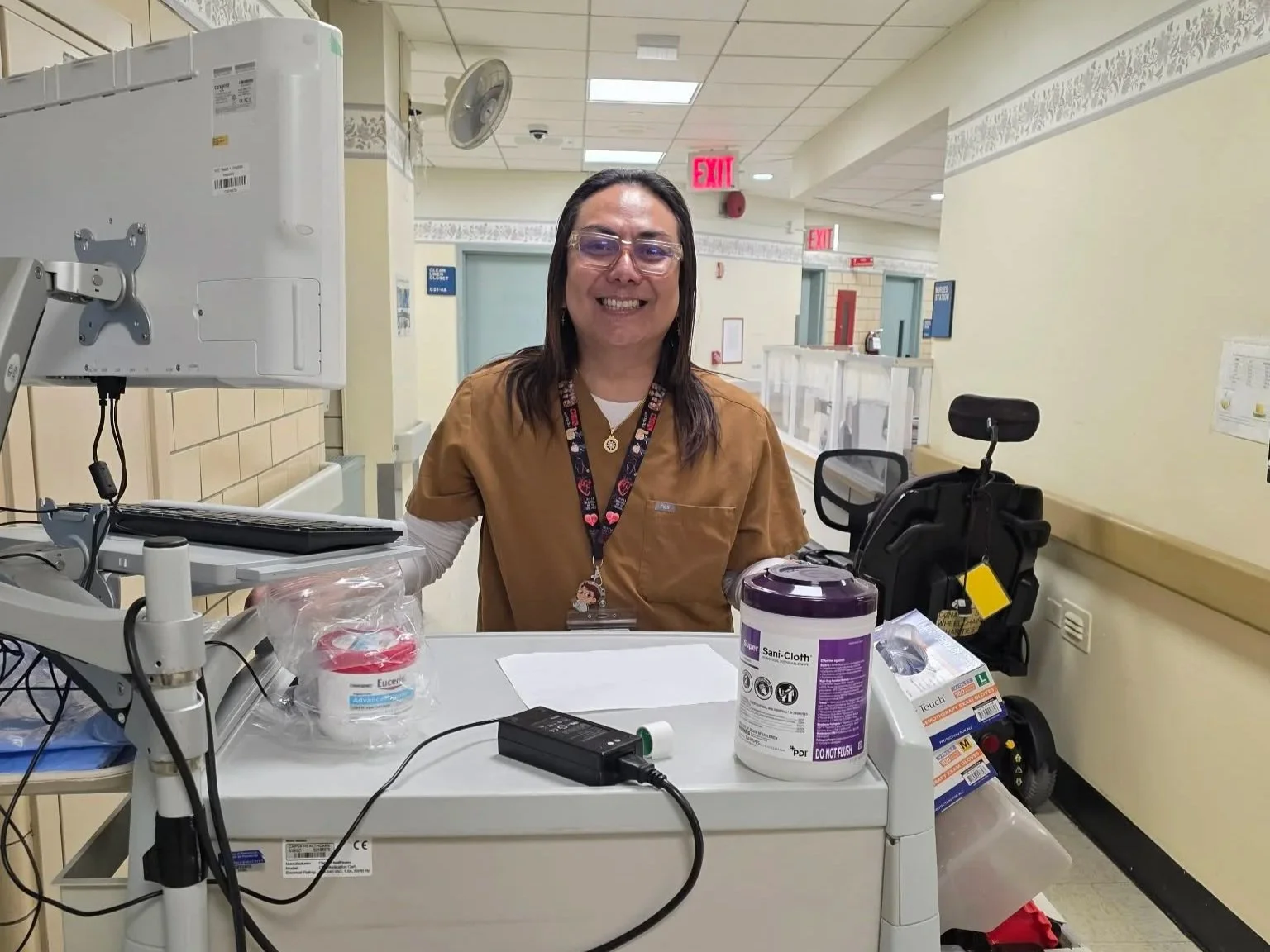
Charge nurse Rodel Emboscado at the health facility in New York City where he works. Filipino nurses serve as the backbone of the U.S. healthcare system, making up 1 in 20 registered nurses in the country. (Photo: Rodel Emboscado)
"The Pitt"— a high-stakes TV medical drama set in a busy urban emergency room — just won Best Ensemble in a Drama Series at the 2026 SAG-AFTRA Actor Awards.
The win is a massive spotlight on Filipino representation, featuring actors Amie Lynn Abellera and Kristin Villanueva as nurses Perlah & Princess — the nurses who keep the chaos at bay — alongside Isa Briones as Dr. Trinity Santos. The Actor Award is a game changer for this indispensable group in the U.S. healthcare system that has been sidelined in medical dramas for too long.
Yet the on-screen victory reflects a more complex off-screen reality. Filipino nurses in the U.S. carry a double burden: they are a vital backbone of the American healthcare system, comprising 33% of immigrant RNs and making the Philippines the single largest source country of immigrant registered nurses in the United States. At the same time their home country's economy depends heavily on their remittances.
This dual role is not accidental. It is rooted in a century of colonial history and a deliberate strategy by the Philippine government to systematize the commodification of healthcare workers, beginning in 1974, according to a study by the CUNY New York Law Review. Filipino politicians justified this policy by crafting a powerful "healthcare hero" narrative, framing nurses as "ambassadors of goodwill". The study found that this label of “Ang Bagong Bayani”, or “the new national heroes,” portrays nurses’ labor as a patriotic sacrifice in an effort to mask the reality of their systemic commodification and exploitation.
According to Pew Research, Filipinos are the most likely of any major Asian group to send money home, with 42% of adults transferring funds regularly. In 2021 alone, remittances from Filipinos living in the U.S. exceeded $10 billion — 9.3% of the Philippines' GDP — funding food, clothing, and health care.
Venus Guerrero: A Career Bookended by Crises
The three-decade career of Venus Guerrero, a 68-year-old retired Filipino nurse, serves as a narrative bracket for this history. Her story shows how a century of policy and migration lands on one body, one family.
Guerrero's professional journey is bookended by two global health crises. She entered the American medical system in 1987, at the height of the AIDS epidemic, and 30 years later hung up her scrubs just as the COVID-19 pandemic began to reshape the world.
"They really needed foreign nurses back then,” she said. “Nobody wanted to work because they didn't know what AIDS was and how it could be transmitted at the time," she added.
The foundations for this pipeline were laid when the U.S. colonized the Philippines in 1898, establishing English fluency and Americanized nursing training as preconditions for mass migration. For Guerrero, the cost was deeply personal: she left her four children — the youngest only a year old — behind for years.
"It's very, very hard... being away from the family and adjusting to a new environment," she said. She spent years navigating New York's cultural shock while maintaining a humble, inquisitive professional stance.
Stories like Guerrero's, repeated across thousands of households, helped cement the "caring Filipino nurse" as hospital shorthand.
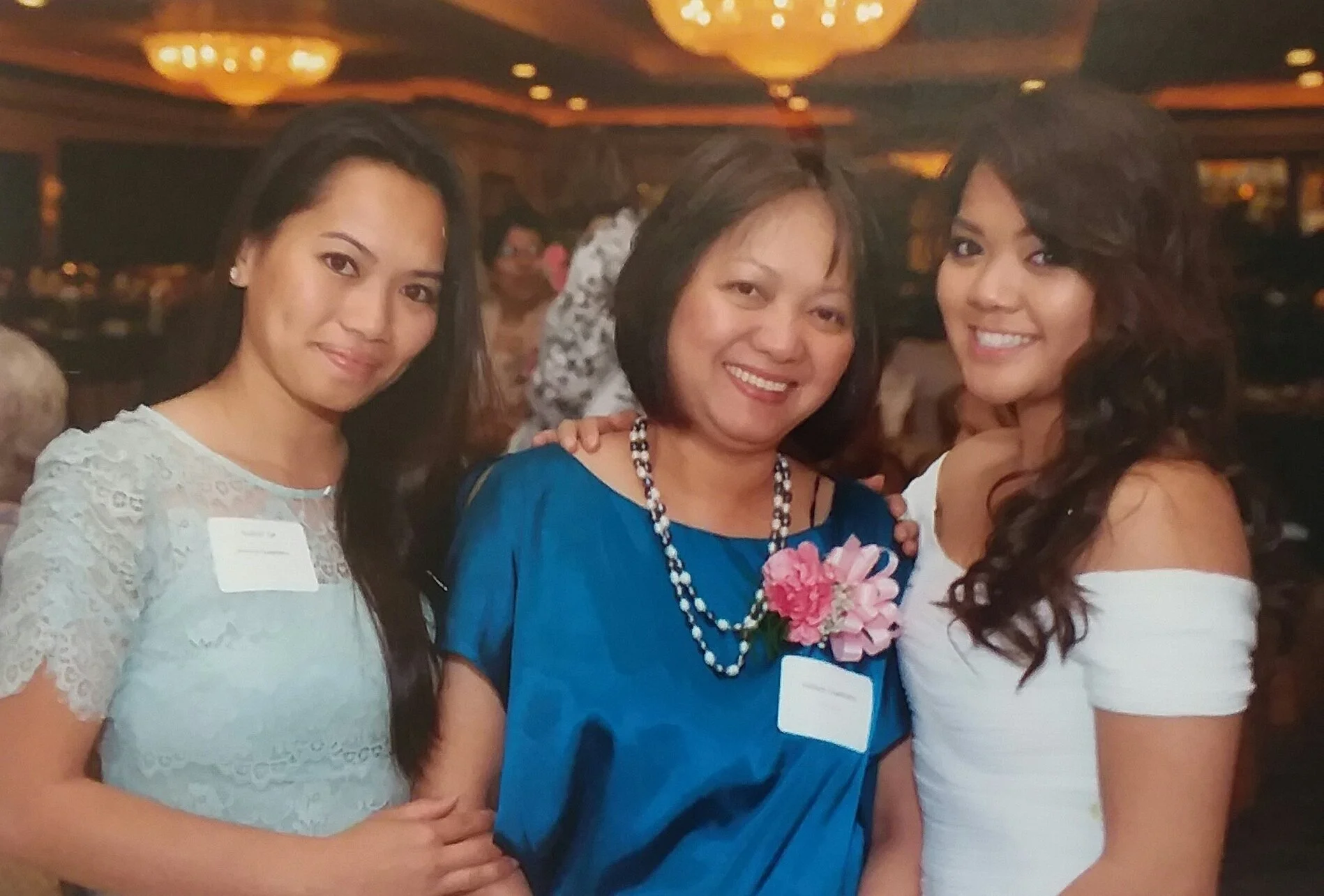
Two generations of nurses. Venus Guerrero (middle) along with her daughters, Sheila and Kaila, who both followed her into the profession.
Reclaiming the "Caring Nurse Stereotype" as Professional Pride
This history has fostered the "caring Filipino nurse" stereotype, a concept caught between policy and practice. Sometimes it surfaces as an easy punchline in Western media — see, for example, this excerpt from a podcast by Theo Von with Jason Momoa.
While the global healthcare system uses this narrative as a commodification tool, the nurses themselves reclaim it as professional pride and cultural identity. As Guerrero noted, "The patients always call to the Filipino nurses because they see us as kind and caring."
This legacy continues through Guerrero's two daughters, who both followed her into the profession.
Rodel Embuscado: A New Generation, New Burdens
Where Guerrero's journey unfolded in the shadow of AIDS, Rodel Embuscado's unfolded amid COVID-19 and shifting ideas about gender, sexuality, and care.
A 1996 graduate of BS Nursing in the Philippines, Rodel worked 11 years in the pharmaceutical industry, supporting his mother and siblings, before realizing he could not afford his "dream home" or "dream car." He moved to the U.S. for financial stability, enduring "survival jobs" as a live-in caregiver.
When the pandemic hit, Embuscado found himself at the epicenter in New York City. As healthcare professionals quit or fell ill, the state called for graduate nurses. Having just recovered from COVID-19 himself, Rodel was deployed to a COVID unit in Brooklyn. Despite the lack of PPE and protocols, he found the work rewarding — but also exposed to discrimination.
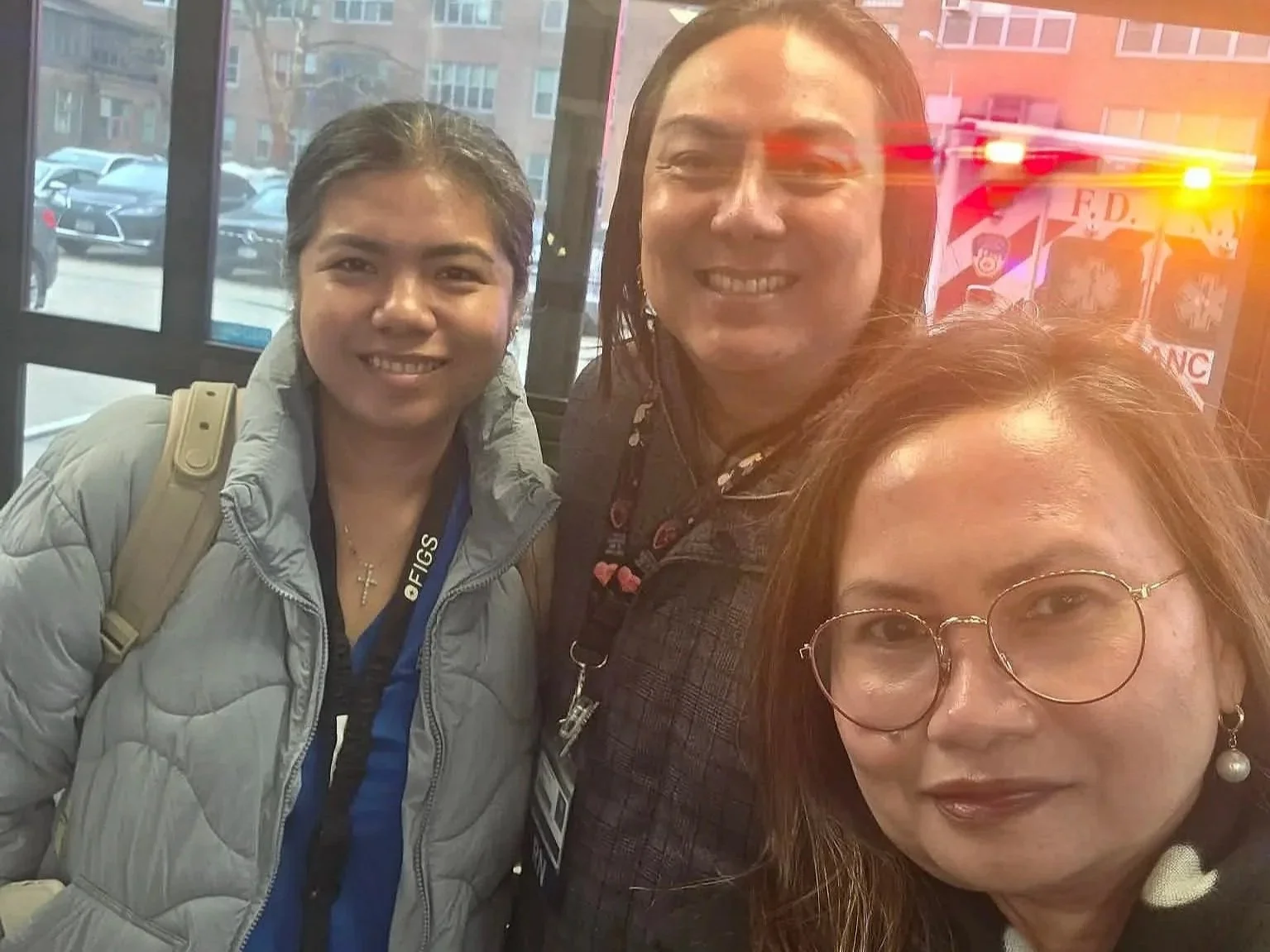
Charge nurse Rodel Emboscado (middle) with Filipino colleagues at the health facility in New York City where they work. Emboscado studied BS Nursing in the Philippines and got his license to practice nursing in the U.S. at the height of the COVID-19 pandemic.
As a gay nurse, Embuscado faced microaggressions and overt bias, including a patient who refused his care and screamed at him. "It really hurt to be discriminated against," he noted, reflecting on how he was sometimes singled out or moved to difficult units without his consent.
Yet, Embuscado finds that the systemic burden is often eclipsed by deep appreciation. He describes the praise for Filipino nurses as "music to our ears," noting that patients will frequently refuse treatment from others just to wait for a Filipino nurse because they said, "the care from Filipinos is different."
Despite his success, Embuscado plans to return to the Philippines to spark a "paradigm shift" in elder care. "I want to teach in nursing school... I'd like to create a paradigm shift in the Philippines that it's okay to put the elderly in a facility. It's much safer," he explained.
Quiet Heroism at the Center
For Guerrero, the second bookend arrived with the COVID-19 pandemic, when her children finally asked her to retire for her safety.
"They said, 'Mom, don't go back there,'" she recalled. She retired at 62, having given her health to a system where nurses often suffer from kidney stones and high blood pressure because they don't even have time for bathroom breaks.
Her final advice to the next generation of "national heroes" echoes the quiet heroism “The Pitt” now celebrates: "You have to be understanding, patient, compassionate, and kind to others. Regardless of the person's color, money, or status, you treat them equally," she said.
*The opinions of contributing writers are their own and do not necessarily represent the views of We Are One Humanity. Submissions offering differing or alternative views are welcome
A multireligious democracy