
Between English and Emptiness
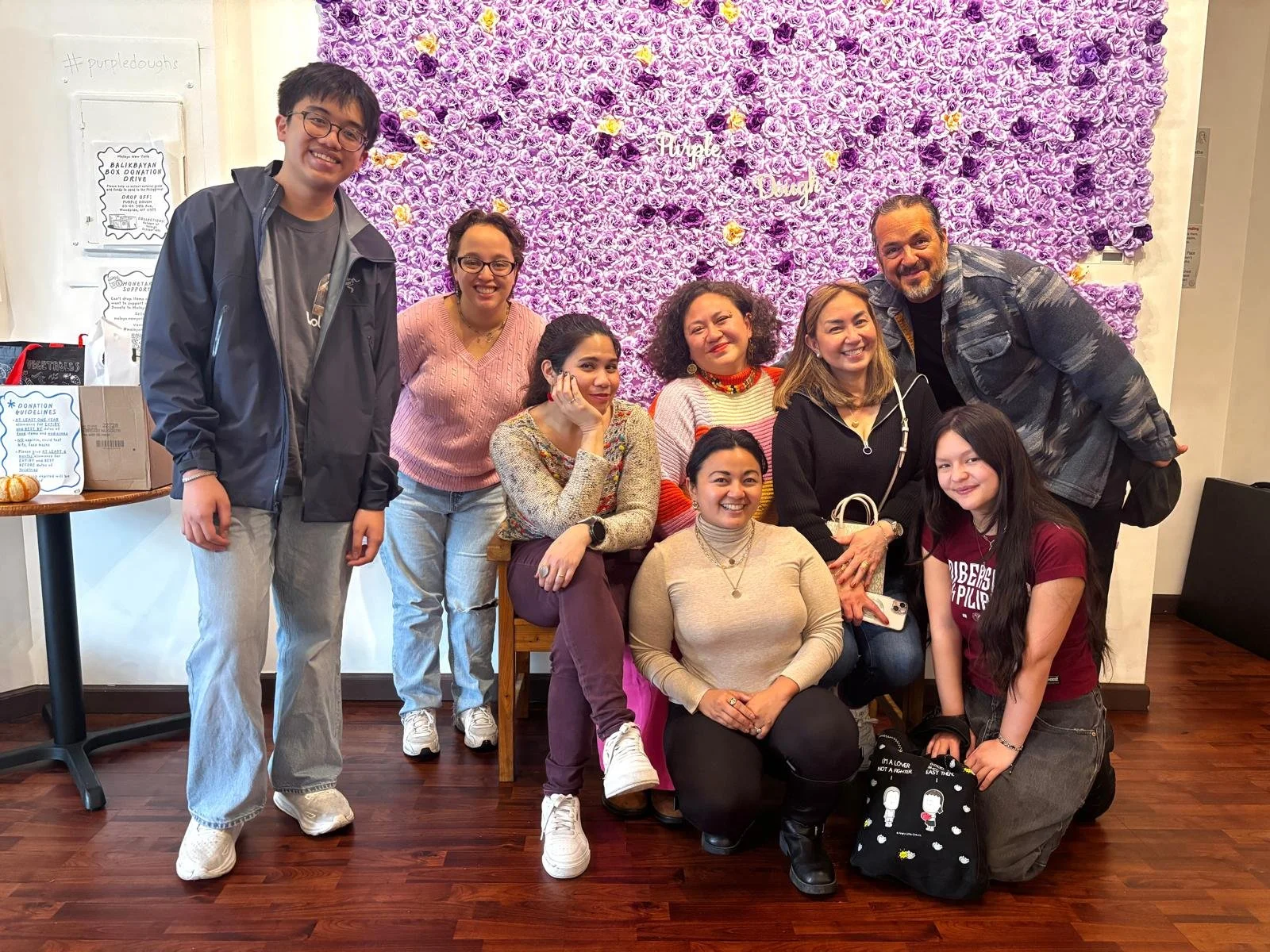
“Across the United States, there has been a noticeable resurgence of interest in Tagalog and other Filipino languages among Filipino American youth. “ (Attribution: Che de los Reyes)
In the Philippines, children learn early that the quickest way to sound smart is to sound less Filipino.
The first words many children learn are in English. From the moment we enter school, we are drilled in English grammar and told that fluency opens doors to good schools, good jobs, and good lives abroad. English is treated as a language of higher status than even Tagalog, the base of the national Filipino language.
A simple glance at Philippine social media exposes this hierarchy: those who mispronounce English or speak it haltingly become comic relief, while those who speak it fluently are instantly seen as intelligent. Worse, children who cannot speak straight Tagalog without slipping into English are often a source of pride for parents, especially when their Tagalog comes with an American twang.
Rooted in colonial history and decades of labor-export policy
But who can blame them? This obsession with English did not appear out of nowhere. It is rooted in a century of colonial history and decades of a single labor-export policy. When this policy began in the 1970s, the selling point for Filipinos to the world was our ability to speak English. Filipino engineers, nurses, seafarers, domestic workers, and caregivers could easily adapt to English-speaking environments.We became highly employable.
The same story repeated a few decades later in the BPO boom of the ‘90s. Call centers, back offices, and IT hubs sprouted in Metro Manila and other cities, drawn not just by low labor costs but by an English-speaking workforce trained to sound “neutral,” “American,” or at least “global.” English had become an export commodity.
For many who left the Philippines in those decades, this logic followed them overseas. Migrant parents raised their children in English so they would blend in, be accepted, and succeed, all to the detriment of the heritage language.
Loss of mother tongue happens much faster among Filipino immigrants
To be sure, this situation has not been exclusive to Filipino migrant families. Across immigrant communities in the U.S., researchers have documented a pattern that by the third generation, most families lose regular use of their heritage language and become firmly English-dominant. Large-scale studies estimate that only about 30% of second-generation migrant adolescents remain fluent in their heritage language.
However, among Filipinos, that loss of heritage language and total shift to English happens at a much faster rate than other immigrant groups, often happening over just one or two generations, because of the premium placed on English over a long colonial history.
A Mississippi State University thesis explored Filipino immigrant families and found that three out of four (76%) second-generation Filipino children in the US spoke only English at home, compared to only 26% of second-generation Chinese immigrant families and 11% Mexican families.
For Filipino Americans, this loss is not simply about vocabulary. The same research concludes that the use of the heritage language is strongly tied to a stable sense of ethnic identity. Mental health studies have found that by the time English becomes dominant, many youths report feeling “not Filipino enough,” embarrassed when they cannot respond in Tagalog to grandparents or relatives, and unsure of their place in both American and Filipino worlds.
The shame of not being “Filipino enough”
New York University Adjunct Professor Amihan Ruiz, who teaches Intermediate Filipino, attests to this. “A lot of Filipino American students have so much shame,” she said. “They’re so ashamed that they’re not speaking Tagalog well enough, they’re not confident enough, they’re not enough.”
Listen to audio feature: Learning Tagalog in Little Manila
Systematic reviews have also linked this language loss to lower self-esteem, higher risks of depression and anxiety, and strained family relationships, especially when young people cannot communicate deeply with elders in the language those elders are most comfortable in.
A lack of language and cultural socialization in childhood, one paper notes, often leads to later struggles for self-definition as young adults try to understand their place in both U.S. and Filipino heritage contexts. Heritage language loss can contribute to feelings of isolation and outsider status, as intergenerational relationships are strained by communication barriers and differing cultural expectations.
Imani Bragg, one of Ruiz’s Filipino American students, said she felt “very out of place in Filipino spaces” while growing up. Taking Tagalog, she explained, was her way of connecting more with her family.
“It shows that I want to get to know them on a deeper level,” she said.
Heritage language supports pride, belonging, and resilience
In the last few years however, something has shifted. Across the United States, there has been a noticeable resurgence of interest in Tagalog and other Filipino languages among Filipino American youth. Universities have begun courses in Filipino or expanded existing ones. Community organizations are launching heritage language programs.
Maintaining Filipino languages has been shown to support pride, belonging, and resilience, tempering the colonial-era inferiority that can turn into self-hatred when young people feel they lack “enough” cultural knowledge.
Indeed, Bragg shared how reclaiming the language that was never taught to her has had such a profound impact on her sense of pride and belonging.
“Whenever I connect with Tagalog or speak Tagalog, it feels like I’m connecting with people that came before me and people that have encountered injustice and oppression,” she said, her voice shaking.
Bragg added: “It feels like I’m honoring them in that way.”
See related video about Amihan Ruiz, who teaches a Filipino language class at New York University that doubles as a space for Filipino American students to explore heritage, shame, and belonging.
*The opinions of contributing writers are their own and do not necessarily represent the views of We Are One Humanity. Submissions offering differing or alternative views are welcome

A Review of Rajmohan Gandhi's James Lawson, Teacher of Satyagraha