
The Journey That Taught Me Freedom
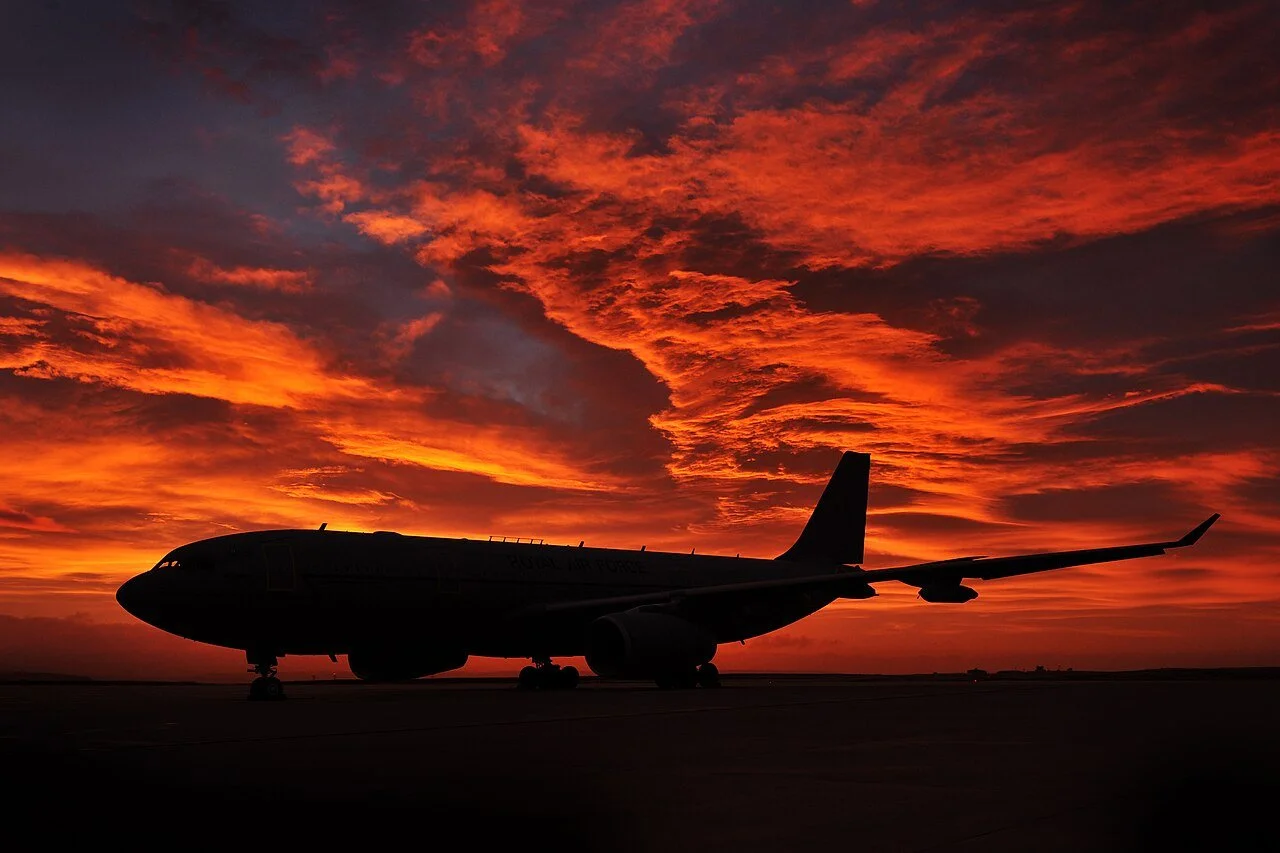
A Royal Air Force (RAF) Voyager KC3 (ZZ337) transport tanker aircraft sits on the flight-line at Mount Pleasant Airfield in the Falkland Islands. (Wikimedia Commons).
“I am not sure that I exist, actually. I am all the writers that I have read, all the people that I have met, all the women that I have loved; all the cities I have visited.”
― Jorge Luis Borges
By and large, I owe my sense of self and my understanding of freedom to travel. Having been fortunate enough to experience firsthand more than 40 countries, I take pride in considering myself a global citizen.
It hurts me to see a world growing ever more isolated.
Classic Playbooks
I come from a typical lower-middle-class Russian family. By “typical,” I mean that no one in my family has ever set foot abroad.
My family is among the roughly 70% of the Russian population — or around 100 million people — who have never crossed the country’s borders, according to 2022 data. This predates the full-scale invasion of Ukraine and the resulting travel restrictions.
Effectively, this means that two out of every three Russians perceive the world largely as the state media paints it — hostile and unwelcoming. While younger people have a chance to get a clearer perspective online, the older demographic almost never does.
The deliberate narrowing of a population’s worldview is, of course, not unique to Russia. Familiar patterns are now emerging in the United States, as Donald Trump swiftly steers the country toward isolation.
Through cutting ties with former allies, willfully damaging the nation’s global image, and weakening the dollar, this isolation course affects how freely Americans move through the world.
At the same time, as foreigners become less visible, it becomes easier for the state to paint them as “aliens” — as the “other.” And no authoritarian regime welcomes international scrutiny.
The logic is time-proven: the more isolated a nation, the easier it is to control. That control depends on an essential closed loop that breaks when foreigners and traveling citizens bring in global perspectives and best practices, nurturing the awareness that empowers people to defend their rights.
How it Started
To this day, I remember the thrill of setting off on my first journey abroad. In 2009, I spent three summer months crossing Wisconsin with a traveling carnival. That adventure opened my eyes to a world far beyond my homeland.
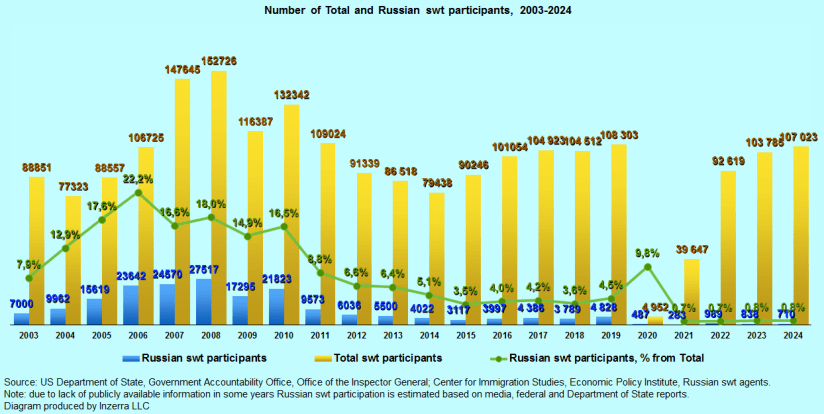
In the late 2000s, Russian students made up around 20% of all participants in the Department of State’s Summer Work and Travel program. In 2008 alone, more than 27,000 Russians traveled to the U.S. to participate in the program.
Today, what was once a wide-open door has been essentially shut. Only 710 Russian students — just 0.7% of the total 107,023 students from around the world — were able to participate in the program in 2024.
This decline was a decade in the making, fueled by gradual and mutual consulate closures. The breaking point arrived in May 2021, when Moscow designated the U.S. as an "unfriendly" country. The resulting ban on local embassy staff forced a total suspension of routine visa processing; for Russian students, the chance to secure a visa at home simply vanished.
Most outbound roads have been closed. Recent news continues to show how the Kremlin is building barriers from the inside — making it harder for anyone to look beyond the state’s walls:
The state is slashing English-language classes in Russian schools.
Public shopfronts are being stripped of Latin script to mandate Cyrillic-only spaces.
Citizens face heavy fines for even mentioning IELTS, since the British Council was declared an “undesirable organization.”
Major messaging apps like WhatsApp and Telegram have been essentially blocked.
Targeted mobile Internet service disruptions have become a daily occurrence, even in Moscow.
Electronic draft notices make it possible to block more men from leaving Russia
Under the European Union’s new migration strategy, it is now considered inadvisable for EU states to issue visas to Russian citizens.
And even if access to the outside world hasn’t been cut entirely, what remains is now accessible only to a narrow elite.
It’s the People We Meet
In 2022, I left Russia, in part, because I couldn't imagine being trapped inside. I wanted to keep exploring and seeing what was out there — and not just the sights, but the human side of the world beyond.
Because in the end, it’s not mere physical locations, however significant, that make travel so enriching; it’s the people you meet, and the human connections you make.
In my case, I have all these people to thank for making my journey meaningful:
Sebastian from Uruguay, Sofia from Lithuania, and Mikko from Finland;
Adam from Slovakia, Dayron from Cuba, and Dmytro from Ukraine;
Achraf from Algeria and Rishat from Latvia (may he rest in peace);
Greta and Erion from Albania, Sufyan and Mohammed from Morocco..
Your openness knows no borders. This is for you.
This is also for Ksenia and Gabriella, for Elena and Alejandro, for all the caring people helping me find my footing in the States — I owe so much of this journey to all of you.
This is also for my Russian friends who had to start over in Spain and Canada, Montenegro and Poland, Argentina and France. And for those back home who are still finding ways to experience life beyond.
And to you, dear reader, may you have the opportunity to explore the diversity of our world and meet your people.
We all need to grow closer, not apart.
*The opinions of contributing writers are their own and do not necessarily represent the views of We Are One Humanity. Submissions offering differing or alternative views are welcome

A Review of Rajmohan Gandhi's James Lawson, Teacher of Satyagraha