
Personal and Political Fear
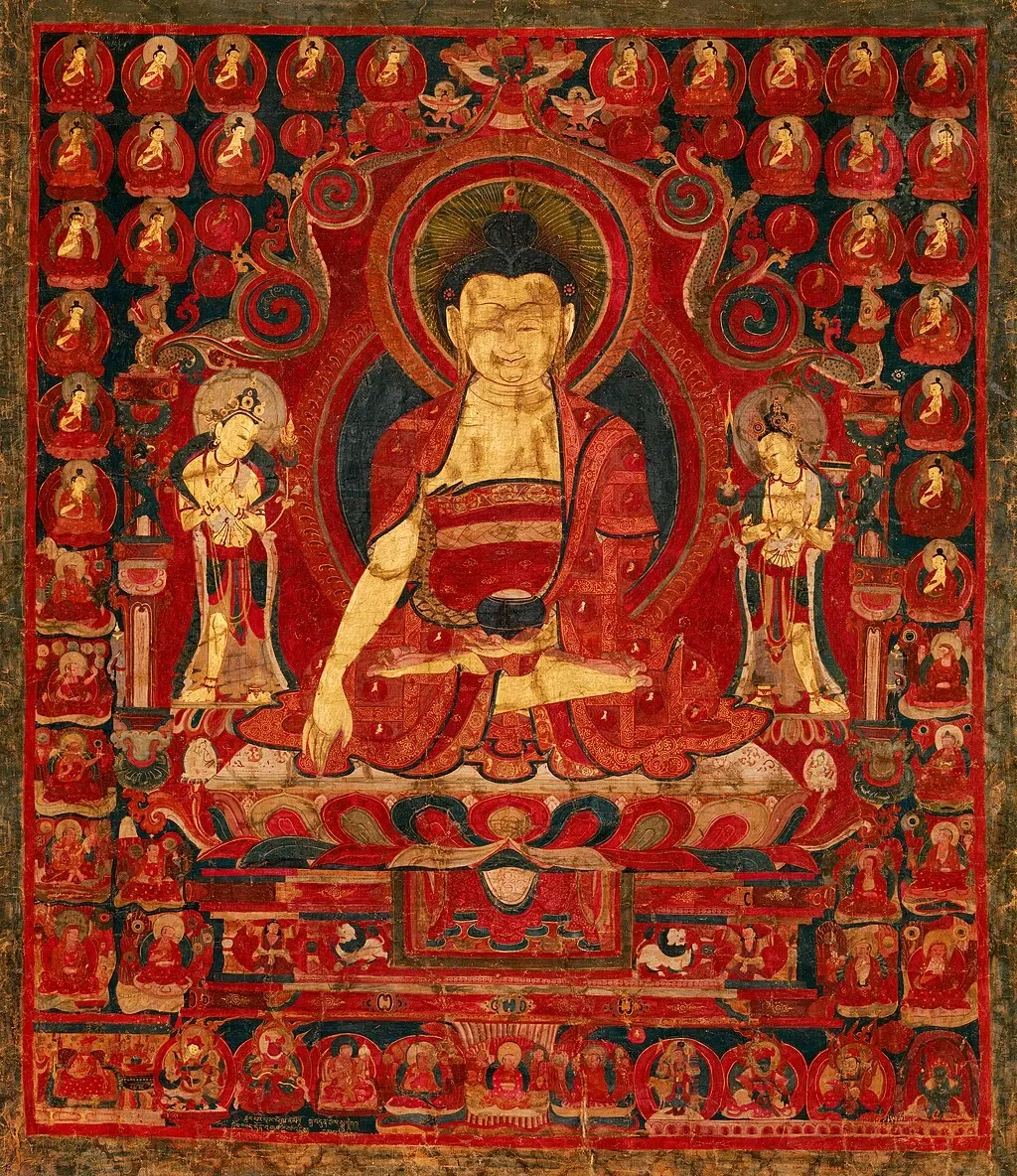
17th century painting of the Buddha with Bodhisatvas in background (Wikimedia Commons)
Our information landscape is filled with strong opinions, strongly held. Have you noticed? Over the holidays I considered my place in the landscape and decided on this—fewer essays, more letters.
Why a letter over an essay? Well, an essay is, fundamentally, an argument and arguments are one-way offenses. What I write here is not on offense or defense. I write well-researched inquiries full of feeling. I write to you with curiosity, wonder, and gratitude for the world in which we live, in the hopes that the same world becomes the subject of your own amazement.
Now onto the meat of the matter.
In 2026 I will wade into battle. I will attempt to deliver and recover from labor. I will raise a baby while writing bi-weekly letters on human rights. I will attempt to neither neglect her for me, nor I for her.
Finding Peace in Battle
Despite my efforts at optimism, throughout my pregnancy I have been asked “are you scared to give birth?” and “are you nervous about becoming a parent?” The culture has shifted to where courageous women feel comfortable sharing their negative experiences with pregnancy and postpartum. “All the good hormones go away, leaving you depleted”, they have told me. The message is clear—modern pregnancy, postpartum, and working-motherhood will break you.
I understand what they mean. I have feared for my unborn baby, my sanity, and that I am not strong enough to recover physically. Before pregnancy I was one upright pillar in a marriage that requires two, but what if this pillar crumbles? Then what?
I have heard from other mothers that much of the “modern village” is missing-in-action and there is a guilt one feels for wanting more than others are willing to give. As someone raised in a collectivist immigrant community, this particular iceberg chilled me to the bone.
Lastly, there are the hopes and dreams we have for ourselves outside of motherhood—an artistic pursuit or places in the world we want to see. Our husbands, fathers, and brothers cannot relate to our condition and neither can the women who love us but have not experienced this particular aspect of human life.
Despite it all, I have challenged myself with weaving the hardship of the last trimester, childbirth, and postpartum into the most peaceful time of my life. Here is what I have in mind.
What do we mean by peace? Can there be peace amid the chaos of hormonal changes, late night feeds, diaper changes, and toddler tears? Can peace coexist with new responsibilities? Is it foolish to expect peace when walking into battle?
This is where my inner life comes in.
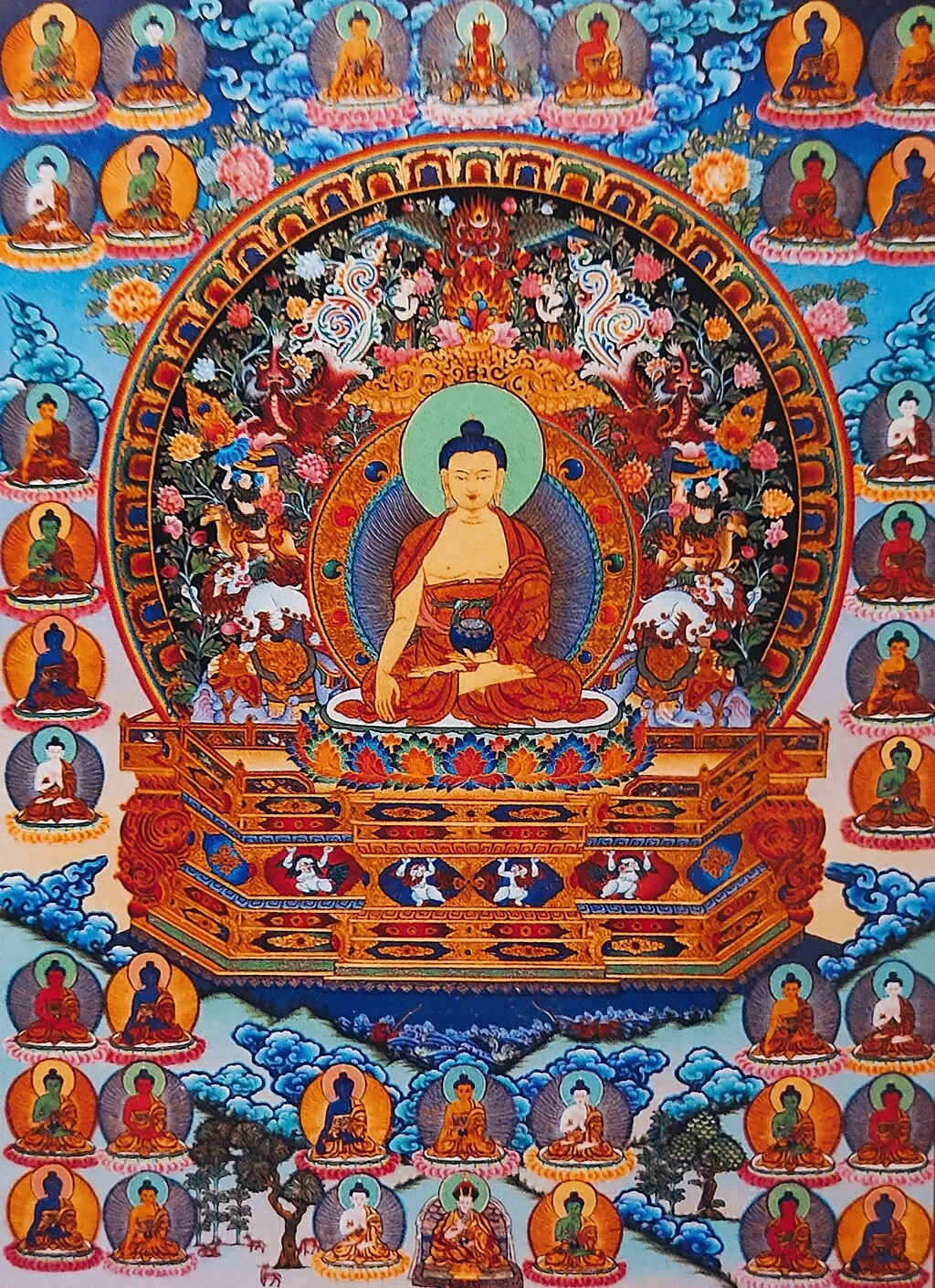
Many depictions of the Buddha (Wikimedia Commons)
My inner life is, of course, the world that lives inside my mind. It is where my emotions, thoughts, conversations, imagination, memory, and stories reside. It has not always been the picture of peace it is today. Fear and anxiety have, instead, clouded the world inside me.
Let me begin with childhood. There were moments of peace in our household, but our household was mostly like the sea. Some days calm, some days stormy, and some days a pure delight. I feared the wrath and disappointment of my strict Indian parents. I disclose this not for your pity, but to illuminate that I know what fear is and I know what fear does. Where there is fear, there can be no peace. One of the worst side effects of fear is it causes us to flee from our inner life. My teenage years were muddled with doubt and confusion. I wanted to be someone my parents approved of but also, who was I really? What were my likes and dislikes? And why was I here? I did not have answers to these questions when I began college and college itself added fear. The stress of the Stanford environment managed to combust what were identifiable fears into nameless, all-pervasive anxiety. Again I was left with no answers to the meaning of my own existence. As a Stanford alumni I was tasked with “saving the world” and yet my inner world desperately needed resurrection.
My 20s had little peace. Peace requires sleep, for starters, and my unhealthy habits collided with the very reasonable fears of a politically conscious young person. I feared what global warming would do to our planet, being trapped in a capitalist system and surveillance state, alienation from community and self, World War III, and mass shootings. I was so afraid of these possibilities that I could not watch shows like Black Mirror lest they completely unravel the bit of fight in me.
Then there were personal fears. Fear of rejection, heartbreak, worthlessness, and pain. While I could name these individual fears, I could not name their sum. It was a sleepless monster for which I was no match. As anyone who has experienced anxiety knows, at some point you simply become afraid of the anxiety itself and every moment you are awake is a moment it could strike. Such were my woes.
Around the age of 27 the tide began to change. I soothed my nervous system, journaled, began to understand my thought patterns and destructive habits, developed stress management practices, and bit-by-bit crawled out from the pit of fear and anxiety into the light of day. As I focused on fortifying my peace of mind and mental resilience, I became more capable of facing sizable political questions. I did not need to flee from them. I learned ways to untangle them and, in doing so, I learned more about myself.
Fear and Anxiety
In his essay “Flight, An existential conception of Buddhism”, Scottish Buddhist author Stephen Batchelor writes that fear and anxiety are different.
“Fear always has a particular entity in the world as its object. The sensation of fear can be eliminated either through removing oneself from the object (flight), or through disposing of the object itself (fight)… Anxiety, on the other hand, never has a particular entity in the world as its object. In this sense it is said to be ’objectless.’ The sensation of anxiety occurs as a disclosure of the fact that we exist at all. It emerges when we glimpse our life standing out of nothingness, hovering precariously between birth and death.”
Batchelor reminds us that the Buddha too was overwhelmed by existence. However, “instead of evading the underlying realities of human existence… he courageously faced these realities and absorbed himself in untangling their mystery.”
When I stopped fleeing my personal and political anxieties and, instead, began to examine them with curiosity and self-compassion I became less afraid of what I was discovering. I liked who I found and honed in on her interests, strengths, and desires. I began to see where she fit in, in the broader struggle for justice.
Now at 31, married and pregnant, peace is a daily practice. Where I used to rush and run, I amble. I used to gulp, now I chew small meals, slowly. My mornings once resembled the start of a race and now I rise without an alarm at all. I am relieved and fortified by the slowness of body, mind, and time. In an ironic turn of events, when weighed with more responsibilities than ever before, I am at peace with life. When weighed down by dozens of new pounds and throbbing headaches, I am at peace. My heart is working harder to pump blood and my uterus is pushing on my diaphragm which leads to shortness of breath and yet, peace. They tell you that peace is a feeling of lightness and looseness. Well, my body is heavier and tighter than ever and yet—somehow—like rays of sun spilling into a room through a window, peace has found me.
I was nervous about declaring peace with the last trimester and postpartum. It is my wish, yes, but to say a wish out loud is to spoil its magic. A wish should be kept a secret, should it not? And yet, I made my wish the theme of this letter, for you to see. So, consider this the opposite of secretive magic. It is the magic of sharing.
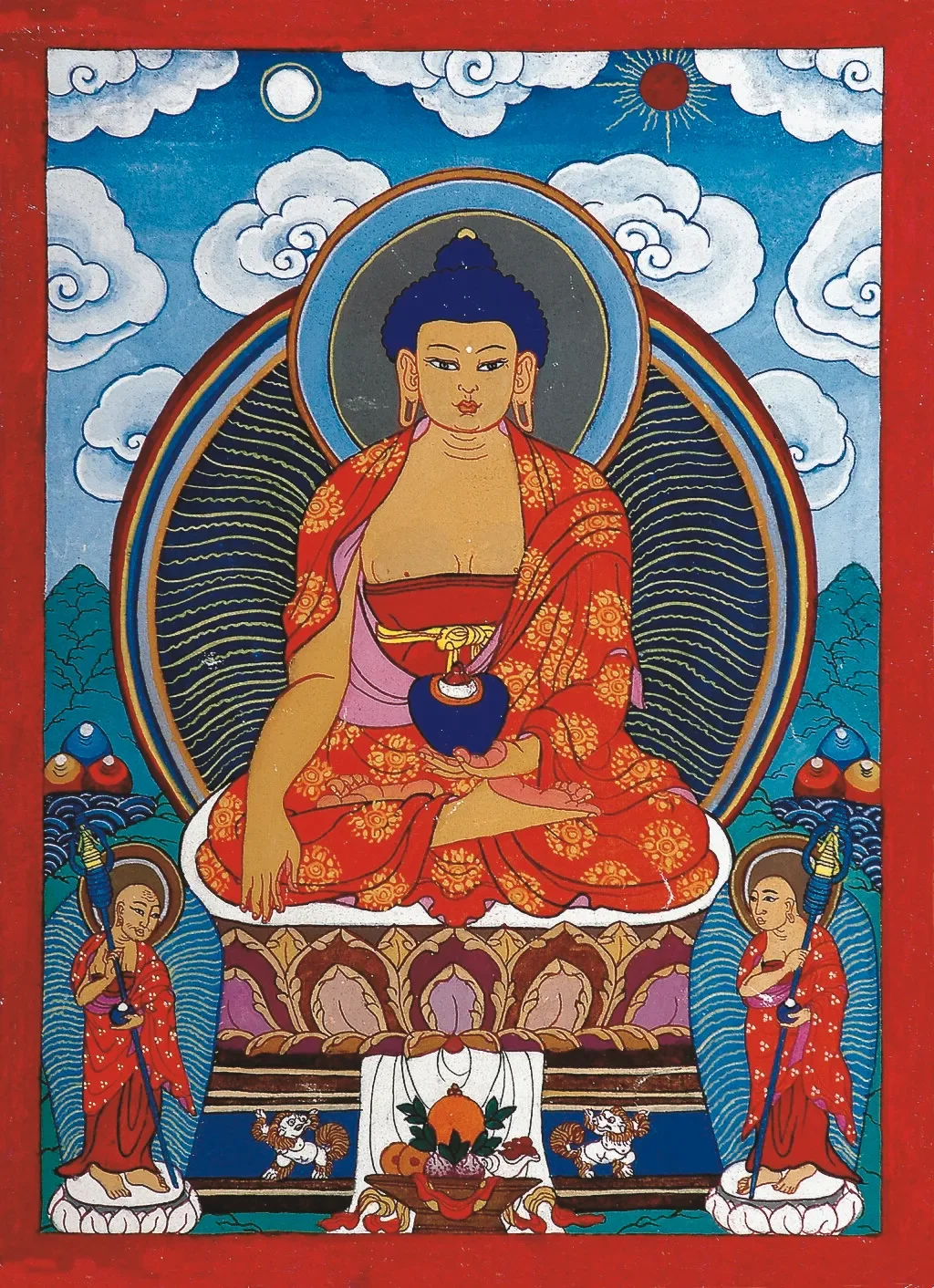
Illustration of the Buddha (Wikimedia Commons)
In a previous post, I had written about how pregnancy is a spiritual experience and a site of rich philosophical inquiry. In relation to Buddhism I yet again find myself baffled by how excluded women have been from the annals of theological and philosophical history. The Buddha was, ultimately, a man who had the freedom to abandon society to seek enlightenment. As a woman carrying life there is no longer an option where I can isolate myself to seek enlightenment. Instead, I must seek enlightenment amid motherhood. As I asked earlier, is it foolish to expect peace when walking into battle? Or is the heart of battle exactly where peace can bloom?
To use the language of Buddhism and Hinduism, there is a new Dharma for me to follow. The Dharma of a mother. I am tasked with seeking enlightenment not as an individual disconnected from others, but as a person inextricably linked to others. This would be the Sangha—or community—in which I exist.
Bachelor writes that “in order to actually resolve the problem of anxiety and overcome the tendency to flight, it is necessary to put the Dharma into practice… It is a process that affects the whole of one’s life: behavior, thinking and awareness. It involves a discipline composed not only of meditation, but also of a new social awareness and ethical conduct.”
It took me 27 years to stop fleeing from myself. It took me 27 years to sit and examine, with discipline and integrity, my personal and political fears. As my sense of self clarified so did my values and thus my politics. I walked into the battlefield to find peace at 27, and I am doing it again at 31. My last trimester has been peaceful. I expect my labor, delivery, and postpartum will also be. Just as there is great meaning in committing oneself to one’s political values, there is great meaning in following one’s Dharma—or duty—to others. On the other side of my duty to my daughter is peace.
*This article is being reproduced with permission. See the original article on Substack.
More stories from We Are One Humanity

Listening to many roots in a restless, unfinished democracy