
Lessons from a Harsh Delhi Winter
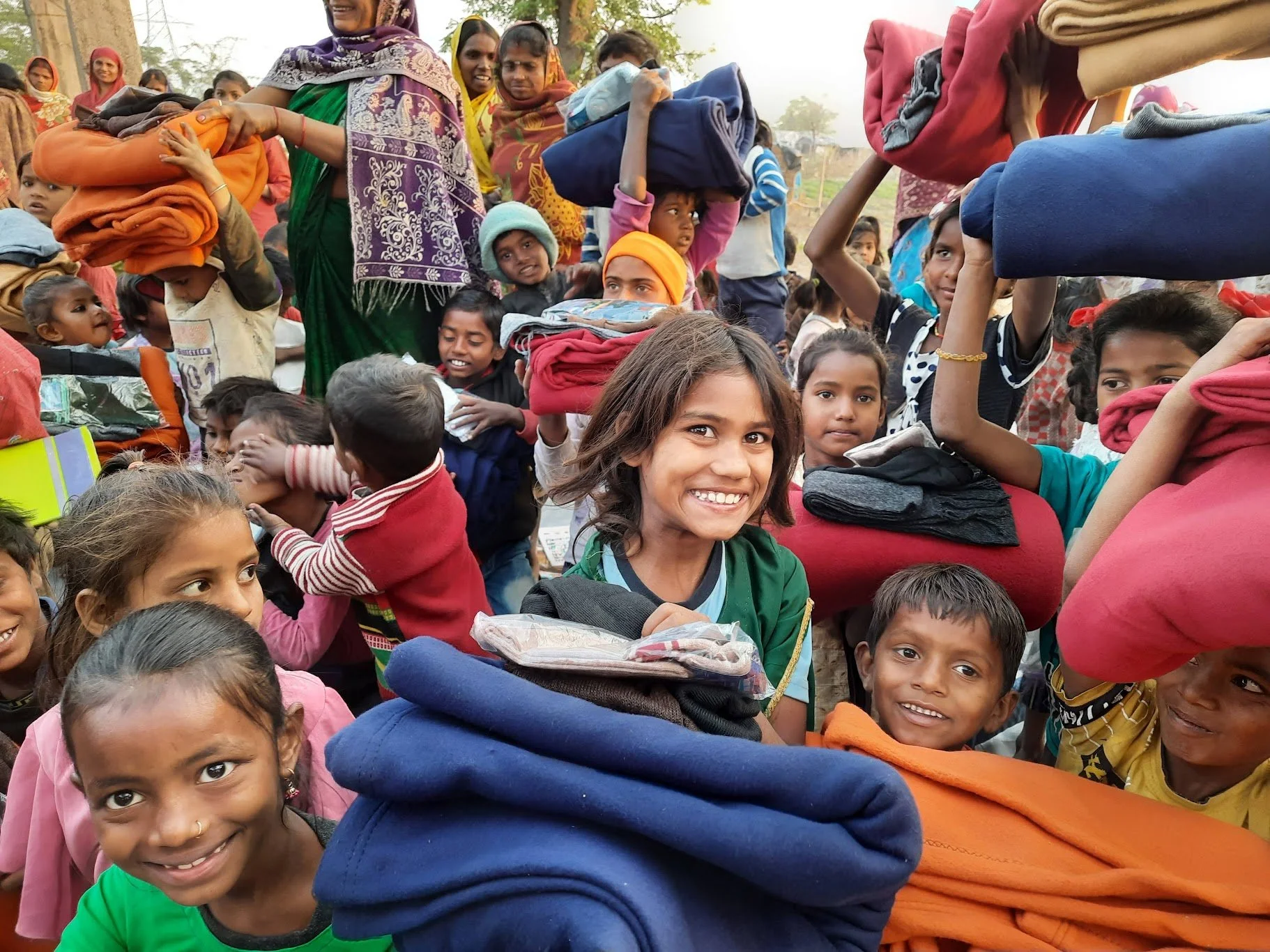
Delhi winters are brutal for those with little or no shelter. Slum dwellers, street vendors, rickshaw pullers, beggars, and people living on the streets bear the worst of it—especially their children, whose malnourished bodies are particularly ill-equipped to endure the cold.
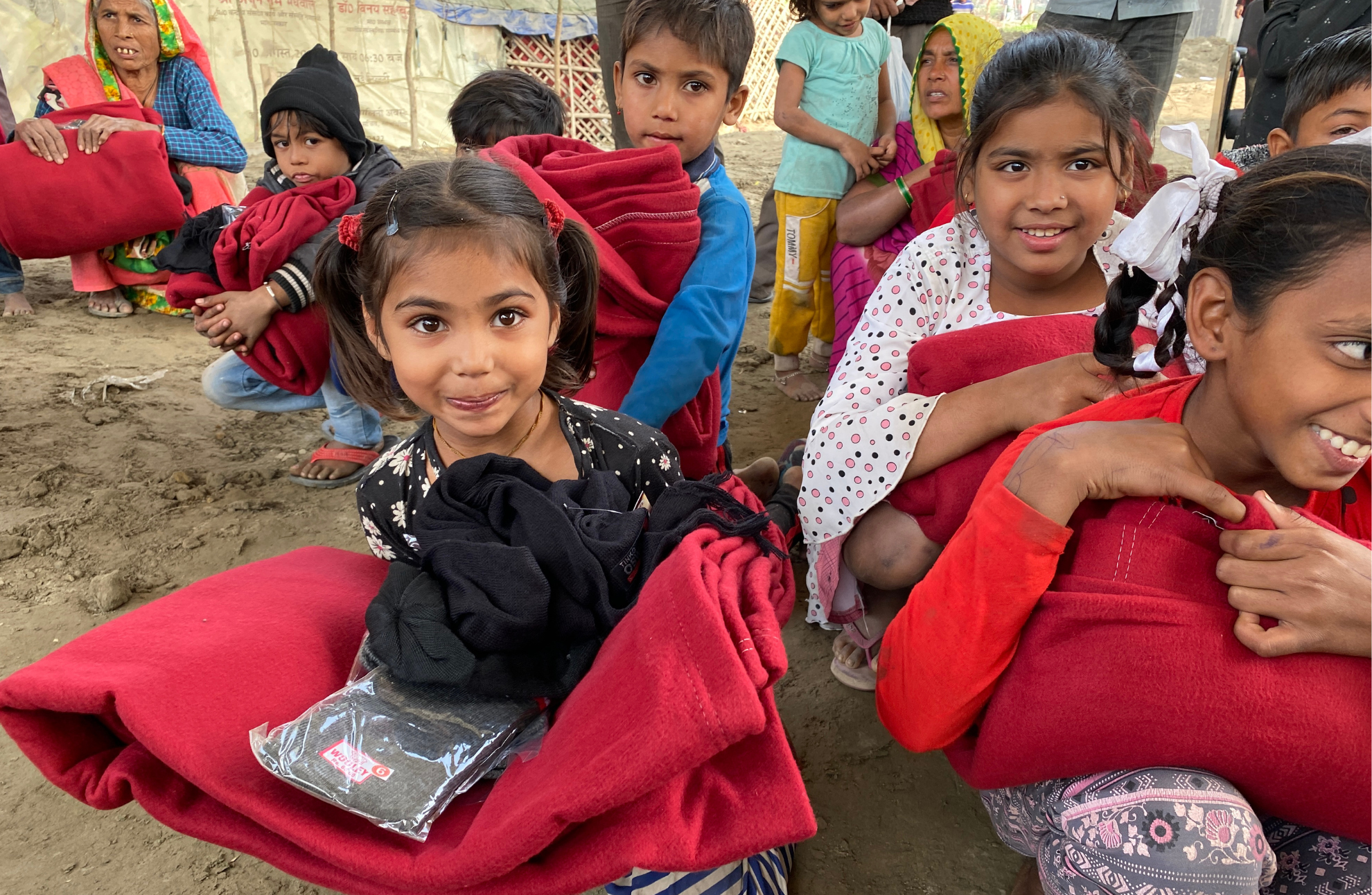
A few years ago, a group of friends—none of us particularly good at enduring winter—decided to turn our discomfort into a small act of solidarity. We started a winter project to raise funds, buy blankets, caps, mufflers, and socks at wholesale rates, and distribute them as winter kits to those who needed them most.
The project struck a chord with many generous, concerned donors, and what began as a small effort now reaches a couple of thousand people each year.
This project has taught me lessons I didn’t expect, and given me unexpected insights that have stayed with me long after the winters have passed:
1. The poor are generous.
My friends and I try to carry winter packs whenever we are out and about, because, sadly, there is never a shortage of people who need them. Almost every time I stop at a traffic light and hand a kit to someone asking for alms, something happens that never ceases to amaze me. That person will call out to others nearby—fellow beggars, families huddled on the pavement—urging them to come and receive one too. If someone is standing a little distance away, they will ask for an extra kit, not for themselves, but to take it to them. And they do.
In a world that has given them so little, their instinct is still to share. Scarcity has not stripped them of generosity; if anything, it seems to have deepened it.
2. The poor are honest.
Contrary to stereotypes, most poor people I have met are scrupulously fair. If they already have a cap, they will politely refuse another. If they have a muffler but no socks, they will say so plainly. There is no grabbing, no hoarding, no sense of “take it now, just in case.”
Even when the cold is biting and survival is uncertain, there is dignity in their choices. They take what they need—and no more. I can’t say the same for many others who have much more.
3. The poor are grateful.
The first response to a winter pack is often disbelief, sometimes even suspicion. They look at the bundle, then at us, as if waiting for the catch. It takes a few seconds for the realization to sink in: this is really for them, freely given, no questions asked.
And then something changes. Faces soften. Eyes light up. The smiles brighten the grey of the Delhi winter.
Poverty and Virtue
Just to be clear, this is not an attempt to romanticise poverty. There is nothing romantic about life on the streets. But there is something profoundly moving about witnessing humanity endure—and shine—under the harshest conditions.
I have seen time and again that poverty does not erase virtue. Generosity, honesty, and gratitude have not disappeared amongst people who have no comfort or security. If anything, these virtues so often missing in the middle class and above, somehow manage to survive among those who have the least, and yet give the most.
It is depressing to confront stark poverty and desperation in a country that, by official accounts, is supposedly living through an era of unprecedented growth and prosperity, an amrit kaal, as it is often called, but in the words of Ralph Waldo Emerson, “… in the mud and scum of things, there is always, always something that sings.”
One final lesson: We never quite know what awaits once we step outside the comfort of our flat, house, or gated community. On the coldest days, I sometimes hesitate to carry the winter packs with me. Because, well, it’s just a hassle to count them, pack them, and get them ready for distribution. And yet, not once have I regretted doing so.
A Man Who Walked With Gandhi
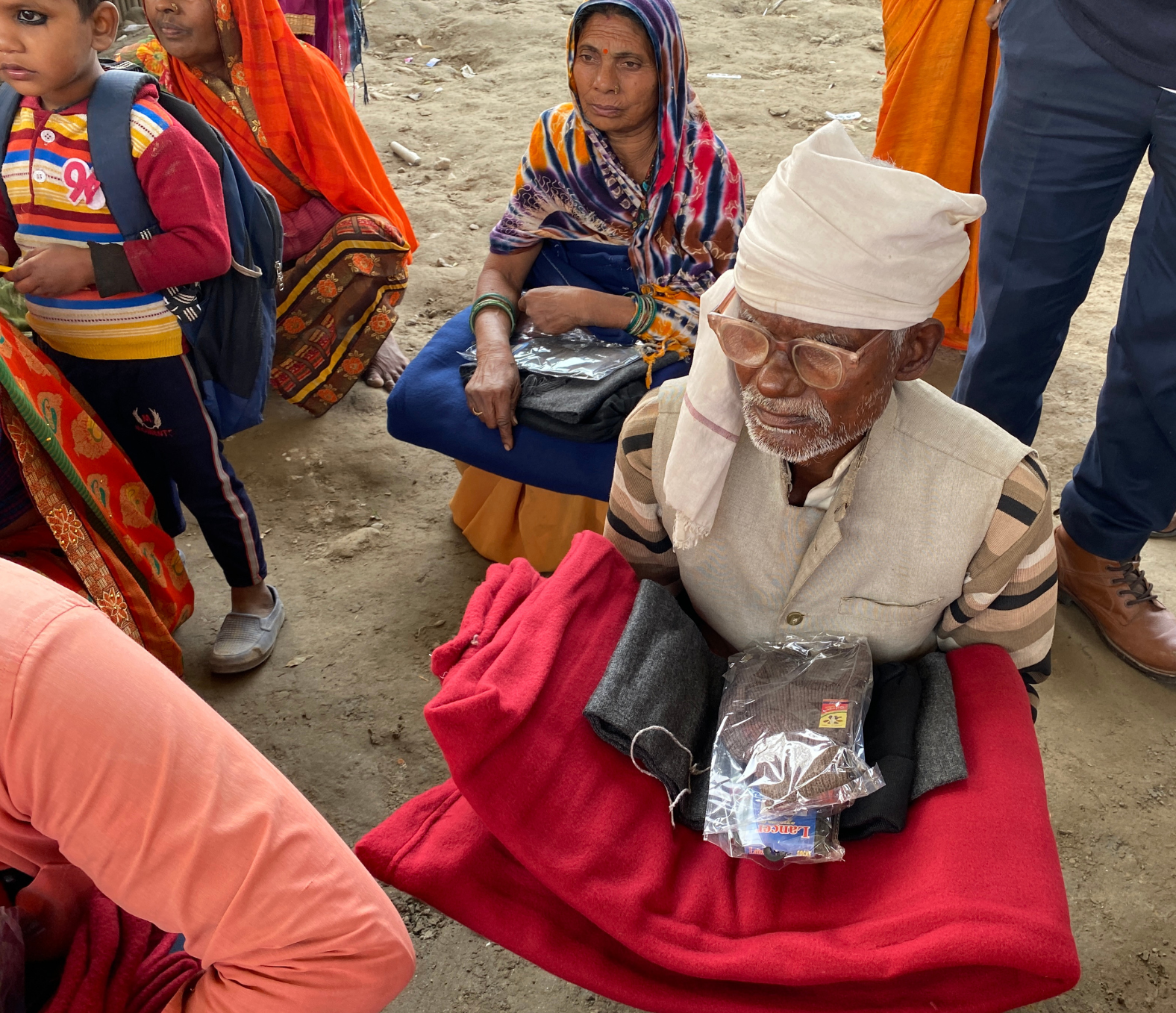
A few days ago, while driving past a posh neighbourhood in central Delhi, a friend and I spotted an elderly man carrying the Indian tricolour. We stopped to speak to him, and offered him a winter kit, curious about who he was and what he was doing. He told us his name was Karuna Prasad Mishra, and he introduced himself with pride as a ”Bharat Yatri”. He is 92 years old. He said he had walked with Mahatma Gandhi when he was just 13—and that he has been walking ever since.
He walks, he said, because he dreams of an India that is secular and grounded in the values of satya and ahimsa, and where the government’s focus is on education, employment, and justice, and not on communal polarisation and crony capitalism. He said he does not know what will ultimately happen to the country he loves, but he will keep walking as long as his body allows him to.
I, for one, am very glad I had winter kits in the car that day. Some realities, it seems, can only be understood on the street.
More stories from We Are One Humanity

Male dominance has become the driver of power and politics