


Six days a week, I communicate about the sea as the senior strategic communications officer of the Philippine Coast Guard.
Every Sunday, I head for the mountains.
I started exploring Philippine trails in 2017 as a way of grounding myself amid the intense pressure of my work as a journalist and anchor of People’s Television, Network, the Philippines’ state-owned television network at the time. I still remember my early years as a mountaineer, counting and documenting all the summits I had conquered. My ultimate goal was to climb the highest peak in the Philippines, Mount Apo, in Mindanao, southern Philippines. After nine years, I finally reached its peak with my husband.
The Dumagat of the Sierra Madre
In 2018, my husband and I got acquainted with several hiker-missionaries belonging to a group called Team Blessed. We joined one of their faith-based “immersion” activities in an Indigenous tribe called the Dumagat, in Sitio Inuman or sub-village, in Bulacan, a province north of Manila.
The Dumagat are among the Indigenous peoples of the Philippines, with communities living across Sierra Madre, the country's longest mountain range. A 2014 ancestral domain application document recorded 52 households and 263 residents in Sitio Inuman. Their livelihood depended on traditional hunting and gathering forest resources.
Earl Querol, our immersion leader, began serving the Dumagat in 2014. Querol is a missionary, and sharing his faith is part of his work. He said that the Dumagat recognizes a supreme being they call Makedepat, came first, and that the projects he takes on are ones the elders ask for. He has been working with the community to improve their living conditions, specifically, in planting rice and various vegetables, in installing agricultural hoses from the nearest waterfalls to direct water into the village’s irrigation system and into the houses for drinking.
At 5 a.m., we met up at Luvers Market, Barangay San Rafael in Rodriguez, Rizal, a province east of Manila. From there, we rode a habal-habal (motorcycle taxi) for an hour to the jump-off point. We then started our nine-hour trek and arrived at the village of the Dumagat at 3 p.m.
We unpacked our supplies at the residence of one of the village heads, Rolly Aviando, and joined the village elders who were cooking rice and noodles with sardines for the village’s communal dinner.
As we all gathered to eat outdoors, I noticed that every member of the tribe would take only enough food to ensure everyone would have something to eat. The way they considered each other’s needs alongside their own reminded me of what makes a family strong and close-knit. After dinner, we spoke with the children until 7 p.m. They shared that they wanted to become teachers and doctors so that they could serve their tribe.
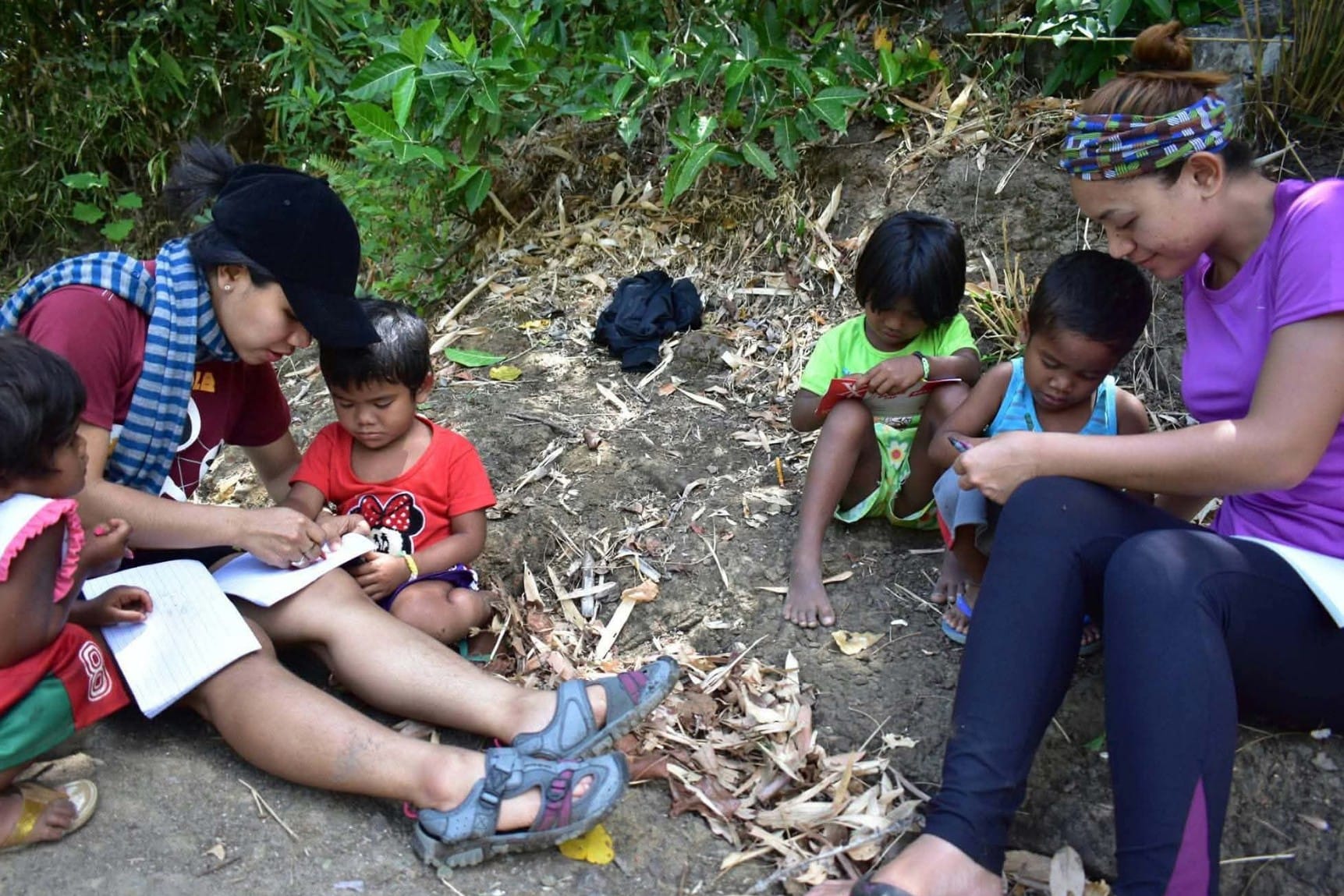
The following morning, members of Team Blessed taught the Dumagat children some basic lessons of writing and drawing, with lessons on respect and kindness. I taught children’s ministry in our local church from 2016 to 2018, and have enjoyed working with children since. Doing the same activities with Dumagat children was such a rewarding experience. The entire Team Blessed then went swimming in a nearby river and shared lunch of rice and canned sardines before beginning our journey home.
Since that engagement, my husband and I have remained with the Dumagat community through Querol, who continues to work with them with the support of people who believe in his mission, including Team Blessed.
From 2019 to 2025, my husband and I, together with other supporters, donated money for three boats that Dumagat students now use to travel to school, as Sitio Inuman is surrounded by waterfalls and rivers. The elders also use these boats to transport ill family members for medical treatment. Other donors gave funds for the construction of a backyard vegetable garden that now feeds 35 households, as well as communal toilets that are now being used by more than 25 families.
Supporting the Student-Athletes of Wawa
My husband and I started trail running after the global pandemic. What we thought was a one-time experience became a commitment that keeps us physically active and connects us with a local community that slowly became our second home. We always look forward to our early-morning breakfasts with fellow runners every Sunday and catch up about upcoming races.
Whenever we run, we start at Sitio Wawa, a small village in Barangay San Rafael located on the mountainside of Rizal. We often encounter student-athletes from the village training along our regular Sunday trails. These students would also join local trail-running events as they regularly receive their race kits for free from race directors Mark Brian “Heya” Manalo and Albin Moka, as their personal commitments to supporting the student-athletes.
We saw their potential during sporting events, although limited resources prevented them from taking full advantage of training sessions and school competitions — opportunities that teach the youth how to manage their emotions, in times of victories and losses, as well as develop athletic integrity and team spirit.
Recognizing the student-athletes’ capabilities and the benefits of youth engagement in competitive sports, my husband and I began supporting the running and basketball teams of Wawa National High School since last year. We gave them athletic shoes. I still remember the smiles on their faces the first time they put on their new shoes. Their old ones were already worn because of the intense training sessions.
Earlier this year, Barbie Jaromay, one of the student-athletes we supported, won a silver medal in the 10,000-meter run and a bronze medal in the 4x400-meter relay during the 2026 Palarong Pambansa, the Philippines' biggest national sports competition for young Filipinos. It was her second time winning at the competition, having won silver in the 800-meter run the year prior.
Barbie Jaromay is the second student-athlete from Barangay San Rafael who achieved this milestone. Her older sister, Jessa Mae Jaromay, was the first local from the community to win at the national sports competition when she won gold in the 1,500-meter run in 2013.
In preparation for the 2026 municipal meet, which leads up to the national event, we purchased 30 pairs of brand-new athletic shoes for the student-athletes. The coaches decided to have a small ceremony to mark the handover.
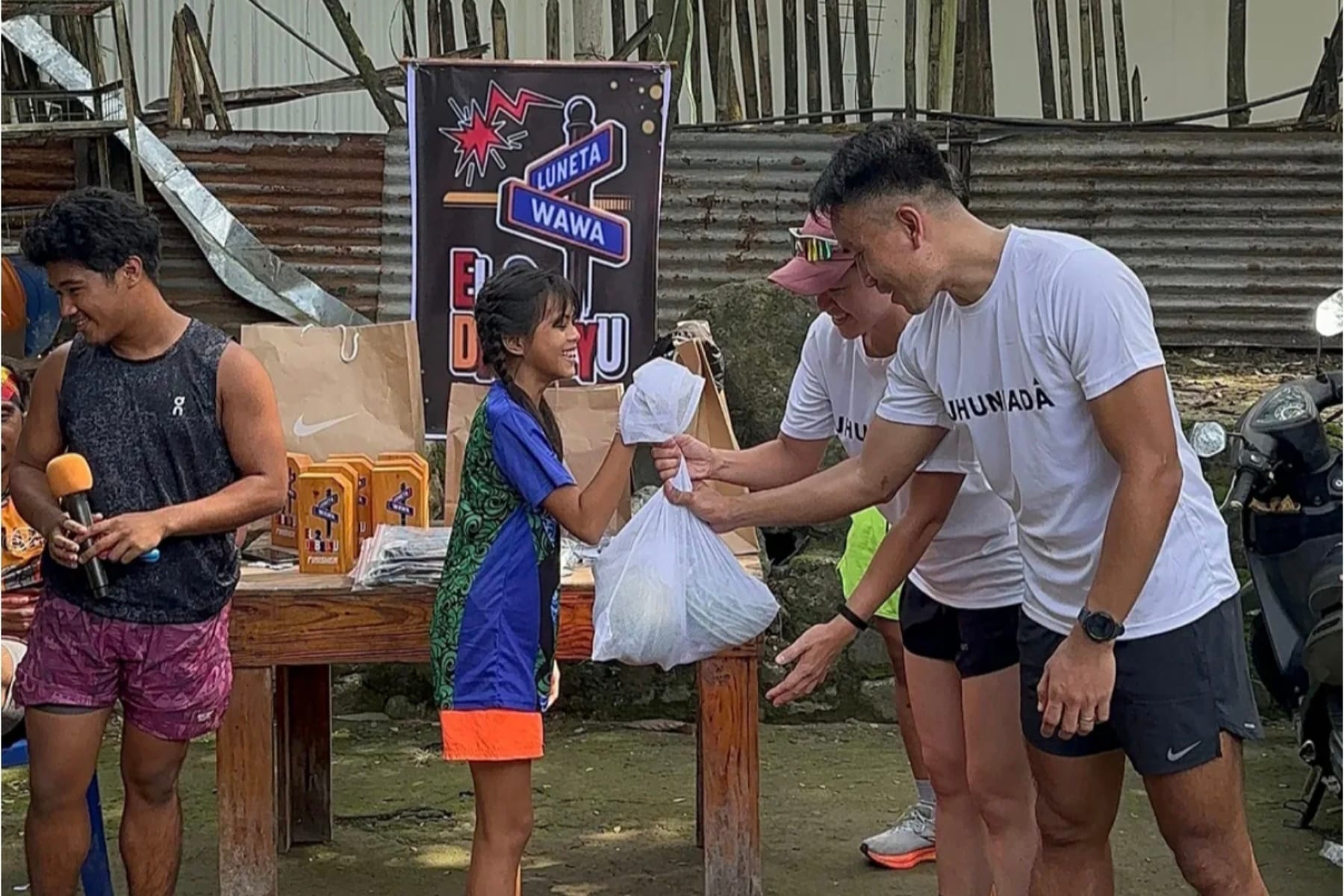
We consider our connection to Sitio Wawa a part of our mission. We see ourselves as channels of blessings, and it gives us a deep sense of fulfillment to witness them realizing what they can achieve through hard work.
After completing our 34-kilometer road run from Luneta Park in Manila to Sitio Wawa as our 2025 year-end challenge, we received fresh produce from the student-athletes led by K-yumi Gonzales. The vegetables, harvested from their backyard gardens, was a surprise gift from the athletes to express their gratitude for our support throughout the year.
We have found more reasons to return to the mountains than the summits we once dreamed of reaching. We think about the Dumagat, whose genuine care for others we admire and the student-athletes whose determination and passion for sports continue to inspire us.
We come back to experience nature, but more importantly, we do it for our purpose-driven mission to support and protect the youth who shall be the future leaders and movers of our nation.


