


Regarded as one of Sri Lanka’s finest public intellectuals, Martin Wickramasinghe (1890-1976) unleashed the possibilities of radical thought in 20th-century South Asia. For his 50th death anniversary, we revisit his contributions to Sri Lankan fiction, anthropology and journalism.
A tiny island some 30 miles from India, Sri Lanka has a recorded history of more than 2,500 years. Its recent history has been marred by ethnic conflict, civil war, and political and economic crises. This has tended to dominate international reporting. While the country is marketed globally as the “Pearl of the Indian Ocean” — and the more cynical and pessimistic, mindful of its troubled past, tend to call it a “teardrop” — both groups are right: a half-full glass, after all, is also half-empty.
Yet at one point, the country was well known for its contributions to regional, even global, intellectual exchanges. Historical records tell us of monasteries that served as seats of learning and monarchs who patronized monasteries. Pilgrims and travelers from far-flung regions, including Europe, West Asia and China, wrote about their visits to the country and their encounters with these establishments. Such exchanges continued for much of the island’s history, well into the colonial period. Portuguese forces conquered it in the 16th century, and the Dutch and British followed. By the 19th century, Sri Lanka figured at the center of an empire on which, it was said, the sun never set.
The Quintessential Intellectual
During this time, the popularization of print media, or print capitalism as the anthropologist Benedict Anderson puts it, led to the spread of ideas that reinforced notions of nationhood and a nation-state. In 19th-century British Ceylon, the press and print media were dominated by European and Western interests. Later, these networks found their way to other parts of the country. This paved the way for debates and discussions across racial, religious and language lines. This in turn laid the foundation for a generation of public thinkers, writers and scholars of repute in the country.
Among these public figures was Martin Wickramasinghe. Little known outside Sri Lanka, but hugely popular in his country, Wickramasinghe has been described as the quintessential organic intellectual, and the preeminent novelist and short-story writer of the 20th century in Sri Lanka. He was also, possibly, the most prolific public thinker of his time in the country. This week marked Wickramasinghe’s 50th death anniversary. At a time of political and economic tension in Sri Lanka, his life offers an alternative framing of art, culture, history, literature and nationalism, which is more nuanced and more moderate.
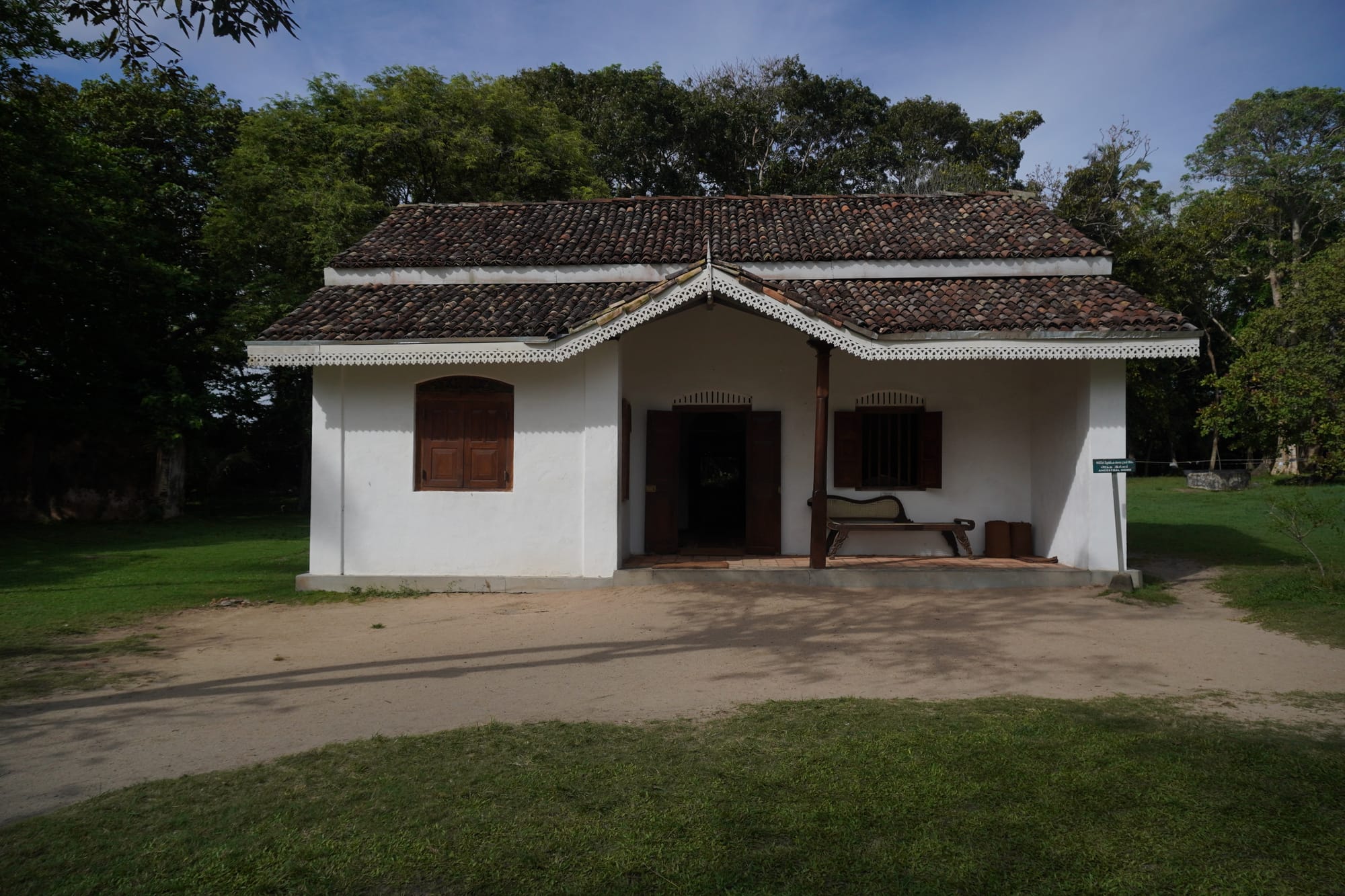
Martin Wickramasinghe was born on May 29, 1890 in Koggala, a village some 150 kilometers (92 miles) from the capital, Colombo, in the southern district of Galle. The district stood at the center of Sri Lanka’s maritime provinces. These provinces had come under the control of successive European powers from the 16th century. Absorbing different cultural influences, in his memoirs Wickramasinghe recalls Koggala as a quintessential colonial village that was prone to reinvention and transformation. His ideas of art, culture and history were shaped at the crossroads of the region. Reflecting on it later, he depicted a world where social structures were moving and changing. In contrast to nationalist ideologues who idealized the village as a static and unchanging entity, he saw it as a society in motion.
“The middle class … started abandoning old customs and names to stand apart from ordinary village folk. Discarding male names such as Sirimal, Nimal, Gauthamadasa and Buddhadasa, and female names such as Dayawathie, Premawathie and Gunawathie, they gave their sons names like Francis, Henry, Samson and Oibert, while the girls got names such as Lucy, Maggie, Laura and Nelly.”
Martin Wickramasinghe, “Upan Da Sita” (From the Cradle, Sarasa Publishers, 2014)
Wickramasinghe initially learned to read and write under a local village teacher. He was then sent to the village Buddhist temple, where a monk who happened to be his cousin taught him not just his first language Sinhala, but also Pali, Sanskrit, the Devanagari script and even the rudiments of English. The latter became useful when his parents decided to send him to an English school that was run by the Anglican church, closer to the city of Galle. These were years of tremendous economic transformation in the south. While certain people prospered in material wealth, others declined. Wickramasinghe saw these changing tides of fortune. In time they would affect his own family.
Although his family had ambitions for him — he was the only son among eight daughters, a point that marked him out for special treatment by parents and elders — Wickramasinghe was forced to abandon his education when his father, who served as a police official, passed away. Wickramasinghe was around 8 years old at the time. By then, his family had invested in a graphite mine. At this stage Sri Lanka was going through a boom in the graphite industry. Tragically for his family, the investment failed. Drowning in debt, his mother had no choice but to remove Wickramasinghe from school and find him employment. In the early 20th century, Colombo stood as the center of the island’s economic and political power. In 1906, Wickramasinghe was sent there to work as a shop assistant.
For a young man from Galle, Colombo must have appeared strange and somewhat alien. A deeply Westernized, urban, and sophisticated space, ordered and controlled, it was the residence of many of the country’s wealthiest residents. Entrenched in European customs and attitudes, these residents, known as Ceylonese, were largely removed from the rest of the country. Although it was embedded in colonialism, it was in Colombo that decisions were made and reforms directed to change the country’s administrative and political structures. It was here that the island’s leading social and political movements unfolded. Familiarizing himself with his surroundings, Wickramasinghe adapted to these developments, observing them and often taking part in them.
In Koggala, Wickramasinghe had shirked formal education. His memoirs, published in 1961, depict a child who disliked classroom learning and frequently played truant. Yet while he resisted formal schooling in Galle, he immersed himself in books in Colombo. He patronized leading bookshops in Pettah, the commercial center of the city, where he worked and lived. Eventually, he discovered the writings of freethinkers, rationalists, philosophers, scientists and anthropologists. Among the authors he read at this point were the American radical thinker Robert Ingersoll and the English biologist Thomas Huxley. Through them, he discovered Charles Darwin and other science writers. Their ideas influenced him. Over time they shaped his attitudes towards society, culture and religion.
“My mind was possessed by a desire to learn about the beginning and end of the world. None of the bookshops in Colombo carried these books. Cave and Co. had some books which carried these titles. I bought a copy of a collection of essays called Human Origins for fifty cents and read it. I realised that my English was not good enough to comprehend everything in these essays. I hence bought a pocket English dictionary and read Robinson Crusoe and later Gulliver's Travels.”
Martin Wickramasinghe, “Upan Da Sita” (From the Cradle, Sarasa Publishers, 2014)
Refused to Conform
To understand his progress at this stage, Wickramasinghe’s intellectual evolution must be contextualized. During the early 20th century, Sri Lanka witnessed the peak of a Buddhist Revival. Tracing its origins to the late 19th century, the Buddhist Revival was led by monks and activists who were fiercely protective of their faith. They frequently published polemics against other ethnic and religious groups. Determined to restore Buddhism to what they regarded as its rightful place, in newspaper articles and novels they envisioned a world in which their identity would triumph over others. Wickramasinghe saw these developments from afar. He refused to conform to their views and attitudes.
Wickramasinghe was just 24 years old when he published his first novel, “Leela,” in 1914. Despite its fairly predictable plot, he depicted a clash between tradition and modernity. Rather than celebrate traditional values, as many in the Revival did, he explicitly celebrated modernity and intellectual progress. At a time of great social change in Sri Lanka, this message proved off-putting for monks and activists. Not surprisingly, in the press, the novel was branded as an attack on Sinhala Buddhist values.
Encouraged by the response to the novel, two years later, in 1916, he began writing to the press. His first article, “Vruksalatha saha Sathwayo” (“Plants and Animals”), published in a leading daily Sri Lankan newspaper, The Dinamina, posed a daring question: if both animals and plants constituted evolving life forms, should not both be subjected to the Buddhist laws of rebirth? Going beyond even his critique of tradition in “Leela,” this first article opened him to a barrage of angry comments by readers. Once again, he had chosen to go against the grain and to use his knowledge to reinterpret his faith and culture.
Culture as Subject of Scrutiny
Taken together, his first novel and his first article laid the foundation for his career as a writer and a thinker. In 13 novels, several short stories and countless essays, many of them published in newspapers and journals, he explored aspects of his society through a rational and anthropological lens. In doing so, he made two unique contributions.
First, in Sinhala, Wickramasinghe introduced literary, cultural, and scientific terms and ideas to a vernacular audience. At a time when Sinhala nationalists uncritically valorized the past and held it as an object of veneration, Wickramasinghe popularized the most contemporary, radical ideas from the West among his countrymen. In doing so he made them aware of other ways of framing identity, beyond the restrictive, often insular forms which nationalism took, and has taken since then, in Sri Lanka.
Second, writing in English, he applied the frameworks of the leading anthropologists of his time — the two most prominent being Bronislaw Malinowski and Ruth Benedict — to his community. As the anthropologist Sarath Amunugama said in an interview with me, in delving into his society so deeply, he made Sinhala Buddhist culture “as valid an object of study as any other rural traditional society in the world of his time.”
This contribution was unprecedented for two reasons. First, as mentioned before, he refused to subscribe to nationalist elements in his country. Although he identified himself as Sinhala and Buddhist, he said that culture was not an abstract entity, that it was changing and rupturing all the time. His upbringing in Koggala made him aware of the fluidity of culture and how societies were borrowing from each other. Against such a backdrop, he refused to adulate his culture. Instead, he made it a subject of scholarly scrutiny.
This was evident even in his fiction. In novels like “Gamperaliya” (1944), which has often been compared to Giuseppe Tomasi di Lampedusa’s great saga of the Italian nobility, “The Leopard,” he charts the economic changes which transformed Sri Lankan society in the late 19th century. Like Lampedusa’s novel, “Gamperaliya” portrays a clash between an old aristocracy moored in traditional values and a new elite moored in capitalism. Considered as the definitive realist Sinhala novel of the 20th century, it was hailed as a masterpiece almost right after it was first published.
Second, as a public figure, Wickramasinghe communicated his ideas through the popular press. At the time newspapers enjoyed considerable circulation and were featuring essays on literature, art and religion. Wickramasinghe made use of these platforms to convey his ideas on these subjects to a wide audience. In doing so, he enabled the transmission of new and modern ideas to a very receptive readership.
With the public as his audience, Wickramasinghe also strove to deconstruct theories of art, culture and literature which until then had been inaccessible for lay readers. In books like “Aspects of Sinhalese Culture” (1952), “Buddhism and Culture” (1964), “Buddhism and Art” (1973) and “Sinhala Language and Culture” (1975), he introduced new theories and tried to democratize knowledge. Lacking formal schooling, self-taught and self-formed, he valued the power of ideas and frequently questioned received assumptions.
When doing so, he did not shirk from courting controversy. His first novel, “Leela,” provoked colorful reactions, especially from monks. Almost 60 years later, in 1973, he repeated this feat with his last novel, “Bava Taranaya.” Depicting the life of Siddhartha Gautama — a highly sensitive topic — with unusual directness, “Bava Taranaya” scandalized audiences. Monks and activists took issue with how he had portrayed its subject. Not unlike Salman Rushdie’s “The Satanic Verses,” extremists branded it as a heresy, with one person calling upon authorities to jail its author. Though the then government decided against such an action, the controversy his novel provoked showed that Wickramasinghe chose to be a contrarian even to the very end of his life. He would pass away three years later.
In that sense, perhaps his single biggest contribution, as a Sri Lankan and South Asian literary figure, was that he used a comparative approach to whatever he wrote about. As the literary scholar Chamila Somirathna observed in her MA dissertation on Wickramasinghe, he adopted a multifaceted view of concepts and theories. Over time, this transformed him into a pluralist critic who valued diverse perspectives.
“While he did not reject the existence of the university system, he envisioned the emergence of several universities which he believed would allow a better dialogue, even controversy, between different ideas, resulting in new forms of knowledge… He also argued that language and literature do not necessarily belong to academic institutions, but to everybody. The fact that [he] used newspapers as one major medium for discussing literature and criticism reflects his view that access to the study of literature and criticism is the right of the general public.”
Rejecting the Past
Wickramasinghe’s study of evolution and anthropology opened him to the links between different aspects of culture. Yet, as the renowned Sinhala language scholar and linguist Sandagomi Coperahewa argued in an interview with me, Wickramasinghe’s fiction, his novels and short stories, tend to be read to the exclusion of his more radical writings on culture. Partly because of this, he is identified as a Sinhala Buddhist thinker, even though his essays and articles reflect a more complex, nuanced perspective.
Because of this omission, his absence from the pantheon of modern — and modernist — thinkers in South Asia should not come as a surprise. Wickramasinghe lived, worked and thrived at a time when South Asia was undergoing a profound transformation in its culture, its society and its politics. Coming of age at the twilight of colonial rule in Sri Lanka, he formulated theories of art, literature, culture and religion that could not have been more different to the insularity of nativist-nationalists.
It is for that reason that Martin Wickramasinghe deserves to be read, deconstructed and demystified, as more than a Sinhala, Buddhist and even a Sri Lankan thinker. Like that other pluralist thinker of 20th-century South Asia, Rabindranath Tagore, Wickramasinghe imbibed a cosmopolitan view of society that did not find favor with his colleagues.
Unlike those who saw it as something to be venerated, Wickramasinghe perceived the past as something we could never return to, something we should not idealize. The title of one of his well-known books, “Kalunika Seveema” (In Search of Kalunika, 1950), reveals his attitude to the past: in Sinhalese folklore, “kalunika” was a herb said to impart long life on those who found it. But as with most folklore, it simply did not exist. For Wickramasinghe, the past was a little like “kalunika”: full of glory and romance, it could never be found or retrieved. Going in search of it, he suggested, was hence akin to a fool’s errand.
This article has been updated on Aug, 6, 2026.


