
Power and Humanity
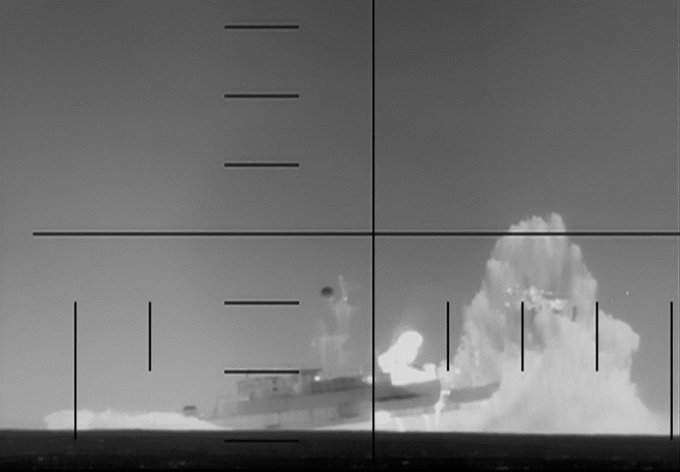
Sinking of Iranian Vessel (Wikimedia Commons)
The US government seems to want a war and an invasion every month. In January it invaded Venezuela and abducted its president. On February 28, it struck Iran after Israel launched a surprise attack there. President Donald Trump appears confident of winning this war as quickly as possible. The Pentagon thinks otherwise: one report suggests that the war may drag on until, and even beyond, September.
It is difficult to justify these acts, even on the basis of geopolitics and grand strategy. Trump’s and Israeli Prime Minister Benjamin Netanyahu’s actions are now being compared to the US invasion of Iraq in 2003. Yet there are differences.
The first and most obvious is that George W. Bush took great care to obtain Congressional authorization and to inform his allies. Here, by contrast, not only are the vast majority of Democrats in the US opposed to this war, a vast majority of the US’s allies, from the United Kingdom to France to Spain, have refused to join offensive actions.
Ethics is something hardline right-wingers have never seriously considered. The ethics of war is a topic too passe and outmoded for their thinking: for them, such things are for the weak and the simple-minded. It is against that backdrop that the US government, with the full sanction of the “Department of War”, torpedoed an Iranian vessel which had taken part in joint exercises with the Indian Navy a month ago.
Small Island, Strategic Location
In the early hours of Wednesday, 4 March, the Sri Lankan Navy received a distress signal from an Iranian frigate 44 nautical miles off the southern coast of Sri Lanka.
The frigate, IRIS Dena, had taken part in a joint exercise with India at the International Fleet Review in February. It was returning from Visakhapatnam when it was attacked. The attack marked the first time a nuclear-powered submarine sank an enemy surface vessel since 1982 and the first time a US submarine torpedoed a vessel since the 1945.
The death toll from the attack stood at 87. Around 60 are still missing. The Sri Lankan Navy managed to rescue 32. While US officials gloated over the torpedoing, Colombo took immediate action and brought them to the National Hospital in Galle, where a group of doctors, medical interns, and concerned locals attended to them.
As of now the Iranian government, which has condemned the attacks, has requested the Sri Lankan government to repatriate the survivors. Meanwhile, Sri Lanka has responded to a distress call from another Iranian vessel; as of 6 March, it has managed to evacuate all passengers while docking the ship on the eastern coast of the country.
War games and Video Games
Whether the attack on a vessel that had taken part in a harmless exercise with a joint US and Iranian ally – India enjoys warm ties with both countries, as well as with Israel – is illegal is open to debate. According to at least one US military expert, it may be. Iranian officials have called it a war crime, others a possible violation of the Geneva Convention.
What is concerning, if not damning, is not the attack; it’s that the attackers did not care to go and check on the passengers onboard the vessel after the attack. To give some context, during World War II, both Allied and Axis forces – including Nazi Germany – took care in many cases to check on passengers after attacking ships and vessels.
In that sense, US Secretary of War Pete Hegseth’s remarks after the attack are reflective of a state of mind that dominates strategic thinking in Washington.
“An American submarine sank an Iranian warship that thought it was safe in international waters. Instead, it was sunk by a torpedo. Quiet death.”
Triumphalist and callous, such remarks have been called out by Democrats. In a statement issued hours before confirmation of the sinking of the vessel, Elizabeth Warren took to the floor of the US Senate to castigate the attacks on Iran.
“… they seem to be treating war with Iran like a game, as if Commander in Chief was a costume, ‘Secretary of War’ is a fun pretend title, and the lives lost are just numbers on a board with the title card ‘Operation Epic Fury.’”
Rules of Engagement
The contrast between Washington’s actions and Colombo’s response could not have been starker. On the one hand, the American President clearly thinks he has limitless carte blanche to do as he will with countries he deems as enemies.
The problem actually goes deeper. Washington no longer distinguishes between ally and enemy: every day Trump picks on a nominal US ally and NATO member, like the UK or Spain, for their unwillingness to take part in offensive actions against Iran or their condemnation of US actions in West Asia. UK Prime Minister Keir Starmer has been a target of a barrage of humiliating comments from Trump; he has so far refused to buckle down and drag the UK to what seems to be a drawn-out war in West Asia.
On the other hand, Sri Lanka has taken the call to rescue passengers, in line with both legal and humanitarian obligations. “Our position,” Sri Lanka’s president clarified in an official statement, “has been to safeguard our neutrality while demonstrating our humanitarian values.” Opposition Leader Sajith Premadasa, while praising the Sri Lankan Navy for going out of their way, noted that the nation’s Exclusive Economic Zone, which is where the attack happened, “is for peaceful purposes, not for military action.
The attack certainly raises questions about the rules of engagement, and whether the US sees these as being valid any longer. Secretary of War Hegseth put that in perspective: “No stupid rules of engagement, no nation-building quagmire, no democracy building exercise, no politically correct wars.” But it also raises questions about what should be done when a global power brings a war to your backyard, whether we should ignore it and behave as though it does not exist, or whether we should do what we can, with the limited resources we have, to help out those who are caught in the crossfire.
India, the de facto regional hegemon, has refused to explicitly comment on the issue, apart from clarifying that it was in no way involved in the US attack. This is to be expected: as of late, Indian Prime Minister Narendra Modi has received an endless barrage of humiliating comments from Trump officials, and he is perhaps keen on not raising the stakes too much. Yet the lack of response to a vessel being attacked by an external power in its own backyard casts some aspersion on the reputation which India has built as the regional power. As an Indian friend noted to me after the attack, its silence amounts to “a monumental shame for those who endlessly sing Atithi Devobhava [‘Guests are our God’].”
Final Words and Thoughts
Perhaps being silent is a strategy, as much a strategy as being vocal. Sri Lanka itself has been silent on the matter. It has justified its action on humanitarian norms. This has won praise from other countries and even media outlets, but it has also aroused much revulsion, especially among US citizens, for the actions of its government.
An American friend sent this post to me after the sinking of the vessel. It is strikingly honest and candid, and it speaks to so many people I know.
“Breaking with all norms of civilization and warfare, we refused to rescue the drowning survivors. The Sri Lanka Navy was left to pull the dead bodies from the water. I am hard pressed to think of any other nation throughout history that would do something so cowardly and despicable. We are genuinely in a league of our own.”
I think that tells a lot about where we are, what we can do – and most importantly, what we should do to preserve our basic humanity, in such troubling times.
*The opinions of contributing writers are their own and do not necessarily represent the views of We Are One Humanity. Submissions offering differing or alternative views are welcome

When the media buries the corporate plunder driving our climate crisis