
Message for an Unhappy Country
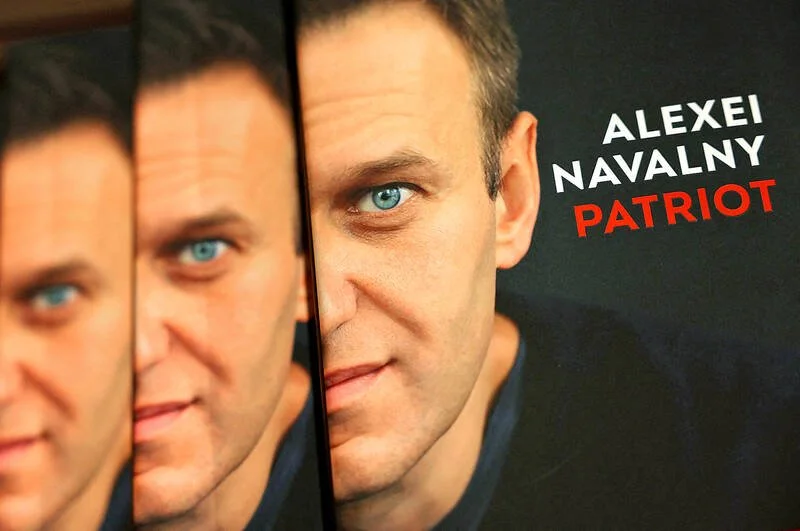
Photo: Taipei Times
A review article on Alexei Navalny, Patriot, trans. Arch Tait and Stephen Dalziel (London, 2024)
It would be a big mistake to equate the Russian people with the Russian state—this is a key point in Alexei Navalny’s memoir-cum-political statement, Patriot, published after he died in an Arctic penal colony in February 2024. In the minds of some observers, democracy has never really flourished in Russia because the political culture of the country is essentially autocratic—but this is not Navalny’s view. He is convinced that many Russians, far from being instinctive authoritarians, long for ‘real politics and real elections’. He also sees Russia as an unhappy country—he describes it in Patriot as ‘unhappy in every respect’. He saw it as his life’s work to address this by making the country more democratic, while also promoting a radical change of national values.
The Making of a Dissident
Born in 1976 to a Russian father and a Ukrainian mother, Navalny grew up in Obninsk, a city located 60 miles southwest of Moscow. A corporate lawyer by profession, he got involved in politics after leaving university, initially through the ‘liberal’ political party Yabloko, and then in parties or coalitions he helped to lead. But it was as a campaigner against corruption that he achieved much of his prominence. ‘Russia is built on corruption,’ he says in Patriot. His Anti-Corruption Foundation, founded in 2011 with a focus on malpractice by high government officials, caused the regime much embarrassment. It also gave Navalny a national profile, while marking him out as a threat to the status quo. He was blocked from standing in elections to become Mayor of Moscow (in 2013) and Russian President (in 2018) on ‘procedural’ grounds. Patriot opens with an account of how he was poisoned with the Novichok nerve agent by the Russian security services in 2020, before undergoing medical treatment in Germany. It closes with his thoughts from behind bars after he returned to Russia—he is one of a long line of Russian oppositionists who, over the centuries, have contributed to the nation’s prison literature.
On corruption, Navalny had his own moral awakening. As a student, he witnessed bribery first-hand and was drawn into it. For example, in one of his classes—he studied law at People’s Friendship University in Moscow—he and his fellow students paid $50 each for a pass mark, their dollar notes neatly tucked into their gradebooks. He and a friend also tricked some of their professors into giving them pass marks for inadequate or incomplete assignments. At the time, he boasted of this to others, seeing it as an example of resourcefulness, but with hindsight, he calls it a ‘disgraceful’ part of his biography. Retrospectively, he blames himself for turning a blind eye to the corruption of the Yeltsin administration (in the 1990s) because of his sympathy for Yeltsin’s liberal political agenda. The corruption reflected what he calls the ‘super-cynicism’ of the period—Navalny presents post-communist Russia as a country lacking the moral foundations needed for building a free society.
Navalny’s campaigns were effective because, more quickly than most, he understood and mastered the power of social media. Russia’s rulers have long been wary of movements like the Arab Spring—the wave of pro-democracy revolts driven by social media that swept across the Arab world in the years 2010-12. Navalny’s instinct for bypassing official media channels and raising money through microdonations rather than large donors was a threat to the Kremlin’s carefully honed system of ‘managed democracy’. Navalny was adept at utilising YouTube, Instagram, TikTok, and Twitter to reach younger audiences. His campaigns culminated in a documentary entitled ‘Putin’s Palace: The story of the world’s largest bribe’, which investigated the building of a large palace on the Black Sea, allegedly for Putin’s personal use. The film suggested that the financing of the palace came from a corrupt scheme in which Putin was personally involved. It was released at the time of Navalny’s return to Russia and was the most popular video on Russian YouTube in 2021. It was an obvious challenge to the regime’s control of news and propaganda.
The Politics of Truth
Recounting Navalny’s life and activities, Patriot explains his moral philosophy—a philosophy indebted to the ideas of the Soviet dissidents of the 1960s and 1970s. The danger of ‘lies’ and the importance of ‘truth’ are central to this. For example, in a statement at a court hearing in February 2021, he calls on everyone ‘not to live by lies’, arguing that nothing can have any meaning for people when they tolerate ‘endless lies’. These words echoed the famous programmatic statement by writer Alexander Solzhenitsyn, ‘Live Not by Lies,’ which first came out in samizdat form in 1974. Navalny also remarks: ‘A word of truth has tremendous power … There are many honest people, armed as I am, with the word of truth. Millions of them.’
In Navalny’s view, it is existentially vital for people to live with honesty and integrity. ‘The only moments in our lives that count for anything are those when we do the right thing … Nothing else matters,’ he says. In his mind, this is important not only for people’s personal well-being but also for society, too, since people in a very real sense influence the world around them by the way they live. He criticises Leo Tolstoy for arguing, in a famous passage in his novel War and Peace, against the reality of human agency. ‘Personal responsibility lies on the shoulders of each of us,’ Navalny insists.
Interestingly, Navalny comes across as an essentially happy person. Part of the reason for this may be that he had a sunny disposition. But he himself connects his positive outlook to a sense that, in his campaigns, he was fulfilling his destiny: ‘I love what I do and think that I should keep doing it. … Deep down I know I have to do this, and that this is my life’s work.’ He is effectively saying that happiness in its truest form comes not from the avoidance of suffering, but from finding a sense of moral purpose. Having a sense of purpose was certainly one reason for his ability to endure serious hardship. In his 2021 statement, he said he had no regrets about returning to Russia after his medical treatment in Germany, even though he was ‘not particularly enjoying’ the fact that he was imprisoned on his return. Rather, he felt a ‘certain satisfaction’ over the fact that at a difficult moment, he had done as he was ‘supposed to’.
While Navalny is clearly a confident person, his book demonstrates an awareness of human fragility, including his own. In Patriot, he stresses the importance of living without fear—‘One day I simply made the decision not to be afraid,’ he says. But he also notes that living fearlessly is a daily struggle, and it is possible to lapse: ‘The pendulum swings endlessly. Or the tug of war. Today, you are brave. Tomorrow, they seem to have scared you a bit. And the day after tomorrow, they have scared you so much that you despair and become brave again.’ Navalny is saying that there is a moral core within each human being, which is constantly being tested. Once again, there are echoes of Solzhenitsyn here, this time from his labour camp chronicle The Gulag Archipelago (1973-74), where he states that the dividing line between good and evil runs through each human heart, and that the exact location of this line oscillates continuously with each moral victory and defeat.
The Cost of Dissent
A connected theme, which comes up periodically in Patriot, is what Russians call ‘hostage-taking’—zalozhnichestvo. This refers to the state’s practice of pressurising people into political conformity by intimidating their relatives and friends. It was done in such an organised way in the Soviet Union that some oppositionists argued that the whole Soviet system was built around it. The idea underpinning it is that while people are often personally ready to undergo suffering, they baulk at being responsible for the suffering of others, and the security services can exploit this vulnerability. Navalny is eager not to be entrapped by this. In his 2021 statement, he insisted, ‘They won’t stop me even by taking hostages.’
This was a real issue for Navalny: in 2014, he and his brother Oleg were convicted on a charge of stealing money from a French cosmetics company, a charge Navalny presents in Patriot as spurious and ridiculous. Navalny was given a suspended sentence, but Oleg was given a three-and-a-half-year term, two and a half years of which were spent in solitary confinement. The verdict, according to Navalny, was designed to create a situation in which he could be pressurised to curtail his political activities in return for improvements in Oleg’s prison conditions. This was painful for him. ‘Going after the broader circle of my relatives to take revenge on me really hurt,’ he remarks.
As the book relates, Navalny’s relationship with his wife, Yulia, helped to sustain him because she supported his campaigns wholeheartedly and understood how the mechanisms of intimidation worked in Russia. In the striking ‘Epilogue’ to the book, Navalny describes how, during a visit she made to see him in prison, they together acknowledged that the ‘worst-case scenario’—his dying in prison—was the most likely outcome. Strikingly, the openness and honesty of their exchange on this, in a snatched conversation in a prison corridor, gave them a sense of joy and togetherness.
If there is a strong ethical dimension to Navalny’s outlook, there is also a spiritual element. It was something of an embarrassment to some of his atheist colleagues, Navalny observes, that he was religious in outlook—some of them probably thought him a ‘nutjob with a Messiah complex’, he quips. But he is not ashamed to state his Christian commitment in simple, if bold terms. He had himself been a militant atheist, he observes, but he found that faith helped him simplify his life by trusting the future to God. He also thought that one of Jesus’ Beatitudes, ‘Blessed are those who hunger and thirst after righteousness,’ encapsulated what was most needed politically in Russia. Of course, there were significant differences between Navalny’s faith and that of the state-backed Moscow Patriarchate, which has promoted the war in Ukraine as a ‘holy war’. The fact that religious belief and a commitment to human rights are combined in Navalny’s outlook is unusual for a country where they are regularly presented as in conflict.
Navalny has at times been accused of advocating a right-wing form of Russian nationalism, partly because of instances when he appeared at rallies with radical nationalists. In Patriot, he acknowledges that some demonstrators at protests he attended had ‘exotic’ or ‘narrow-minded’ views. However, he states that in pursuing democracy and rights of assembly for all, he had no choice but to be consistent and apply this to everyone, including some people with unpleasant views. Freedom, he argues, means being open to discussing your views with people you disagree with. ‘We must create a situation where everybody can participate on an equal footing in fair and free elections, competing with each other,’ he stresses.
Some Ukrainians have also seen Navalny as insensitive to Ukraine’s national aspirations, especially because, following Russia’s annexation of Crimea in 2014, he suggested that Crimea should remain Russian. In 2023, Navalny backtracked on this, stating that Crimea should be returned to Ukraine. In Patriot, Navalny’s comments on the Ukraine war are uncompromisingly hostile. In what he calls his ‘fifteen theses of a Russian citizen who desires the best for his country’, he calls the war an unjust war of aggression based on ridiculous pretexts, saying that Russian forces should withdraw from Ukraine because the country does not need new territories. Russia, he declares, should cooperate with war crimes trials, reimburse Ukraine for the damage done in the war, dismantle the Putin dictatorship through the convening of a Constituent Assembly, and follow the European path of development.
A Moral Vision for Russia
Navalny makes his affection for Russia clear. As he explains, he loves the language, the landscapes, the literature, the cinema, the sad songs, and the humour; the country is part of his very self—a bit like a right arm or a left leg. All this feeds a message that Navalny is a true Russian. What it means to be a ‘patriot’ is one of the main issues at stake in Russia’s modern ideological wars. It is in this context that we should understand the title of this book, which at first sight might seem a little dull for a text that tells such a remarkable story. The Kremlin wants to portray its enemies as dissidents and oddballs who do not have Russia’s best interests at heart. By contrast, Navalny wants to offer a democratic vision of what it means to be a patriot—in his view, it is those in power who are the ‘sectarians and marginals’.
Navalny is confident that Russia will one day be free of dictatorship. The Putinist state is unsustainable, he declares: ‘One day we will look at it, and it won’t be there.’ Sceptics will say that this hardly looks likely right now: Putin’s position still seems very secure, and the Russian opposition is as divided as ever. That’s true, and Navalny’s optimism may be exaggerated. But success can be defined in different ways. In his Pulitzer Prize-winning study of the Soviet human rights movement, To the Success of our Hopeless Cause (2024), Benjamin Nathans suggests that although the earlier Soviet dissidents did not change the Soviet regime’s attitude to human rights and the rule of law, they were effective in undermining the credibility and legitimacy of a long-standing dictatorship: at an ideological level they provide a case study in how small groups of people can affect a nation’s thinking. With this in mind, we might say that Navalny and some of his fellow activists have achieved something important for modern Russia through creating a humane vision of what Russian national identity can look like.
There is a sense in which Navalny invites people to think of Russia not only as a political entity, but also a spiritual one, one that is present in people committed to truthful living and an open society. It challenges Russians to seek happiness and satisfaction not in the corrupt accumulation of money, nor the violent acquisition of territory, but in living honestly and trying to do the ‘right’ thing. Nation, freedom, honesty, and faith—all these find a place in Patriot, in a vision that has the capacity to appeal to people from across the political spectrum. There is something universal here, in the sense that it will resonate with people from many countries.
More stories from We Are One Humanity
Myanmar refugees in Thailand