


Two years after the Gen Z protests challenged Kenya's political establishment, young people are approaching the August 2027 election with different expectations. Some are organizing to register voters, others are backing the government, while many remain skeptical of both sides. The question is whether their political awakening will translate into lasting electoral influence.
Rose Ngugi was 18 in June 2024, when Kenyan youths took to the streets to protest against the government. She is now 20 and preparing to vote for the first time on Aug. 10, 2027. She is already registered at a polling station in Bahati, Nakuru County. In August, she will dip her finger in the voter’s ink for the first time.
Two years after the Generation Z-led demonstrations, Ngugi believes young people must now take their voices from the streets and social media to the ballot. She thinks this election could be different, but she is not prepared to take politicians at their word.
“I would want a candidate to explain how they plan to create job opportunities for young people, reduce the cost of living and fight corruption,” she said. “I would also want to see their past achievements and not just listen to promises.”
Ngugi is one of millions of young Kenyans whose political awakening began on the streets in 2024 and is now being tested at the ballot. But the generation that marched together is no longer moving in one direction. While young voters could decide a close race, they now disagree about who to blame for their frustrations and who deserves their vote, so their power may be spread across every camp instead of aimed at one.
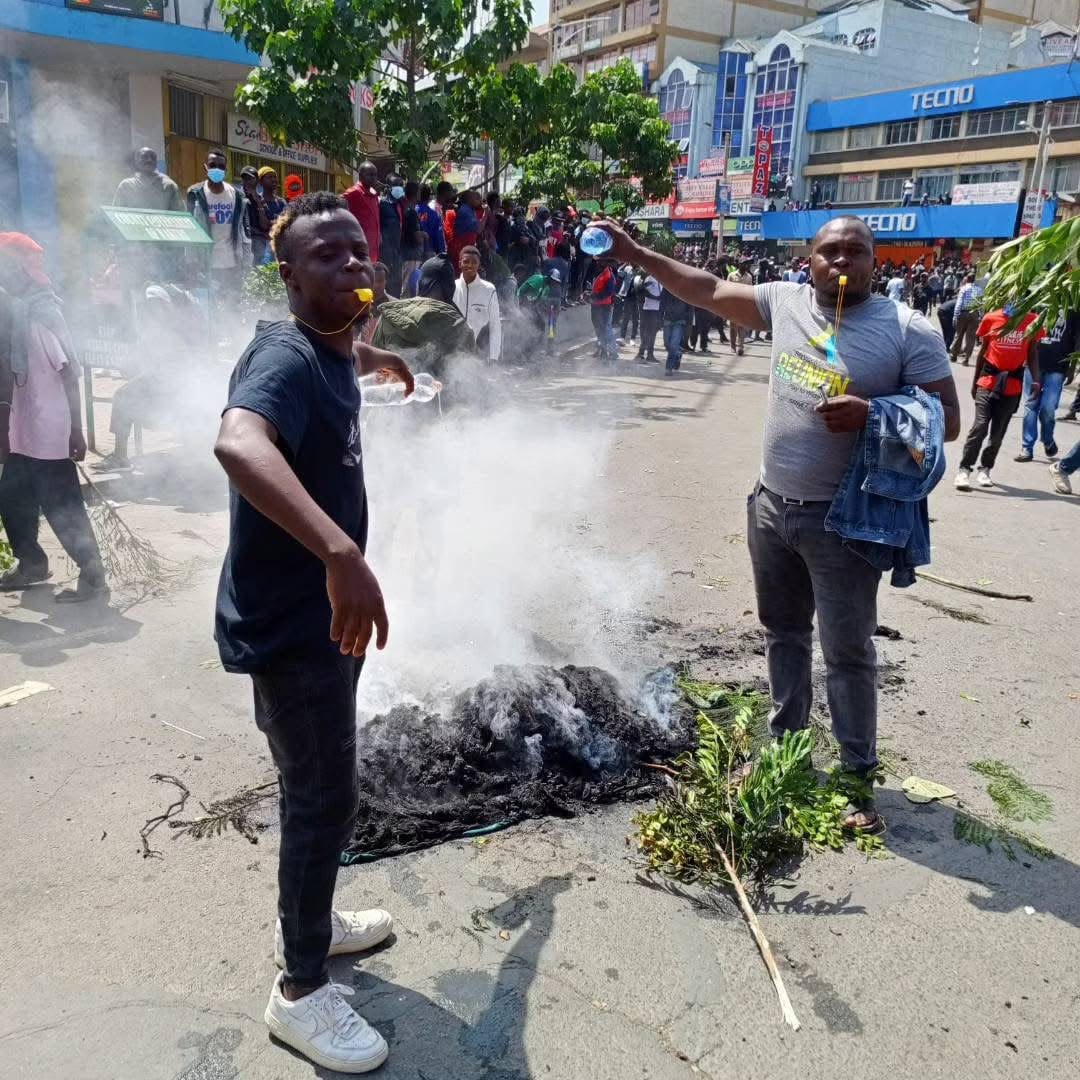
On June 24, 2024, thousands of young Kenyans went to the streets to oppose the country's Finance Bill 2024. The bill suggested new taxes at a time when many Kenyans were facing tough economic times. The demonstrations were organized largely online and spread from the capital to other parts of the country.
The following day, June 25, the protesters stormed Parliament and vandalized a section of it. This was after members of Parliament passed the controversial bill despite public outcry. The Kenya National Commission on Human Rights reported 63 deaths between June and October 2024, alongside 87 abductions. By December of the same year, the commission would report that 26 people remained missing.
The next day, President William Ruto announced the withdrawal of the bill. This did not mark the end of dissent. The youth then moved on to question their leaders about corruption, their lifestyles and whether those occupying public offices were even listening to their concerns.
Demands Still Unresolved
Cynthia Mutindi is a Gen Z protester who took part in the 2024 demonstrations. For her, it was a moment when young Kenyans found common ground despite their different backgrounds. At the time, she believed that coming together could force a wider change in how ordinary Kenyans are treated by those in power.
Reflecting on those moments today, she still feels that much of what the uprising demanded remains unresolved.
“The bill was withdrawn, and that mattered, but the bigger things I hoped for didn’t happen. We lost people, and a lot of the accountability we asked for never came.”
There are still questions about those who died and those who disappeared. A separate set of figures from Amnesty International in 2025 recorded 61 deaths associated with the demonstrations. Only three cases had reached the courts, while two investigations were still awaiting review by the director of public prosecutions. Another 47 remained under investigation.
These figures are not convictions. But they offer a sense of the distance, two years on, between documenting alleged crimes and holding those responsible to account.
With the 2027 polls less than a year away, Mutindi remains hopeful. She sees voting as another opportunity for young people to be heard, although she is skeptical about how much it can achieve.
“In 2024 we surprised them. In 2027 I don’t think we have that advantage anymore. My call is for the youth to register as voters, turn out to vote and protect the vote. I’m not sure there will be so much change, but I’m hoping that our voices have permanently changed how we are handled as young people.”
‘I Have A Voter’s Card’
There are efforts to turn the energy of the protests into votes. One initiative attracting attention is “Niko Kadi,” Swahili for “I have a voter’s card.” Led by young activist Allans Ademba, the movement is a campaign to get young people across the country registered and to the polls.
Ademba said Niko Kadi was a nonpolitical initiative and warned established politicians against trying to take ownership of it. Critics, however, have raised questions about the movement's political associations. Its leaders have, on several occasions, paid courtesy calls to Nairobi Sen. Edwin Sifuna's office. Sifuna has been among those campaigning against Ruto's reelection through the Linda Mwananchi “Protect the Citizen” movement.

Ademba and his team have set their sights on getting 15 million young people to vote in 2027. They have not, however, revealed the exact number of people they have registered so far.
Frustrated by limited opportunities
Niko Kadi is not the only direction the 2024 protests have taken. Some young Kenyans believe the current administration deserves another chance. Daniel Kimani, a youth network leader in Nakuru County affiliated with the ruling United Democratic Alliance, has spent a decade building networks of young people across Nakuru's 55 wards. In his experience, young people are not so much disconnected from the current leadership as frustrated by limited opportunities.
He set out that view in a youth mobilization proposal for the 2027 election. It includes reviving dormant youth groups and holding career fairs and mentorship programs in colleges and universities.
“Political mobilization should move beyond occasional rallies and give young people a sustained role in community development, entrepreneurship and talent development,” he said.
His proposal is political, though. Its goal is to build support for Ruto's reelection.
Over the last two years, there have been calls for a single Gen Z political movement or party. These ideas are, however, complicated by the differences between people like Kimani and protesters such as Mutindi. While many young Kenyans share concerns about jobs and the cost of living, they do not necessarily agree on who should be held responsible or which political path deserves support.
Evans Ochieng, a researcher at Egerton University, said that the frustrations that took young people to the streets have not gone away. In his view, the government's response has been partial and largely reactive.
“The withdrawal of the Finance Bill and changes to the Cabinet showed that public pressure had an effect,” he said. “It did not, however, resolve the underlying concerns about the cost of living, taxation, public debt and police accountability.”
He is equally critical of the current opposition. Political parties and coalitions, he said, have yet to understand the independent nature of the protests. While some are promising young people greater roles in government, he questions whether those positions would come with real decision-making power or any meaningful influence. In his view, Gen Zers are being invited to vote, not to govern.
Ochieng also warns against assuming that young people will automatically support the opposition simply because they criticize the government.
“The youth position is not pro-opposition, it is anti-establishment across the board.”
He believes that Niko Kadi will play a determining role next year. But the difference between having more young people on the voter register and turning that registration into political influence will be crucial. It could shape not only who occupies State House but also the outcome of other elective races.
It is, ultimately, a numbers game. In 2022, Ruto defeated the late Raila Odinga by just 233,211 votes. The Independent Electoral and Boundaries Commission said it has registered 2,936,516 new voters as of August 2026 since continuous registration began in September 2025, as it works toward a target of 28.5 million voters for the 2027 election.
With such a narrow margin in 2022 and millions of new voters being added to the register, where young voters choose to place their support could matter considerably in the next election.
A Split Youth Vote
John Ocholla is a political commentator based in Nairobi. He agrees young voters matter in the coming polls, but cautions against expecting them to rally behind one presidential candidate.
Loyalty in Kenyan politics is shaped by ethnicity, established networks and interests, Ocholla said, and he expects this to continue. In rural areas, he sees young people drumming up support for candidates backed by alliances that influence their communities.
“A youthful candidate with strong appeal could introduce a different dynamic into the 2027 contest, but do not expect the youth vote to move in one direction,” he said.
Ocholla welcomes Niko Kadi but warns that it should be more than a trend or being “cool” among peers: what counts is turning up to vote.
He expects the youth vote to split, which could ease Ruto’s path to a second term, but thinks young voters’ influence would outlast the election and shape how the next administration operates.
“The political awakening is something I do not expect to end with this election. This will carry on to the next government. Vigilance and accountability will be the end goal.”
The bigger picture, then, goes beyond the next election. Gen Z voters may register, but if they do not vote as one bloc, as Ocholla expects, the youth vote alone is unlikely to settle any of the six races on the ballot: president, governor, senator, member of Parliament, woman representative and member of the county assembly.
Away from the polls, this influence could also be seen in how many young people decide to vie for these positions and how parties select their candidates, among other things.


