Destroying Iran
The ongoing, unrelenting destruction by the US and Israel of Iranian lives and resources will be remembered for (among other things) its callousness, for the support (whether enthusiastic or reluctant) that it has received from many nations in Europe and from Canada, Australia and Japan, and for the silence of countries like India. Spain’s refusal to obey Trump will also be noted by history.
“We took a little excursion to the Middle East to get rid of some evil,” Trump has just said.
Some might have smiled at an ability to joke about obliterating another nation’s foundries and lifelines, about blowing up its oil depots, poisoning its air, and other ways of crippling it. Others will not be amused by this confirmation that for our world’s supremacists some sections of humanity are disposable, are inferior humans.
As I type these lines in India on Tuesday the 10th, word comes of Trump hinting at an early stoppage of US attacks on Iran. Although with typical reversal he has also threatened further and more devastating attacks, stories of a deescalation wish on his part persist.
Did the risen prices worldwide of crude oil and gas produce pressures that Trump cannot withstand? Is Iran’s grip over the Strait of Hormuz hurting the US’s allies, the world, and the US itself more than was anticipated? Are Saudi Arabia and the Gulf states demanding a scaling down of attacks on Iran? Are European countries trying to prevent an exodus of Iranians into their spaces?
I don’t know. The advisory that asked all Americans in the Gulf countries to return to the US without indicating how they can do so when most if not all flights from the region have been suspended, suggested that events in the region were not under Washington’s control.
WHAT WAS IRAN’S CRIME?
What, it must again be asked, was Iran’s crime against the US and Israel? Iran didn’t attack either country. It hasn’t built a nuclear bomb. It hasn’t been accused of any recent terror attack against a neighboring or distant land. Yes, it has raised its voice against the expulsion of Palestinians from their homeland and cheered or aided efforts for Palestine’s liberation.
No doubt much of the world was put off by Iran’s authoritarian regime and that regime’s harsh treatment of dissidents. The excesses of the theocratic regime should not be excused or minimized. Still, other regimes that suppress internal foes and curb protests haven’t invited even a hundredth of the violent intervention we’re witnessing in Iran.
Two readings seem undeniable. One, Israel’s current rulers want their country to extend its boundaries, become the regional superpower, and humiliate its Arab and Iranian neighbors. Secondly, with their weapons and dollars, the US’s current rulers have been enforcing and bankrolling Israel’s wishes.
Will the vision of Israel the hegemon become reality? Can Iran be compelled to find a ruler approved by Trump and Netanyahu? Is there any momentum toward a regime change of this sort in Tehran? Even if the US is able at some point to install someone it wants there, and that’s a big if, a Middle East thus transformed is unlikely to last for long. The region’s populations will not meekly swallow American or Israeli supremacy. At some point the people of Israel too may desire release from imprisonment inside a dominant but controlling state that’s hated in the neighborhood.
TARGETS IN A FAR SEA
The March 4 torpedoing in the Indian Ocean of the Iranian frigate IRIS Dena (IRIS = Islamic Republic of Iran’s Ship) by a US submarine and the resulting instant death of around a hundred or more Iranians was an example of the pitiless and distant murder the current war is causing.
Belonging to Iran’s navy, Dena was returning from a friendly, multinational exercise in Visakhapatnam -- on India’s eastern coast -- when it was blown up about 40 nautical miles south of the Lankan port of Galle, within the Exclusive Economic Zone (EEZ) of Sri Lanka. The Sri Lankan Navy recovered 87 bodies and rescued 32 survivors from the destroyed frigate. Those surviving Iranians are currently being sheltered by Sri Lanka.
Until Washington cancelled their participation at the last minute, American naval personnel too were to have joined the amiable Visakhapatnam exercise that preceded the torpedoing of Dena. New Delhi’s failure to offer even a word of unhappiness at the obliteration of people it had just hosted has been strongly resented by many Indians.
Within a few days of Dena’s destruction, the Sri Lankan Navy evacuated 208 crew members from another Iranian vessel, IRIS Bushehr, after the latter ship reported engine problems close to Sri Lankan waters. These 208 Iranians too are now in Sri Lankan hands.
A third naval vessel from Iran, IRIS Lavan, docked on March 4 in India’s west coast port (in Kerala state) of Kochi (formerly Cochin) “to carry out technical and logistical arrangements.” Apparently Lavan had 183 personnel. India’s foreign minister S. Jaishankar said that allowing the Iranian crew to enter Kochi was the “right thing” and the “humane thing” to do. Although the minister said nothing about the attacks and threats against Iranian ships in waters that India has for a long time pledged to guard, his defense of the permission to Lavan and its crew was welcome.
Three days before the Israeli-American attack on Iran, Prime Minister Modi had visited Israel, embraced Netanyahu, and addressed the Israeli parliament. In his speech there Modi recalled Hamas’s 2023 attack on Israel and added, “India stands with Israel, firmly, with full conviction, in this moment, and beyond.”
Modi’s unrestrained embrace of Netanyahu just three days before Iran was attacked by Israel and the US, and his failure while in the region to express any sympathy for Israel’s victims in Gaza and the West Bank was deplored by many in India, by some publicly.
NEPAL’S YOUNG FACE
As of writing, Nepal’s Rashtriya Swatantra Party led by Balendra Shah, the 35-year-old rapper and former mayor of Kathmandu, is just one seat away from winning a two-thirds majority in the country’s parliament. In the individual seat he contested, Shah handily defeated the former prime minister, K. P. Sharma Oli.
Young Shah’s leadership in a land-locked country that lies between China and India and is wooed by both will be watched with interest and expectancy.
An editorial in India’s respected daily, The Hindu, warns, however, that hopes should be restrained:
“Whether the RSP, and Mr. Shah, can translate this sweeping mandate into the institutional reform and economic revival that Nepal desperately needs remains to be seen. Considering that Mr. Shah’s tenure as mayor drew criticism for an anti-poor and technocratic approach to urban governance, the mandate must be greeted with caution.”
JAMES LAWSON, 1928-2024
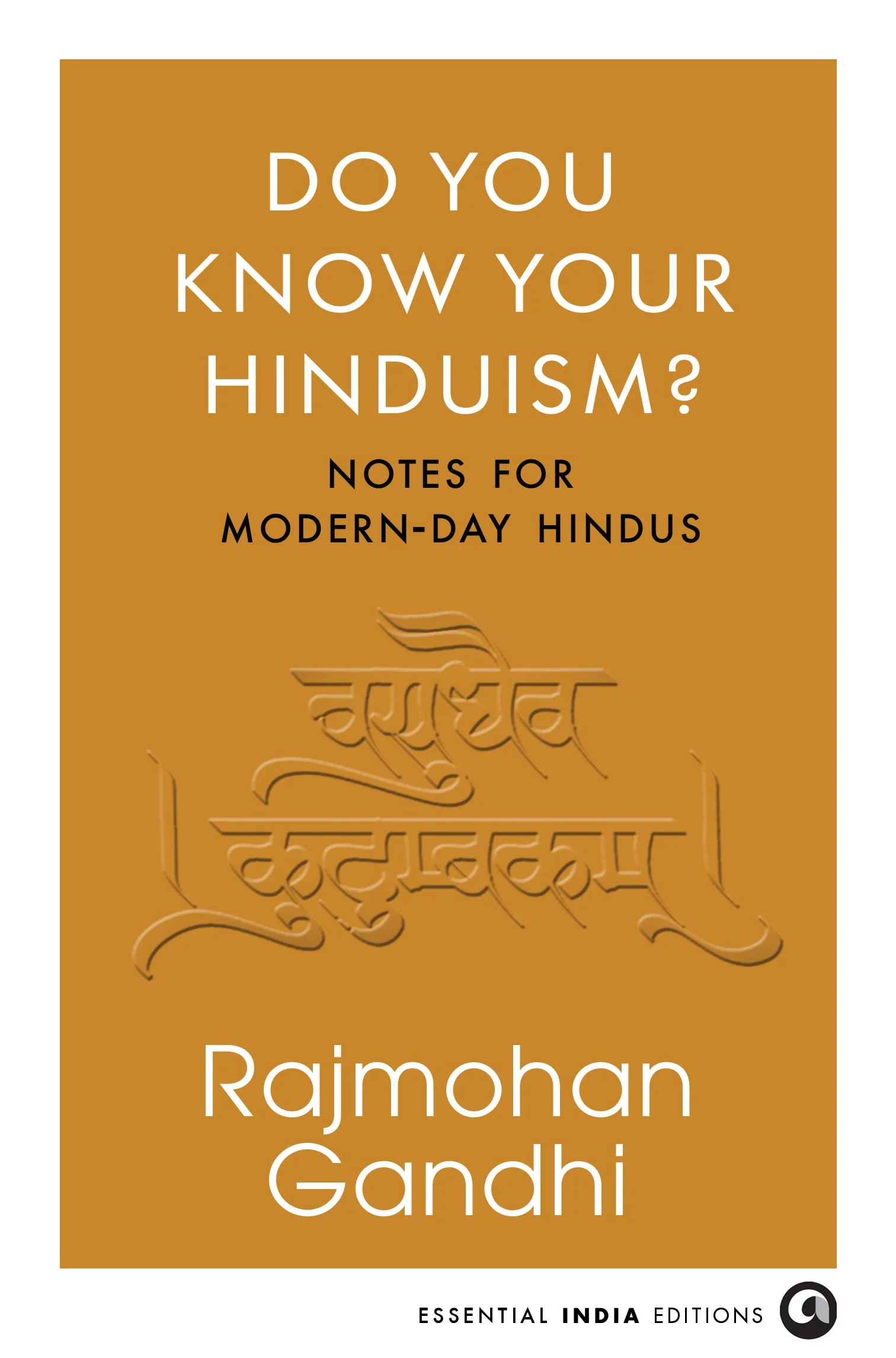
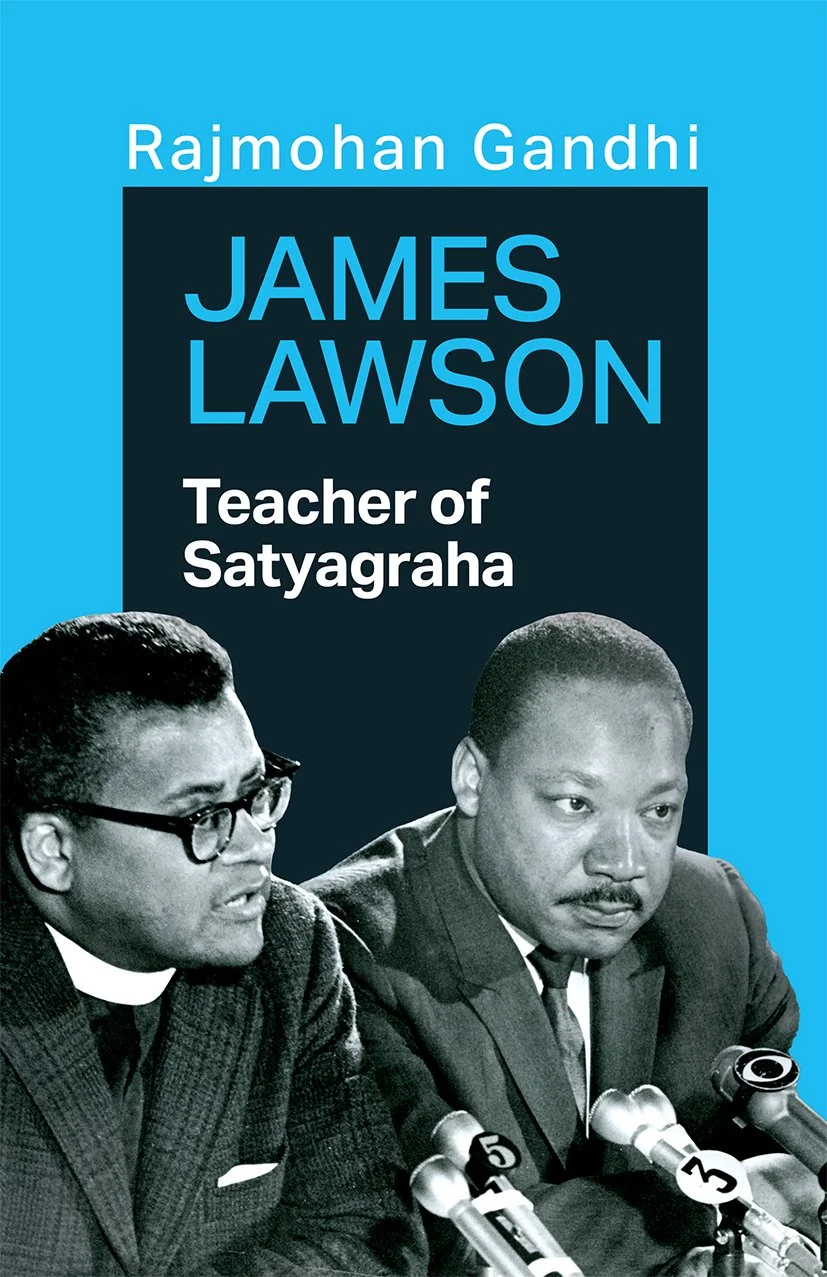
I am taking the liberty to speak in this space of two new books of mine published this week in New Delhi: James Lawson: Teacher of Satyagraha, brought out by Speaking Tiger, and Do You Know Your Hinduism? Notes for Modern-Day Hindus, published by Aleph Book Company.
Shortly before his assassination in April 1968 in Memphis, Tennessee, Martin Luther King Jr called Lawson “the leading theorist and strategist of nonviolence in the world.” King was 39 when he was killed. Born a year earlier than King, Lawson died in 2024, four months short of his 96th birthday.
In 1960, Lawson, a 32-year-old grad student at the time, hit the headlines for being expelled from Vanderbilt University in Nashville, Tennessee, in the middle of a nation-changing satyagraha by black and white college students trained by him. It was a significant moment in America’s Civil Rights movement. Years later, Vanderbilt repented, invited Lawson to teach, established a Lawson chair, unveiled a Lawson portrait, and housed not only a Lawson Institute for Nonviolence but also a substantial portion of Lawson’s personal papers!
I feel most fortunate at being able to come out with a Lawson biography. The book is the result of, among other sources or exercises, the James Lawson papers at Vanderbilt, numerous interviews with the remarkable figure, visits to the home where he had been raised in the small city of Massillon in Ohio and to the school and colleges where he studied, and interviews with some of his closest associates and friends.
The biography’s subtitle, Teacher of Satyagraha, underlines the training that Lawson gave to practitioners of nonviolent direct action in the US in the 1950s and 1960s. It also hints at Lawson’s extraordinary interest in the life and satyagrahas of Mahatma Gandhi. Sparked while Gandhi was still alive and Lawson was in high school, this interest was honed in the city of Nagpur in central India between 1953 and 1956. Then in his twenties, Lawson spent those three years teaching at Nagpur’s Hislop College and studying the doctrine and practice of satyagraha.
Like King, Lawson too became a Christian minister, although with the Methodist rather than the Baptist church to which King belonged. Lawson’s Christianity, I should add, was dogma-free.
Covid and my own advancing years made the task of producing the biography a challenge, but Providence proved kind, and I somehow managed to write it. Having benefited all my life from research done about India and Indians by non-Indians as well -- research that aided my own works on aspects of India’s history -- I feel glad at being able to produce something which, God willing, may provide some Americans with an additional understanding of their country.
UNDERSTANDING HINDUISM
Also released this week, Do You Know Your Hinduism? is slimmer than my Lawson biography. It seeks to provide clear answers to questions such as (1) What are the values that Hinduism asks its adherents to absorb and express? (2) Is being a Hindu a matter of being born to Hindu parents or something more? (3) What are the differences between Hinduism on the one hand and Hindutva (the most common phrase for Hindu nationalism) on the other? And (4), when non-Hindus wish to associate closely with Hindus or marry a Hindu, what should they know about Hinduism?
The fact that in recent years Hindus have been circling our earth in significant numbers calls for simple explanations and interpretations of Hinduism. This little book offers my understanding. One short chapter in it asks what I think to be a pertinent question: What lies behind the “revenge urge” witnessed in some Hindus in today’s India vis-à-vis the country’s Muslims and Christians?