


Tensions along the Thailand-Cambodia border began to rise in late May 2025, when clashes broke out in disputed areas, including Chong Bok in Nam Yuen District, Ubon Ratchathani Province.
This account begins in late June 2025, weeks before the border dispute exploded into the deadliest fighting between the two countries in more than a decade.
Protecting Their Own
As the sun disappeared behind the mountains and darkness settled over the village, more than 10 men gathered outside the village headman's house in Thung Somdet, one of the Thai communities closest to the border.
By day, they were farmers. By night, they became volunteer security guards, protecting their village as the threat of war crept closer.
This was not the first time they had lived through conflict.
Boonthan Promkot, the village headman, told me his community had survived decades of instability — from the Cambodian communist insurgency between the 1960s and 1970s, to the Khmer Rouge era when Cambodian families crossed into Thailand seeking safety, and later the fighting around the Preah Vihear temple in 2011.
"But nothing prepared us for what happened in 2025," he said.
When night had fully fallen, two pickup trucks pulled away from the village.
Inside were the volunteers, carrying shotguns issued by Thailand's Ministry of Interior. Soldiers from the Royal Thai Army joined the patrol as observers. On one side of the road, scattered lights from nearby villages flickered in the distance. On the other, a long mountain range marked the border between Thailand and Cambodia.
I joined one of those patrols in late June. Less than a month later, on July 24, 2025, full-scale fighting erupted between the Thai and Cambodian militaries. More than 100 people were killed. But the death toll was only the beginning. The war left behind wounds that would continue to shape the lives of people on both sides of the border long after the gunfire fell silent.
A Century-old Dispute
The Thailand-Cambodia border has been disputed for more than a century. Much of today's boundary was drawn under treaties between Siam (the name before the establishment of the Thai nation-state) and French colonial authorities in Cambodia in the early 1900s. While most of the border was eventually demarcated, several sections remain contested because the treaty text and later maps have been interpreted differently by the two countries.
The dispute has repeatedly escalated into military confrontations, most notably around the Preah Vihear Temple, where fighting in 2008 and 2011 killed dozens of people and displaced thousands. The International Court of Justice ruled in 1962 that the temple belongs to Cambodia and, in 2013, clarified that the surrounding promontory also falls under Cambodian sovereignty. However, the rulings did not settle all disputed sections of the 798-kilometer border.
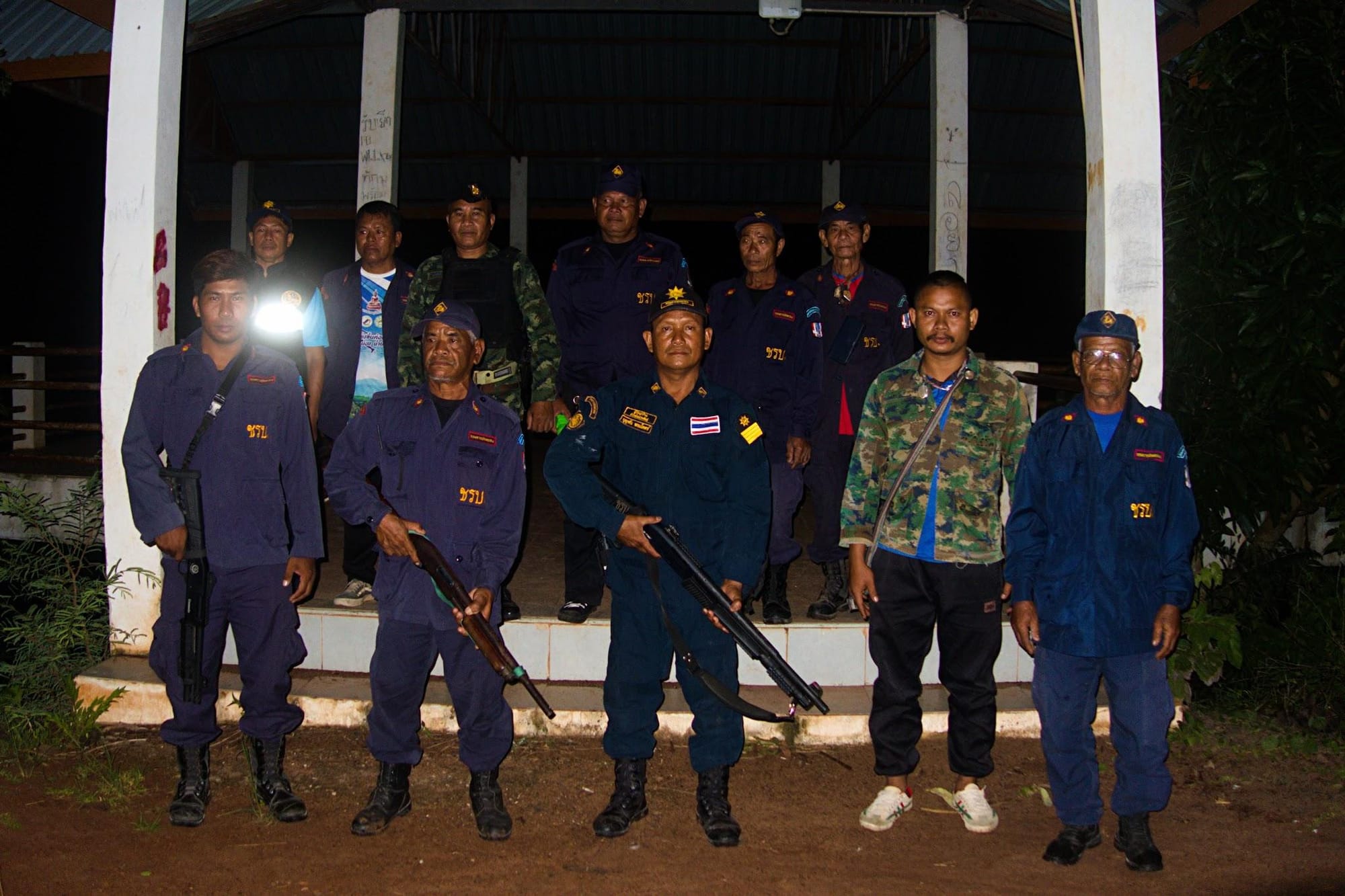
The volunteer security guard team. Photo by Nathaphob Sungkate
When the Gunfire Stopped, the Fear Remained
Three months after the fighting in July, the scars of war were still visible across Thailand's border communities in Sisaket Province.
Some houses stood abandoned, their roofs torn apart by artillery shells. Walls were pierced with bullet holes. But the deepest scars were the ones that could not be seen.
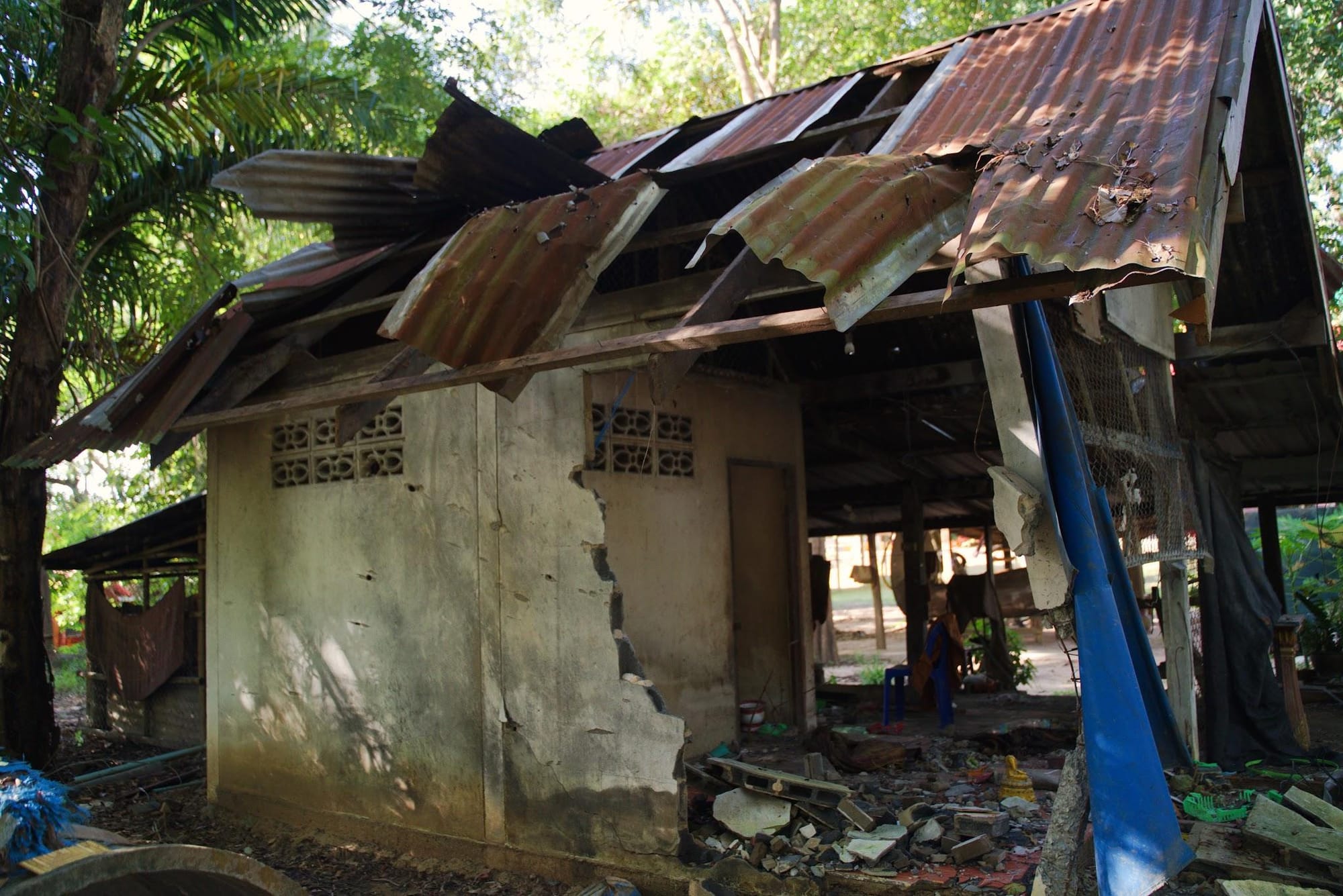
Civilian homes damaged by clashes between the two armies. Photo by Nathaphob Sungkate
"People who don't live on the war zone have no idea what it's like," said Tuk, a farmer whose land lies close to the conflict zone.
"We can't sleep properly anymore. Even when we hear thunder, we panic. The sound of the shells exploding near us is still stuck in my head. I can still feel my whole body shaking."
On the day the fighting broke out, Tuk was working in her fields when she heard artillery fire. She immediately ran home, worried about her parents.
The family spent hours sheltering inside a bunker while explosions echoed around them. Later, they were ordered to evacuate to a temporary shelter, where they remained for several days until the fighting subsided.
Siriwan Arsasri, manager of the Foundation for Health and Sharing, has been supporting vulnerable communities along the Thailand-Cambodia border. She told me that many children continue to show signs of trauma.
"Some children wake up crying during their afternoon naps at school," she said. "When a door slams or a window bangs in the wind, they ask, 'Was that another bomb?'"
Not everyone copes in the same way. Some have turned to drugs in an attempt to escape what they have lived through.
War does not only kill people on the battlefield. Its damage continues long after the fighting ends — through trauma, illness and the loss of livelihoods.
"Many patients could no longer continue their medical treatment," Siriwan said. "They simply disappeared from the healthcare system."
She told me that people along the border are doing everything they can to rebuild their lives. But many no longer know what comes next.
"What depresses us most is what the war has left behind," she said. "People here have always said they don't want war. Yet, at the same time, they are accused of not loving their country."
Their voices went unheard, and in December 2025, violence erupted again. What began as a confrontation between border patrols in a disputed area along the Phanom Dong Rak mountain range quickly escalated into exchanges of heavy weapons.
Fuelled by rising nationalism and political tensions in both countries, the ceasefire collapsed. Hopes of reopening border crossings through dialogue disappeared, leaving border communities to face yet another cycle of violence — and an increasingly uncertain future.
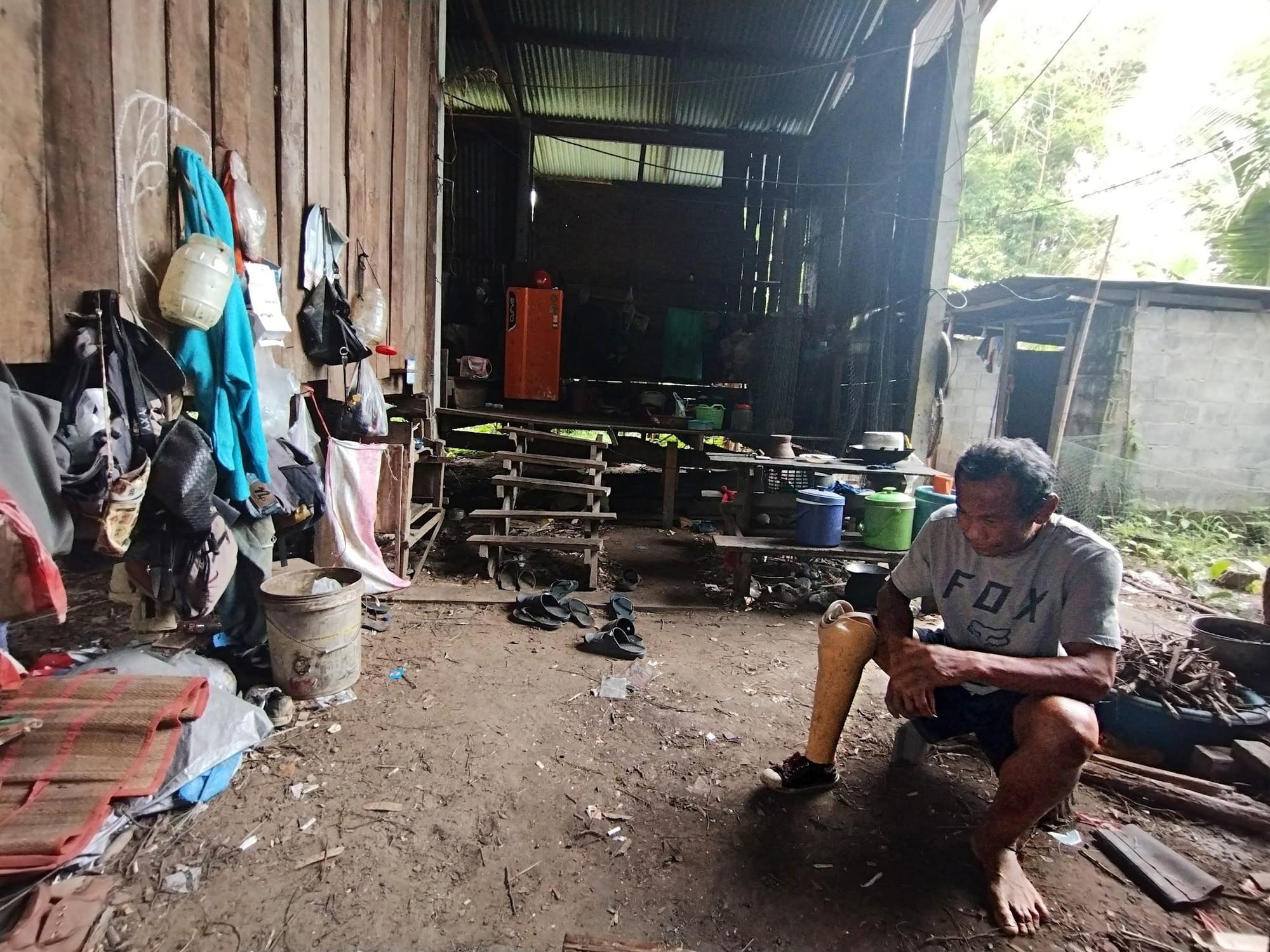
One of the villagers lost a leg after stepping on a landmine during the decades-long conflict between the Thai and Cambodian armies. Photo by Nathaphob Sungkate
From an Economic Zone to a Battlefield
Fifteen years ago, when I was a student, I visited Rong Kluea Market at the Khlong Luek border crossing between Thailand and Cambodia in Aranyaprathet District, Sa Kaeo Province.
The market never seemed to sleep. I still remember stepping off the bus and seeing people pushing carts loaded with goods in every direction. Thai shoppers traveled from across the country to buy affordable products there. Many Cambodians earned their living as traders in the market. At the time, it was one of Thailand's busiest border trade hubs.
When I returned in July 2026, everything had changed. The roads that were once crowded with buses and cargo trucks were almost empty. Shops had closed one after another. Even large retail businesses had pulled out because they could no longer survive.
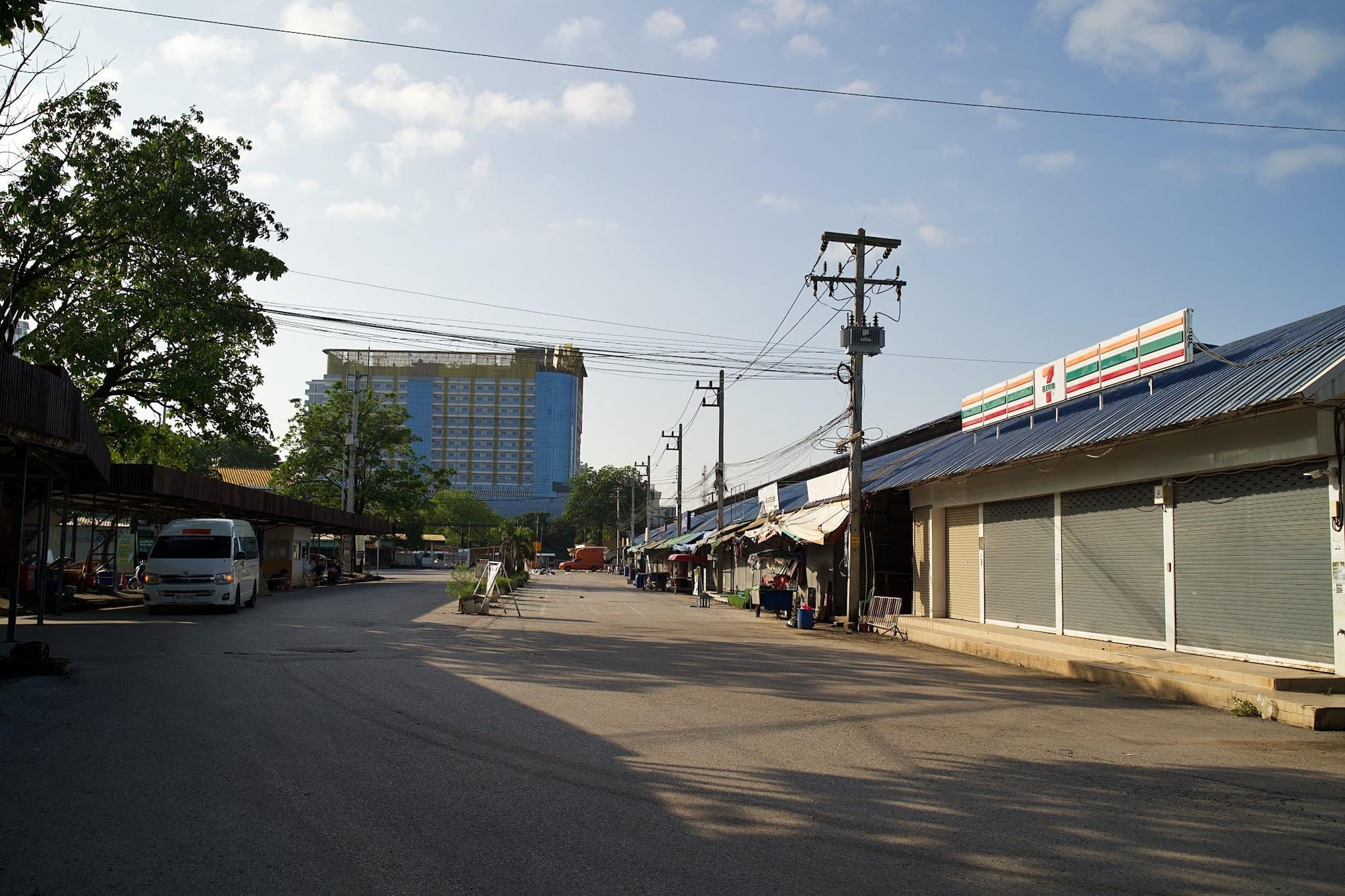
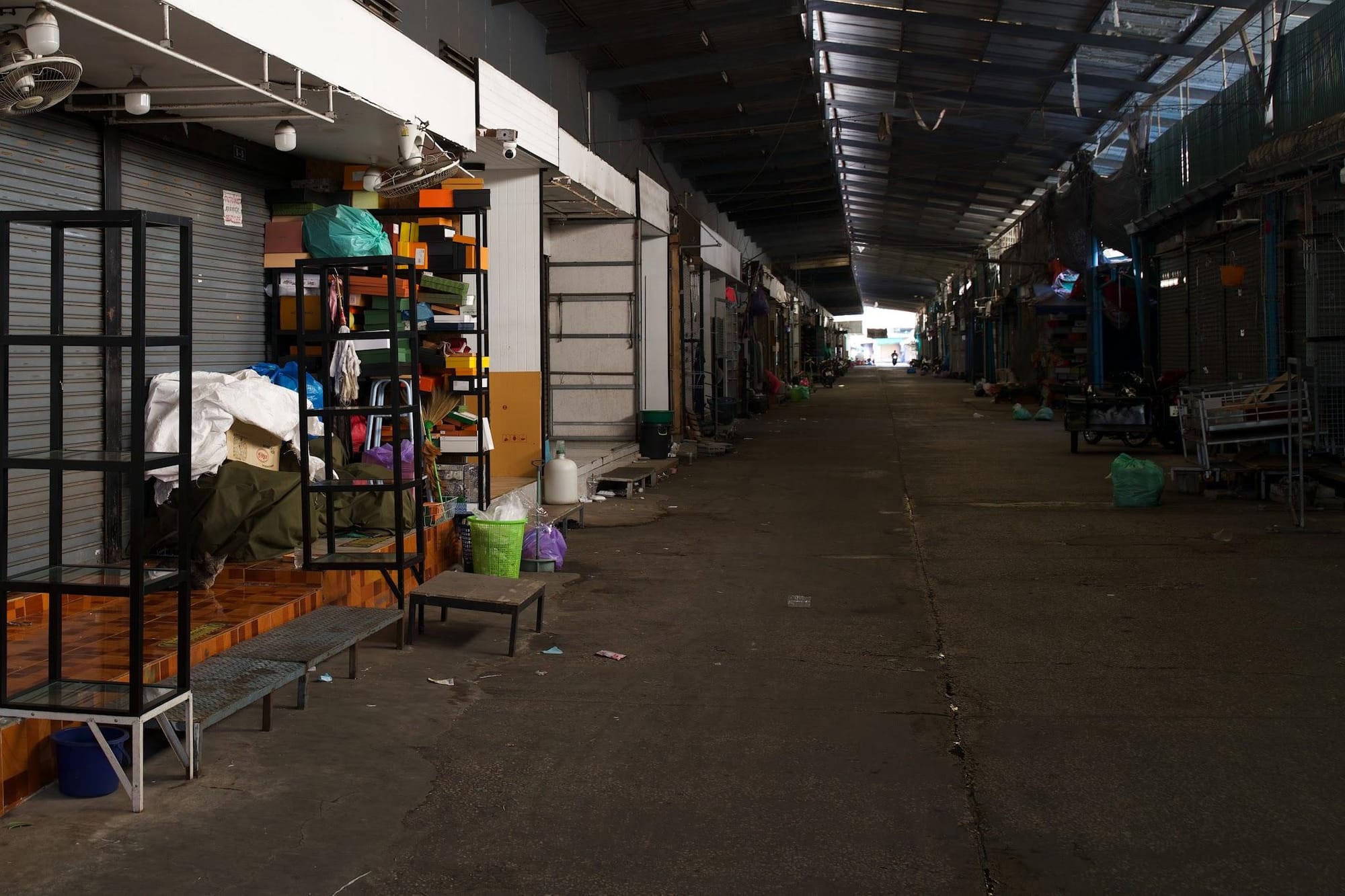
Almost all cross-border businesses were forced to shut down due to the closure of border checkpoints and the conflict between the two countries' armies. Photo by Nathaphob Sungkate
Every business owner I spoke to shared the same fear: if the conflict continues and the two governments fail to reopen the border for trade, many border towns could become ghost towns within the next one or two years.
"Today, it feels like people living along the border have been abandoned by our own country."
That is how Anuwat Wangphanawong, a transport business owner from Aranyaprathet, described the situation.
He told me that people living on the border still feel trapped in a battlefield. Whenever local business owners call for the reopening of the border crossing, they are quickly labeled as unpatriotic.
But the economic reality tells a different story. According to Thailand's Customs Department, before the conflict escalated, border trade in Sa Kaeo Province was worth around 10 billion baht (approx. US$300 million each month in 2024. Even in 2025, when border checkpoints were closed from July onward, total border trade still reached 90.1 billion baht (approx. US$2.7 billion for the year.
In 2026, however, Customs officials reported that border trade between Thailand and Cambodia had fallen to zero.
"The people who fuel this conflict lose nothing. But businesses along the border are dying."
Anuwat was also referring to another kind of war — one fought online. As fighting unfolded along the border, another battle erupted across social media. People from both countries were drawn into waves of misinformation, nationalist rhetoric, and fake news.
The more a piece of content fueled anger and hatred, the more attention, advertising revenue, and online popularity it generated.
Meanwhile, anyone who tried to present verified facts or question nationalist narratives often faced harassment, coordinated attacks, and accusations of being disloyal to their country.
Anuwat believes that when both governments handed full control of the border to the military, security concerns came to outweigh people's livelihoods.
For the military, protecting territory is the highest priority. For border communities, however, the consequences have been devastating. Honest traders who have depended on cross-border commerce for generations are slowly losing their livelihoods, while distrust and hostility continue to grow on both sides.
Yet despite everything, Anuwat still sees Cambodians as neighbors.
"No matter what happens," he told me, "one day we will trade with each other again. We will have to live alongside one another."
For people who have spent their lives on the border, coexistence is not an ideal — it is simply a reality.
What I Have Seen as a Journalist
The reflections that follow are based on four reporting trips I made to Thailand's border communities over the past year. Because my reporting took place on the Thai side of the frontier, this account reflects the experiences of the people I met there.
I recognize that communities across the border in Cambodia have also suffered the consequences of the conflict — from displacement and economic losses to the pressures of rising nationalism. Their experiences deserve their own careful reporting.
One of the sad stories I've heard from many people on the Thai side of the border is that the war has prevented them from returning to their families in Cambodia. Many families can only communicate by phone, amid fear and being stigmatized as traitors to the nation.
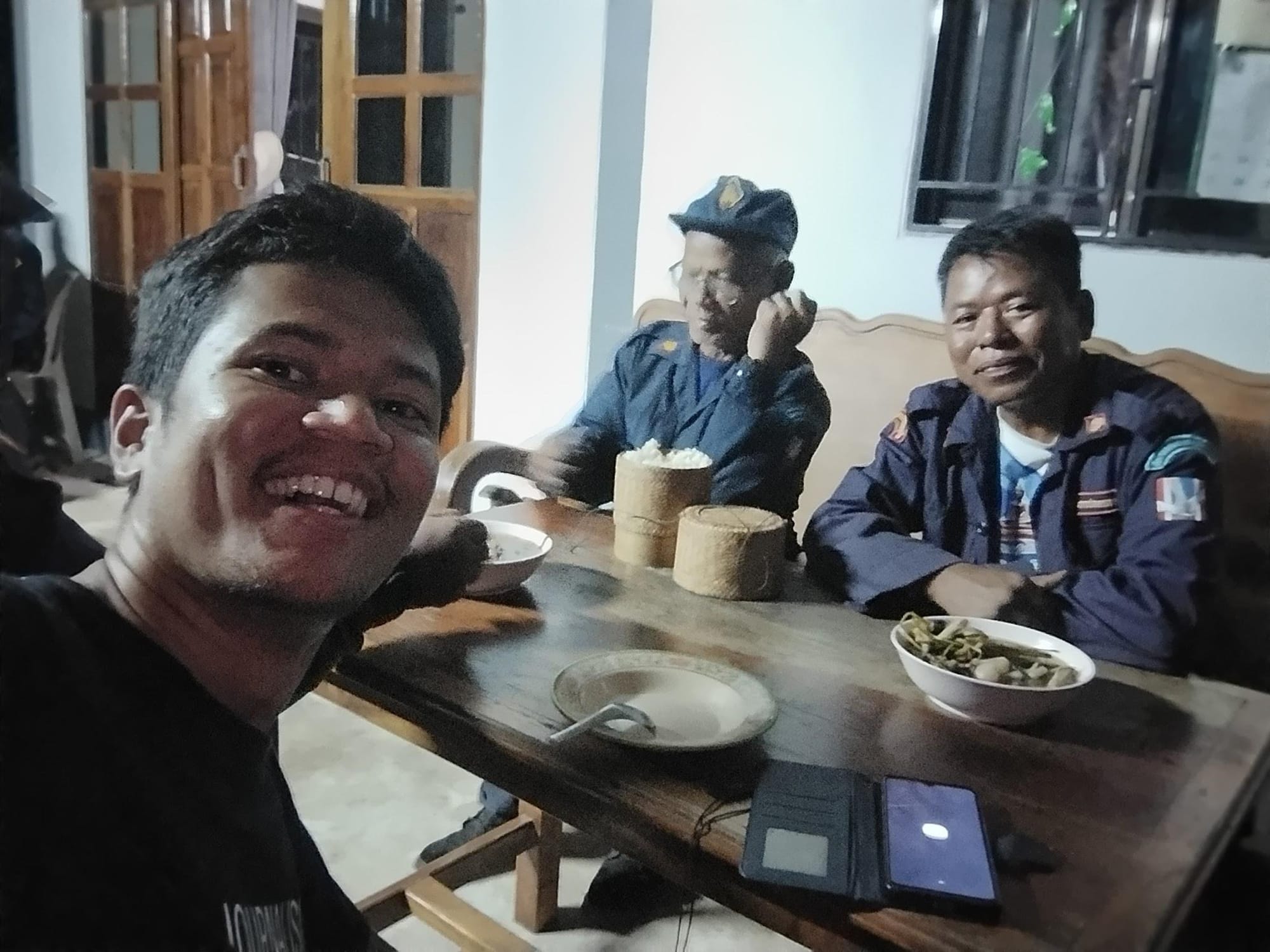
Photos from a field visit to interview village security teams, June 2025.
Each time I went to the border, I was accused online of being "an unpatriotic journalist." The accusation never came because I distorted the facts. Every story I published was built on conversations with people who actually live along the border. Yet many people chose not to believe their voices. Instead, they trusted influencers and online content that fueled anger and nationalism.
One year after the conflict began, I have realized that many people far from the border are interested only when the guns are firing. They wait for the next exchange of artillery, the next dramatic headline, the next military victory to celebrate.
But when the shelling stops, so does their attention. Few people ask what happens afterward — how families rebuild their homes, how businesses survive, or how children recover from the trauma of war.
Sometimes it reminds me of football fans who care only about the final score, not about the people left injured on the field.
That contradiction has stayed with me. We often speak about compassion and moral values, yet it is remarkably easy to celebrate violence from a safe distance while ignoring the wounds it leaves behind. In doing so, we become part of the environment that allows those wounds to be forgotten.
Today, the prospects for peace remain uncertain. Cambodia has rejected direct bilateral negotiations with Thailand over the disputed land boundary and continues to pursue international legal mechanisms instead. Meanwhile, military commanders on both sides are focused mainly on maintaining the ceasefire and preventing another outbreak of fighting.
For the people who live along the border, however, preventing another war is only the first step. There has been little meaningful progress toward reopening border crossings, restoring cross-border trade, or helping communities rebuild their lives.
For those living in Bangkok or Phnom Penh, this conflict may have become yesterday's news. For people living on the border, it is still their everyday reality.


